
More Than Compliance: Mohamed Abdelhafiez on Leadership, Learning and Protecting Lives
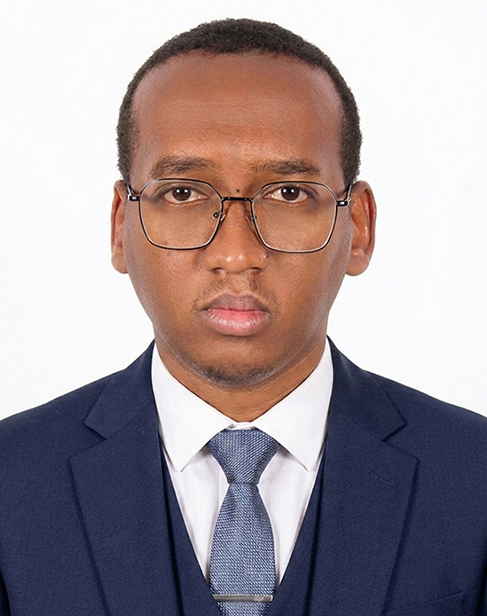
Case Study: Mohamed Abdelhafiez
For Mohamed Abdelhafiez, health and safety is far more than a profession. It is a responsibility to protect people, safeguard the environment and help organisations perform at their best. Since discovering HSE while working as a Sales Engineer, Mohamed has built an impressive career that has seen him progress to Occupational Health, Safety and Environment Manager at Alkhorayef Water & Power Technologies. In this case study, he reflects on the lessons he has learned, the value of continuous professional development, and why effective HSE leadership is about much more than compliance.
When did you first decide to pursue a career in health and safety, and what sparked your interest?
Like many university graduates, I did not have a clear idea of which profession I wanted to pursue after completing my Mechanical Engineering degree. In 2018, I secured a role as a Sales Engineer, and it was during this time that I encountered the factory's HSE team, an experience that changed the direction of my career.
I saw how varied their roles were, working closely with production teams, conducting daily briefings, carrying out inspections, preparing reports, and engaging regularly with senior management. What really caught my attention was the nature of their work. They were not simply following procedures or completing paperwork; they were actively looking after people, identifying risks, and working to prevent harm before it occurred.
The more I observed and interacted with them, the more impressed I became. I began to realise that health and safety was much more than a conventional job. It was a profession centred on caring for people and protecting lives. That realisation sparked my passion for HSE. I have come to see health and safety not simply as a career, but as a humanitarian responsibility.
For me, the greatest value of HSE lies in knowing that the work we do can make a real difference to people's lives by helping to ensure that everyone returns home safely to their families. That sense of purpose which first attracted me to the profession, continues to drive my passion for HSE, as well as my commitment to continuous learning and professional development.
You hold five NEBOSH qualifications. For each can you explain, why you chose to take the qualification and the benefits that followed:
- NEBOSH International General Certificate
The NEBOSH International General Certificate was the first HSE qualification I pursued, as I recognised it as the essential foundation for building a career in health and safety. It is internationally recognised and widely regarded as a respected and sought-after qualifications in the profession.
The course gave me a broad understanding of the fundamental principles of occupational health and safety, including how to identify hazards, assess risks, and implement effective control measures. It provided the knowledge and practical framework I needed to develop from someone with an interest in HSE into a more confident and capable safety professional.
- NEBOSH HSE Certificate in Process Safety Management
As I developed as an HSE professional, I wanted to go beyond general occupational health and safety. I chose to pursue this qualification to deepen my understanding of how to manage high-risk activities in major hazard industries, where failures can have catastrophic consequences, affecting not only employees but also communities, assets, and the environment.
It introduced me to important process safety concepts and tools, including hazard identification, Bowtie analysis, HAZOP, HAZID, and the management of major accident hazards. These concepts helped me understand how different layers of prevention and mitigation work together to control high-risk activities.
What I found particularly valuable was learning to view risk from a broader, systems-based perspective, not only asking what could go wrong, but also understanding how failures can develop and what controls need to be in place to prevent major incidents. This has strengthened my ability to identify potential weaknesses in systems and contribute more effectively to the management of process safety risks.
- NEBOSH HSE Certificate in Health and Safety Leadership Excellence
Strong leadership is one of the most important factors influencing health and safety performance in any organisation. I chose to pursue this qualification to gain a better understanding of what effective HSE leadership looks like and how it can be achieved. Through my studies, I developed a deeper understanding of how leadership behaviours influence people and shape an organisation's culture. The importance of fairness, trust, communication, and workforce engagement was also reinforced.
Taking this qualification gave me greater confidence in my own ability to lead effectively in HSE. It helped me understand that, as an HSE professional, my role is not only to identify risks and provide technical advice, but also to influence, inspire, and engage people so that health and safety becomes a shared responsibility across the organisation.
- NEBOSH HSE Introduction to Incident Investigation
I believe that every incident can provide an important learning opportunity when it is investigated properly. Effective investigations help organisations understand not only what happened, but also why it happened, so that steps can be taken to prevent a recurrence.
This qualification helped me develop practical skills in incident investigation, including gathering and analysing evidence, conducting witness interviews, and identifying root causes. I also learned the importance of turning investigation findings into meaningful corrective actions. The objective should not simply be to complete an investigation report; it should be to put measures in place that prevent similar incidents from occurring and improve the organisation's overall HSE performance.
For me, investigating incidents is one of the most effective ways to learn and improve. This qualification gave me a structured and practical approach that I can apply to ensure incidents become opportunities for continuous improvement.
- NEBOSH Environmental Management Certificate
Environmental management has become an increasingly important responsibility for organisations and professionals around the world. As issues such as climate change, pollution, and the wider environmental impacts of human activity receive greater attention, I wanted to strengthen my knowledge in this area as part of my professional development.
The qualification gave me a structured and practical understanding of how environmental aspects can be identified, how their impacts can be assessed, and how effective controls can be implemented. A key learning point for me was the importance of preventing pollution and environmental damage, rather than simply dealing with the consequences after they occur.
Studying this qualification broadened my understanding of environmental management and helped me appreciate the increasingly close relationship between health and safety, environmental protection, and sustainable business practices.
I understand you have just completed the assessment for a sixth NEBOSH qualification and are awaiting your results. Why did you choose the NEBOSH Health and Safety Management for Construction (International) and how did you find it?
Construction activities involve a wide range of complex and high-risk hazards, and I wanted to strengthen my knowledge and capability in managing these risks effectively.
This qualification has given me valuable knowledge and practical insight into the importance of properly planning and managing construction activities to ensure hazards are identified, risks are assessed, and appropriate control measures are implemented. I found the sections on demolition and excavation particularly valuable, as these activities can involve serious and potentially catastrophic risks if they are not properly planned and controlled.
Although I am still waiting for my result, the learning itself has already provided significant value in my work. For me, professional development is a continuous journey, and each qualification I achieve adds another layer to my ability to understand risks, make better decisions, and protect people in the workplace.
In one sentence, what has been the best thing you have learned through your NEBOSH studies?
My greatest lesson from NEBOSH is that HSE is not simply about rules and compliance; it is about understanding risk, influencing people, and taking genuine responsibility for protecting lives and the environment.
You joined Alkhorayef Water & Power Technologies (AWPT) in 2025. Can you tell us about its HSE ethos?
I view joining Alkhoraeyef Water & Power Technologies as an important step in my professional journey, as it has provided me with the opportunity to apply the knowledge, experience, and expertise I have developed throughout my HSE career within a dynamic and challenging operational environment.
What particularly attracted me to AWPT was the nature of its work in the water and wastewater sector, where HSE risks are closely linked to day-to-day operations. Confined space entry, biological hazards, electrical hazards, work at height, lifting operations, and chemical exposure all present significant risks, making effective HSE management essential. Working in this environment has reinforced my belief that HSE should never be viewed as a separate function or simply a compliance requirement. Instead, it should be embedded in the way an organisation plans, makes decisions, and operates every day. Joining AWPT has given me the opportunity to contribute to a culture where safety is not just a requirement, but a shared value and an integral part of the way people work.
You work as an Occupational Health, Safety and Environment Manager. Can you tell us about your role and responsibilities please?
As an HSE Manager at AWPT, my role is to provide leadership and strategic direction for health, safety, and environmental performance across our operations. I work closely with senior management, operational teams, and the wider workforce to identify risks, strengthen controls, promote safe behaviours, and continuously improve HSE performance.
One of my key responsibilities is leading and overseeing the HSE management system, ensuring that policies, procedures, standards, and objectives are effectively implemented and aligned with organisational and regulatory requirements. I also lead the HSE audit and inspection programme, monitoring findings and ensuring that corrective and preventive actions are properly tracked through to closure.
As part of my HSE performance management responsibilities, I establish and monitor HSE objectives, KPIs, and performance indicators, analyse trends, and provide regular reports and recommendations to senior management. I also participate in management reviews and maintain regular communication with senior leadership to ensure that HSE risks and performance remain visible at the highest levels of the organisation.
There is a diverse range of risks to manage in the water and wastewater sector, including confined spaces, biological hazards, chemical exposure, electrical risks, lifting operations, and work at height. It is my responsibility to ensure that these risks are systematically identified, assessed, controlled, and continuously monitored.
I am also responsible for supporting and strengthening HSE leadership and culture. This involves engaging with managers, supervisors, and the workforce, promoting accountability, encouraging reporting and learning, and ensuring that HSE is integrated into operational and business decisions rather than being treated as a separate function.
I also oversee incident investigation and learning, emergency preparedness, HSE training and competency, legal and regulatory compliance, contractor HSE management, environmental performance, and continuous improvement.
Ultimately, I see my broad role as being about more than ensuring compliance. It is about turning HSE principles into practical actions that protect people, support the business, and safeguard the environment. I must provide leadership, assurance, and direction to ensure the organisation manages its risks effectively, protects its people and the environment, and continuously improves its HSE performance.
My experience at AWPT has further strengthened my belief that sustainable HSE performance is built on strong leadership, workforce engagement, accountability, and continuous learning.
In your opinion what qualities do you believe a health and safety professional needs to be successful?
I believe successful HSE professionals need a combination of strong technical knowledge, leadership, communication, integrity, and a genuine commitment to protecting people.
HSE professionals need a robust technical understanding of health and safety principles, legislation, risk management, and industry-specific hazards. As our profession is constantly evolving, we need to continuously learn and develop our skills throughout our careers.
HSE professionals must also be visible on site. You cannot effectively manage safety from behind a desk. You need to see the workplace, understand how activities are actually carried out, talk to the workforce, listen to their concerns, and build trust with the people who are exposed to risks every day.
Leadership and communication are equally important because we need to be able to influence people at every level of an organisation, from frontline workers to senior management. We should not simply tell people what they are doing wrong; we should be able to explain risks, engage people in finding solutions, and encourage them to take ownership of safety.
I also believe that successful HSE professionals should be proactive, innovative, and solution-oriented. Rather than waiting for incidents to occur, we should anticipate risks, identify opportunities for improvement, and continuously challenge ourselves to find better ways of managing HSE.
Finally, integrity is fundamental. We need to have the courage to speak up when something is unsafe, even when doing so may be difficult. At the same time, we need to approach people with fairness, respect, and empathy.
For me, the best HSE professional is not the person who simply knows the most about safety; it is the person who can turn knowledge into action, influence positive behaviours, and help create a culture where everyone takes responsibility for protecting themselves and others.
What do you enjoy most about your chosen profession?
The opportunity to make a meaningful difference to people's lives is what I find most rewarding about working in HSE. For me, protecting people is a humanitarian responsibility that gives a deeper purpose to the work I do every day.
I enjoy spending time talking to workers on site, as it helps me understand how activities are carried out, identify potential risks, and work collaboratively to find practical solutions. Addressing a risk before it becomes an incident is particularly rewarding because you know that your intervention may have prevented someone from being harmed.
I also enjoy the variety that the profession offers. HSE professionals face different challenges every day, whether they involve risk assessment, incident investigation, leadership, environmental management, training, or operational activities. There is always something new to learn and something that can be improved.
It is equally rewarding to see people's awareness and ownership of safety develop over time. Helping to shift perceptions of safety from something that must be done to something people genuinely believe in and take responsibility for is one of the most satisfying aspects of the role.
Ultimately, my work helps ensure that people return home safely to their families at the end of each day, and that is what gives my profession its meaning.
How do you see the role of health and safety evolving?
I believe the HSE profession is evolving from a traditional compliance-focused function into one that is more strategic, proactive, and integrated within organisational leadership.
HSE professionals need to do more than interpret regulations and monitor compliance. They increasingly need to use data, technology, digital systems, and predictive approaches to identify trends, anticipate risks, and prevent incidents before they occur. However, the human element will remain at the heart of HSE. Technology can provide better data and tools, but it cannot replace leadership, communication, trust, workforce engagement, and the ability to influence people.
I also believe that the remit of HSE professionals will continue to expand as organisations increasingly recognise that protecting people, protecting the environment, and achieving sustainable business performance are closely connected. I expect HSE professionals to become increasingly involved in sustainability, organisational resilience, wellbeing, behavioural safety, and emerging risks, while also continuing to focus on the fundamentals of risk management.
Ultimately, I see the future HSE professional as a strategic leader rather than simply a safety specialist; someone who can combine technical knowledge, technology, and human leadership to help create safer, healthier, and more sustainable organisations.
Looking back at your career journey so far, what does professional development mean to you?
Professional development, to me, means never considering yourself finished. My journey has taught me that every stage of a career presents an opportunity to learn something new.
My NEBOSH qualifications have helped me develop technically, but their real value has come from combining that knowledge with practical experience and learning from the people around me.
Continuous professional development is not about collecting qualifications. It is about becoming a better professional, improving the way you think, strengthening your ability to influence others, and ultimately making a greater contribution to the safety and success of your organisation.
What advice would you give someone who wants to build a career in the health and safety profession?
My main advice is to start with the right mindset: understand that HSE is not simply a job, but a responsibility to protect people and the environment.
Build a strong technical foundation and invest in your professional development, but do not rely on qualifications alone, as practical experience is where knowledge becomes real competence. Get out into the field, spend time with the workforce, and learn from experienced people. Many HSE professionals have supported my development, but I would particularly like to thank my friend, Eng. Khalid Atta Almnan. His advice and belief in my potential contributed significantly to my progression, and I am truly grateful for his support.
Developing communication and leadership skills is also vital. Even if you have excellent technical knowledge, if you cannot communicate effectively, build trust, and influence people, it will be difficult to create meaningful change.
Be curious and never stop learning. Every incident, inspection, conversation, and challenge can teach you something. Do not be afraid to ask questions or admit you do not know something. What matters is being willing to learn.
Be visible, be proactive, and have the courage to speak up. HSE professionals should not wait for an incident to act. We should anticipate risks, challenge unsafe practices, and work with people to find practical solutions.
Finally, do not measure your success solely by the number of reports you complete or inspections you conduct. Instead, measure the positive influence you have on the impact you have by protecting people and influencing positive change.
If you genuinely care about people, remain committed to learning, and put your knowledge into action, HSE can become much more than a career; it can become a purpose.
- International General Certificate in Occupational Health and Safety
- Health and Safety Management for Construction (International)
- NEBOSH HSE Certificate in Process Safety Management
- NEBOSH HSE Certificate in Health and Safety Leadership Excellence
- Environmental Management Certificate
- NEBOSH HSE Introduction to Incident Investigation