
Why continuous learning matters at every stage of your safety career
Case Study: Selimcan Menemencioglu
With more than 15 years’ experience in health and safety, Selimcan Menemencioglu is now Regional HSSE Lead – EMEA at Shell. He completed the NEBOSH International General Certificate in 2021 to strengthen his experience and challenge his thinking. Now studying towards the NEBOSH Level 6 International Diploma, Selimcan shares why continuous learning remains important at every stage of a career.
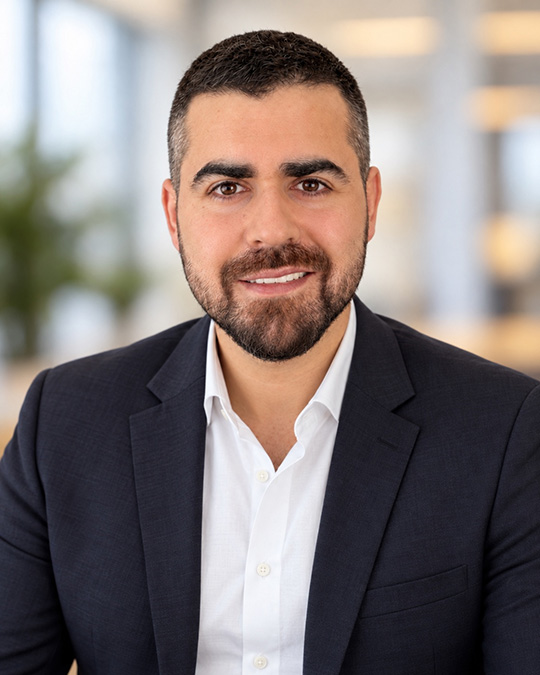
Mr Selimcan Menemencioglu, you have worked for Shell for over 6 years. Could you tell us a little about your career journey within the organisation?
I joined Shell in 2020, and over the past six years I have had the opportunity to work in three very different HSSE leadership roles.
I started as Regional Road Safety Lead for EMEA, supporting road and transport risk management across 39 countries. This gave me a broad perspective on how the same risk can look completely different depending on the country, operating model, contractor structure and local culture.
I then moved into a global role focused on hydrogen safety and energy transition. That brought a completely different challenge, as I was working with emerging technologies, new risk profiles and teams across different parts of the business. It pushed me to think beyond traditional safety management and understand how HSSE needs to evolve as the energy sector changes.
Today, I work as Regional HSSE Lead – EMEA, with responsibility for HSSE governance and assurance across more than 50 sites.
What attracted me to Shell in the first place was the scale and complexity of the business. I wanted to work in an environment where I could learn from different countries, cultures and disciplines while dealing with real operational risk.
Looking back, my progression at Shell has never really been about chasing titles. Each role has taken me into a different area of risk and leadership, pushed me outside my comfort zone, and given me new opportunities to learn.
As the Regional HSSE Lead – EMEA, can you tell us a bit more about your current role?
My current role is very broad, which is one of the things I enjoy most about it. As Regional HSSE Lead – EMEA, I support multiple countries, businesses and operating environments. My main responsibility is to ensure HSSE risks are consistently understood, managed and assured, while taking into account the realities of each location.
My scope includes marine operations, logistics, manufacturing, contractor management and other high-risk activities. A large part of my role focuses on governance and assurance, but equally important is working with leaders and frontline teams to improve how risk is understood and managed in practice.
There is no real “typical day”. I might start the morning by reviewing a critical control issue linked to a vessel operation, move on to a road transport or contractor assurance review in another country, support an incident investigation, and later work with senior leaders on risk priorities or safety culture.
One of the biggest challenges of a regional role is finding the right balance between global standards and local realities. A process can look perfect on paper, but if it does not work in the field, it will not protect people. A key part of my role is bridging that gap.
For me, strong HSSE leadership is not about policing the business. It is about helping people make better decisions, creating the right conditions for safe work and supporting resilient, high-performing operations.
Could you tell us a little about your career journey before you joined Shell?
My career started in major construction and power generation projects, and I think that shaped the way I still look at safety today.
Early in my career, I worked on large EPC projects with major contractor workforces and complex interfaces between construction, engineering and operations. On some projects, the workforce exceeded 9,000 people. Working in that kind of environment teaches you very quickly that safety cannot be managed through procedures alone. You need strong supervision, clear controls, good leadership and people who are willing to speak up when something does not look right.
I progressed from specialist and site-based roles into HSE management positions, eventually taking responsibility for major power and industrial projects. After that, I moved to Unilever, first as Engineering Safety Manager on a major relocation project and later as Regional HSSE Manager covering Türkiye, Central Asia, North Africa and the Middle East.
That move was an important step for me, taking me from project-based environments into regional leadership. Working across different countries, cultures, regulatory environments and business models broadened my perspective significantly.
What first attracted me to health and safety was very simple: the work matters. Good decisions can prevent life-changing events. Over time, I also became interested in the leadership and organisational side of safety, including why people make certain decisions, how culture influences behaviour, and how leaders can create the right conditions for people to work safely.
That combination of operational experience and leadership is still at the centre of how I work today.
You completed the NEBOSH International General Certificate (IGC) in 2021. What encouraged you to take the qualification?
By that point in my career, I had already been working in health and safety for more than ten years, so I was not looking for a qualification to teach me the basics of the profession. I wanted to challenge my thinking, strengthen my knowledge through an internationally recognised framework and support my practical experience with a strong global standard. At the time, I was already working in a regional role at Shell covering multiple countries, so the international nature of NEBOSH was particularly relevant to me.
I completed the qualification through NEBOSH Gold Learning Partner NTSS Eğitim ve Danışmanlık, and I found the learning experience practical, well-structured, and easy to connect with real workplace situations.
What I valued most about the IGC was that it encouraged me to step back and consider how risks are actually managed, rather than simply focusing on rules or compliance. After many years in operational roles, you naturally develop habits and ways of working. The IGC gave me the opportunity to revisit the fundamentals with fresh eyes and to connect my field experience to a more structured framework.
It reinforced areas such as risk assessment, control measures and management systems, while also reminding me how important it is to keep learning, regardless of seniority.
Since completing the NEBOSH IGC, have you made any changes or improvements in your role or workplace?
For me, the biggest impact of the IGC was not one single process or initiative. It helped me structure my thinking more clearly.
By the time I completed the qualification, I already had many years of practical experience, but the IGC encouraged me to look more systematically at how different parts of a safety system connect.
I became more deliberate about looking beyond the immediate issue. If something goes wrong, it is easy to focus on the person, the procedure or the individual failure. Instead, I consider what was happening around the time of that decision. Was the work properly planned? Were the controls practical? Was the supervision effective? Did the person have the right information? Were there competing pressures?
That way of thinking has influenced how I approach transport safety, contractor management, operational assurance and incident learning. It has also changed the way I engage with leaders. Rather than only asking whether a requirement has been met, I try to understand whether the control is actually working and whether people trust the system enough to use it.
The IGC did not replace my experience. It gave me a clearer structure around it, and that has stayed with me as my roles have become broader and more strategic.
Can you share an example of a situation where knowledge gained from the NEBOSH IGC helped you solve a problem or improve safety in the workplace?
An example that stands out for me came during the COVID period, when I was leading road safety across the EMEA region. At the time, our face-to-face defensive driving training had to stop due to the risks of close interaction. However, road transport remained a high-risk activity, particularly in some of the locations we supported, so simply pausing driver development was not really an option.
We therefore redesigned our approach and introduced a more technology-enabled model. Vehicles were equipped with IVMS technology, which allowed us to monitor driving behaviours such as harsh braking, cornering, speeding and rapid acceleration. We also used in-vehicle cameras so that drivers could drive without an instructor sitting beside them. Afterwards, the instructor would connect remotely and review the footage and driving data with the driver. This created more of a coaching conversation than a traditional classroom-style training session.
For me, this was a very practical example of applying the principles reinforced through the NEBOSH IGC: reassessing risk when circumstances change, considering the effectiveness of controls and finding a solution that protects people without creating a different unmanaged risk.
It allowed us to continue developing driver competence during a very challenging period while making better use of technology and real driving data. That experience stayed with me because it showed how effective safety management often depends on adapting the control strategy rather than simply stopping an activity.
Has achieving the NEBOSH IGC influenced your future career plans?
Yes, definitely, although perhaps not in the traditional sense. By the time I completed the IGC, I had already built a long career in HSSE, but it reinforced something I strongly believe: experience should never become an excuse to stop learning.
My career has taken me from large EPC and power projects into manufacturing, regional road safety, marine operations, hydrogen, energy transition and now broader regional HSSE leadership. Every move has shown me that the profession continues to evolve and that senior roles require you to understand far more than just technical safety.
Going forward, I want to continue working in complex, large-scale, high-risk international environments where HSSE is closely linked to operational performance and leadership. I am particularly interested in critical risk management, major accident prevention, contractor governance, safety culture and leadership development.
I also want to keep strengthening my strategic capability, which is one of the main reasons I enrolled on the NEBOSH Level 6 International Diploma this year. For me, the IGC was never the end goal. It was part of a much longer development journey, and that mindset continues to shape how I think about the next stage of my career.
What do you enjoy most about working in health and safety?
What I enjoy most is seeing the moment when safety becomes something people genuinely own rather than something they are told to do. Throughout my career, I have worked in very different environments: construction projects, manufacturing, transport, marine operations and energy businesses, but that part is always the same. You can have strong procedures and systems, but real improvement happens when people understand the risk, believe in the controls and feel confident enough to challenge something that does not look right.
Some of the most rewarding moments in my career have been quite simple: seeing a supervisor stop a job for the right reason, watching a leadership team change the way they talk about risk, or seeing a lesson from one location used to prevent a similar event somewhere else.
I also enjoy the variety. No two countries, sites or projects are exactly the same, so the work constantly challenges you to learn. For me, that is what keeps the profession interesting. You are always working at the point where people, operations and risk come together, and when you get it right, the impact is very real.
Looking back on your career so far, what achievement are you most proud of?
One of the achievements I am most proud of came during my time at Unilever, when I was working as Engineering Safety Manager on one of the company’s largest global capital projects. The project was much more than building a new large manufacturing campus, relocating operations from the existing site and safely decommissioning the old facility. It was a very large, complex end-to-end programme with significant construction risk and a major contractor workforce.
I was approached for the role because of my previous construction and EPC safety experience. Unilever already had very strong global safety standards, but naturally most of them had been developed around manufacturing operations. Large-scale construction introduced a different risk profile.
One of my first priorities was to develop a construction safety framework specifically for the project, with standards and requirements covering the key construction risks and contractor activities. What started as a project-specific approach later became a benchmark that could be used more widely across other Unilever construction projects.
I am particularly proud that the impact went beyond one project. We were able to take practical experience from the field into something that could support safer construction elsewhere in the organisation. Most importantly, we completed this very large and complex project without a fatality or life-changing injury.
I am also proud of the people who were part of that team. Several colleagues have since moved into senior safety and leadership roles across different organisations. Knowing that we learned, developed and grew together during such a demanding project is something I value a lot. The project was also an important turning point in my career. Following its completion, I moved into a regional HSSE leadership role, where I was able to take many of those lessons into a much broader international environment.
When I look back, that project still stands out because it combined everything I value in safety: strong field leadership, practical standards, contractor engagement, learning and developing people, and creating something that continued to protect people long after the project itself was completed.
What advice would you give to someone who is considering a career in health and safety?
My advice would be to stay curious and spend as much time as possible understanding how work actually happens. Technical knowledge is important, but health and safety is also about people, leadership and decision-making. Some of the best lessons I have learned in my career have come from frontline workers, supervisors and project teams rather than from a textbook.
For anyone considering the NEBOSH IGC, I would definitely recommend it. It gives you a strong and internationally recognised foundation, but more importantly, it teaches you to think about risk in a structured way. I completed the IGC in 2021 after already spending many years in HSSE, and I still found real value in it. This year, after more than 15 years in the profession, I enrolled on the NEBOSH Level 6 International Diploma because I still believe there is more to learn.
The one thing I would say is: do not treat a qualification as a box to tick. Use it to challenge the way you think, connect it to what you see in the workplace and keep building on it throughout your career.
Experience matters, but the best professionals are the ones who never become too experienced to learn.