
Building an international HSE career through experience and learning
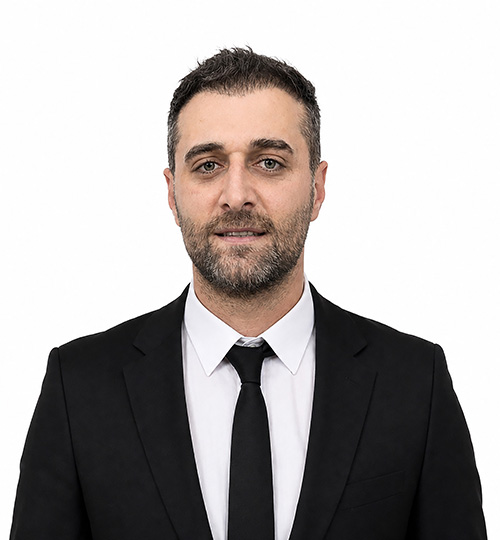
Case Study: Özgür Musaoglu
From beginning his health and safety career in Türkiye to working on major international projects across the energy, rail, mining and construction sectors, Özgür Musaoglu has built a wealth of practical HSE experience. Now working as a Project HSE Chief in Libya, he has complemented this experience with continued professional development, including the NEBOSH Level 6 International Diploma. We spoke to Özgür about his career journey, the value of combining practical experience with professional learning, and the lessons he has gained from working in complex, multinational environments.
You have built an international career in health and safety, working on major projects across several countries. Can you tell us about your career journey and what first attracted you to the profession?
In the early years of my working life, I began to understand how important it was to plan work safely and communicate this clearly to workers. I also had the opportunity to take part in an Erasmus internship in Germany and the Work and Travel programme in the United States. These experiences broadened my perspective, strengthened my independence and adaptability, and helped me become more confident communicating with people from different cultural backgrounds. These skills have remained valuable throughout my international HSE career.
My career in occupational health and safety began in Türkiye. In my early years, I gained experience through site inspections, permit-to-work activities, training and day-to-day HSE practices. I later had the opportunity to work on projects outside Türkiye in the energy, rail, mining and large-scale EPC sectors.
As my career progressed, so did my responsibilities. Alongside site-based duties, I took on broader responsibilities in risk management, HSE documentation, incident investigations, performance monitoring, contractor coordination and team leadership. Today, I work as a Project HSE Chief on a large-scale energy project in Libya. Working on a large industrial project with a multinational workforce has reinforced my understanding of the importance of close monitoring and effective management, particularly when work activities and conditions are constantly changing.
What makes this profession meaningful to me is that our work directly impacts people’s lives. As an HSE professional, my aim is not simply to ensure that rules are followed, but also to help people work safely and return home to their families.
Your career has taken you to projects in Türkiye, Iraq, Libya, Mongolia and Tanzania, across sectors including power, mining, rail and construction. How has this varied experience shaped you as a health and safety professional?
Working in different countries and sectors has helped me take a more flexible and holistic approach to HSE. Although the risks and working methods vary across energy, rail, mining and construction projects, I have found that the core principles remain the same: identifying risks correctly, selecting suitable control measures, involving workers in the process and ensuring effective supervision.
When I join a new project, I first try to understand its scope, critical activities, work areas, organisational structure and existing HSE systems. I also place importance on developing and implementing procedures and documentation that meet the project’s needs, with visible commitment from senior management. I then observe the site and how work is carried out. This helps me shape my approach based not only on documentation, but also on the realities of the working environment. My experience has exposed me to a wide range of risk profiles, from mining and concentrator transformation activities at the Oyu Tolgoi project in Mongolia, to the early stages and mobilisation of a railway project in Tanzania, and power plant EPC projects in Iraq and Libya.
One of the most important lessons I have learned from working with multinational teams is that communication is just as important as technical knowledge. People may speak different languages, have different cultures and have different working habits, but it is possible to build a shared understanding of what it means to work safely. This requires listening to workers, explaining the reasons behind safety requirements and building trust around safety.
You have continued to invest in your professional development throughout your career, including completing several NEBOSH qualifications. What originally led you to choose NEBOSH?
As my career progressed, I realised that, alongside my practical site experience, I needed a more systematic and internationally recognised foundation in HSE management. This led me to NEBOSH.
I first completed the NEBOSH International General Certificate, which helped me understand core HSE principles in a more structured way.
I then completed the NEBOSH HSE Introduction to Incident Investigation qualification to further develop my understanding of incident investigation. The course enhanced my ability to look beyond the immediate outcome of an incident, consider its underlying causes, and identify improvements that could help prevent similar incidents occurring in the future.
As my career progressed, I enrolled on the NEBOSH Level 6 International Diploma to gain a more strategic perspective on HSE management. My Diploma studies gave me a deeper understanding of risk management, leadership, HSE management systems, and human and organisational factors. What I valued most was the opportunity to connect these subjects directly with my day-to-day site experience.
I continued my NEBOSH journey because each qualification added a new perspective to my existing knowledge, strengthening my professional approach and helping me think more systematically about HSE across a range of project environments.
You described completing your NEBOSH Level 6 International Diploma as a challenging but incredibly rewarding journey. What motivated you to keep going and achieve the Diploma?
Studying for my NEBOSH Diploma was a valuable learning experience, though at times challenging. Finding regular time to study while continuing to meet the demands of my HSE role on a major international project was one of the biggest challenges. Balancing work and study required organisation, discipline and commitment.
I also realised that Diploma-level study cannot be approached through memorisation alone. It requires you to understand and evaluate concepts and relate them to real workplace situations. Although challenging, this was also one of the most valuable aspects of the course.
What motivated me most to keep going was seeing how directly the learning related to my day-to-day work. I could apply what I was learning to real-world situations, which gave me a different perspective and strengthened my professional practice.
When I completed the Diploma, I felt that I had achieved more than just a qualification. The intensive learning journey was personally rewarding, but more importantly, it gave me a more systematic and strategic approach to HSE that complemented my practical and management experience.
Can you share a specific example of where knowledge or skills gained through your NEBOSH studies have helped you in the workplace?
My NEBOSH studies have led me to adopt a more systematic and holistic approach to risk management. On our current project, construction, mechanical, electrical, commissioning and other activities are taking place simultaneously, with different contractors working in the same areas. This means one team’s activities can affect another’s, so considering the risks of an individual task in isolation is not always sufficient, particularly during simultaneous operations (SIMOPS).
The approaches to risk management, organisational factors, leadership and management systems that I studied during the NEBOSH Diploma have encouraged me to look beyond the task itself and consider the wider context in which work is carried out. When reviewing job hazard analyses (JHAs) and work plans, I consider not only the task itself, but also surrounding activities and the organisational conditions that could influence how safely the work is carried out.
I apply a similar approach to incident investigations. Rather than focusing solely on an individual worker’s actions, I consider wider factors such as supervision, procedures, training, equipment, planning and working conditions.
This broader approach has also proved valuable when working across different countries and project environments. Although the working culture and circumstances may vary, I can adapt the fundamental principles of risk management to the environment in which I am working.
You have experience managing health and safety within complex project environments. How important is professional competence in helping you manage these challenges effectively?
I do not see professional competence as theoretical knowledge alone. I believe it requires a combination of technical knowledge, site experience, communication, leadership and continuous learning.
Technical knowledge helps us identify the correct requirements, while site experience helps us apply them effectively in real working conditions. For example, understanding the technical requirements for permit-to-work (PTW), lockout/tagout (LOTO), lifting operations, and confined-space work is essential, but being able to communicate this to workers is equally important. Communication is critical on projects involving multiple contractors and disciplines. Explaining why safety requirements are necessary, rather than simply telling people to follow them, can help build greater understanding and encourage safer ways of working.
An HSE professional needs to not only monitor compliance but also understand how different activities interact and help teams work together safely.
For me, professional competence also means continuing to learn and develop. Throughout my career, I have sought to complement my practical experience with formal learning. The NEBOSH Diploma was an important step in that development, strengthening my knowledge and helping me adopt a broader, more systematic approach to HSE management.
Looking back at your international career so far, which experience or achievement are you most proud of, and why?
It is difficult to choose just one experience that makes me most proud. Working across different countries and sectors, and progressing to the role of Project HSE Chief, have all been important milestones in my professional development.
Achieving eight million hours without a lost-time accident on the Samawa 750 MW Combined Cycle Power Plant project and receiving recognition from the British Safety Council were significant team achievements. The Misurata 650 MW project also achieved three million hours without a lost-time accident and received a British Safety Council award. My experience on a large-scale mining project in Mongolia, in a very different geographical and operational environment, was another important opportunity to develop professionally. I do not see HSE performance as the achievement of one individual. Everyone, from workers on site to senior management, has a part to play. What matters most to me is the teamwork and commitment to safety behind these achievements. For this reason, I am most proud of contributing to safer working environments and a positive safety culture across different projects, while continuing to learn and develop as an HSE professional.
What are your ambitions for the next stage of your career?
My goal for the coming years is to build further on my experience in HSE management and leadership on international projects, taking on greater responsibility, particularly within large-scale EPC, energy and industrial projects.
Alongside developing my technical knowledge, I want to strengthen my skills in leadership, HSE management systems, risk management and organisational factors. Keeping my knowledge up to date with international standards, industry good practice and emerging approaches to HSE will also remain important to me.
In the longer term, my ambition is not only to be an effective HSE manager, but also to contribute to a positive safety culture across an organisation and support the development of others. I want to continue learning from different projects and working environments and use that experience to help teams work safely and effectively.
What advice would you give to someone who is considering a career in health and safety or thinking about taking the NEBOSH IGC or another NEBOSH qualification?
I would encourage anyone who wants to build a career in HSE to develop both their theoretical knowledge and practical site experience.
I do not think a NEBOSH qualification should be viewed simply as a certificate to add to your CV. Understanding what you learn and being able to apply that knowledge in real working environments are much more important. For me, NEBOSH has complemented the practical experience I have gained over the years, providing a more systematic and internationally recognised knowledge base.
If I were advising someone at the start of their career, I would say: “Do not just learn the procedures; try to understand why they are needed.” Listening to workers, asking questions, observing work and trying to understand the real risks are all important parts of developing as an HSE professional.
For those looking to build an international career, communication, leadership, problem-solving, a willingness to learn and the ability to work effectively with people from different cultures are just as important as technical knowledge.
Finally, I believe HSE development never really ends. Every project, team and working environment offers an opportunity to learn something new, and I intend to continue learning and developing throughout the next stage of my career.