
From apprentice to business owner: one professional's health and safety journey
Case Study: Dan Bower
When Dan Bower left college at 17, a career in health and safety was never part of the plan. Yet less than a decade later, he had progressed from laboratory apprentice to leading QHSE across an entire business group before launching his own consultancy. In this interview, he reflects on the value of continuous learning, the importance of building genuine safety cultures, and why effective health and safety is about helping people succeed rather than simply enforcing compliance.
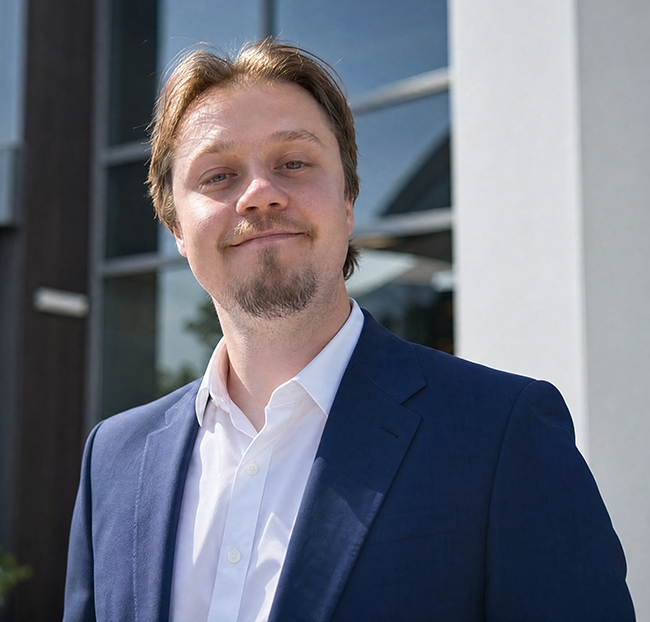
After completing a Lab Technician Apprenticeship, you chose to pursue a career in health and safety when you were still a teenager. What was it about the profession that appealed to you?
Health and safety was never the plan; I think if we're honest, it's nobody's childhood dream. I walked out of college at seventeen, halfway through the academic year, and ended up working in a warehouse. When an apprenticeship came up in the company laboratory, I applied and was successful. As part of the apprenticeship, I was enrolled on a Level 3 Diploma in Applied Science, which I completed in 2019.
The end of my apprenticeship coincided with my employer placing a greater focus on health and safety, so I was asked to take on health and safety responsibilities alongside my laboratory work. I suppose you could say that health and safety chose me rather than the other way around.
What kept me in the role was the opportunity it gave me to make a difference. I could influence how work was done and help develop the people doing it. Few roles offer such a broad opportunity to create positive change. Just three years after walking out of college, I found myself managing health and safety during a global pandemic.
Choosing to enter the health and safety profession at such an early age is unusual. How do you think the industry can encourage more young people to follow your lead?
I would focus more on the positives rather than fear and recognise that there are many routes into the profession that should be encouraged.
To elaborate on my first point, some health and safety practitioners try to drive compliance through scare tactics. However, if your experience of health and safety is limited to videos showing death and destruction, the perception of the profession can become one of doom and gloom, with practitioners seen as blockers rather than enablers. That's not the best advert for the profession. I'd prefer health and safety professionals to be seen as partners who help operational colleagues achieve what they need to do, but in a safe way. It's about problem-solving, collaboration, and making a difference, which appeal to many people entering the workforce today.
My second point is that many people enter the profession sideways, as I did through a technical apprenticeship for example. Give apprentices something real: the risk assessment nobody wants to do, a seat on the safety committee, or an investigation to sit in on. They're on the frontline, they see the problems firsthand, and they often have valuable insights to share. It was being given an opportunity like this that sparked my interest in the profession, far more than any careers talk ever could.
In 2021, you completed your first NEBOSH qualification, the National General Certificate. Can you tell us why you took this qualification and how it benefited you?
The reason I signed up was that health and safety had been added to my role, and I needed to know what I was doing.
The benefit was structure. I'd picked up plenty on the job, but it was all sitting in my head in no particular order. The NEBOSH General Certificate gave me something to hang it on, and the language to explain my reasoning to the people I was trying to influence, whether they were on the shop floor or in the boardroom.
That second part mattered more than I expected. Being able to set out why something needed doing, in terms that directors recognised, is what got it done.
You are now a dual NEBOSH Diploma holder, having completed the NEBOSH National Diploma in Occupational Health and Safety in 2023 and the National Diploma in Environmental Management in 2024, studying with NEBOSH Gold Learning Partner Delyn Safety UK:
- Why did you choose to take the two Diplomas? The scope of my role kept widening, and I wanted the depth of my knowledge to match it. Studying for the National Diploma in Occupational Health and Safety was about being able to hold my own on the technical side rather than defer on more complex issues. I subsequently chose to take the Environmental Diploma, because we were focusing on improving the organisation’s sustainability performance hard at the time, and I didn't want to be someone who could only contribute to one aspect of the wider agenda. By the end of my time with the organisation, I was leading QHSE across the group, with responsibility for continuous improvement also added to my remit during my final few months.
- How did you find studying at Diploma level? I found it challenging at first, as it was a significant step up from the Certificate. I had a great tutor which was vital, as the level of detail was completely different. Every topic had multiple layers to it. At Diploma level, you need to explore subjects in far greater depth and detail than is required at Certificate level. At the time, I was working as a QHSE Officer, and my employer gave me time off to attend the classes, which were delivered remotely via Teams. Everything else, including the homework and self-directed study, had to be done in my own time. I was extremely grateful for the support I received, as being given time off for the classes is what made achieving these qualifications possible alongside a full-time role. After completing the Occupational Health and Safety Diploma, I moved straight on to the Environmental Management Diploma, largely because I had built up momentum. I wanted to keep learning, and I knew that if I took a break, I would fall out of the habit of studying and find it much harder to get back into a routine and dedicate the necessary time to it again.
- How has achieving these qualifications helped you? - When I passed the National Diploma in Occupational Health and Safety, I secured a promotion from Officer to Manager. My role continued to expand as my knowledge and confidence grew, and I eventually became responsible for leading QHSE across the entire group. My longer-term ambition was to work for myself as a health and safety consultant and, in practical terms, achieving these two Diploma-level qualifications helped make that possible. When you're an individual consultant asking a manufacturing business to trust you with their compliance obligations, you need credibility before the conversation even begins. Holding two Diplomas helps give the required reassurance that you know what you are doing. Less obviously, they also gave me the confidence to challenge unnecessary measures. A significant amount of health and safety expenditure can be directed towards controls that appear effective but do little to reduce risk in practice. Having the technical knowledge to assess issues against recognised standards, enables me to advise clients not only on what they should be doing, but also on what they can stop doing. This allows resources to be focused on controls that genuinely improve health and safety performance.
Do you have any advice for other safety professionals that will help them balance work and study?
Two things made the difference for me. First, my employer gave me time off to attend the classes. Not everyone will have that opportunity, but it's always worth asking and making a strong business case rather than assuming the answer will be no.
The second was making use of the people around me. I would talk things through with my mentor and tutor rather than struggle in silence with something I hadn't fully understood. That probably saved me more time than any study technique.
Beyond that, be honest about where the hours will come from. Most of mine came from evenings and weekends. Achieving these qualifications requires a genuine investment of time and effort, and pretending otherwise is one of the main reasons why some people enrol but never finish. If you're prepared for that commitment from the outset, you're far more likely to succeed.
What has been the best thing you have learned through your NEBOSH studies?
That fear buys you about a week of compliance, and understanding buys you years.
After gaining 8 years' experience in the chemical distribution and manufacturing sector, you set up your own health and safety consultancy in November 2025. Can you share what motivated this decision and how it is going so far?
I'd always had the idea of building something of my own in the back of my mind. The owner of the business I worked for before setting up DBIM Limited ran it in a way that set a standard I still measure everything against. I wanted to take what I'd learned and use it to make a difference across multiple organisations rather than just one.
The businesses I can support most effectively are those that cannot justify employing a full-time safety manager. I take a very hands-on approach and offer far more than producing a folder that sits on a shelf, leaving the client no better equipped to manage health and safety. My aim is to help address immediate challenges while also strengthening the organisation's in-house capability for the future.
So far, my clients have ranged from small to large organisations and from low-risk to high-risk environments. Almost every one of them believed their health and safety arrangements were in good shape. However, once I started looking more closely, I found opportunities for improvement and helped close those gaps. To their credit, every client has been open to feedback and committed to becoming better.
The hardest part is getting in front of people. The consultancy market is highly competitive, with several large, established providers. What differentiates me is my personal, tailored approach. I am the person who delivers the service throughout, giving clients direct access to consistent support and expertise from start to finish.
When you look back on your career to date, is there a project or achievement that you are most proud of?
The culture change programme I worked on over a four-year period with my previous employer is the achievement I am most proud of. Our initial approach was what many organisations start with: documentation, training, and awareness campaigns. It worked well for the first year, but when the focus eased, the momentum was lost and things slipped back significantly. The business owner was disappointed because he understood the impact that genuine cultural change can have, so we regrouped and recognised that we needed a different approach.
We turned to behavioural safety and completed the Health and Safety Executive's behavioural safety course. Applying what we learned made a huge difference. We realised we needed to explain where the business was trying to get to and, just as importantly, why. We also had to help people understand what was in it for them. We established committees and improvement projects to tackle the issues people raised, and gradually gained real traction. Employees began bringing forward their own ideas and challenging unsafe behaviours themselves. People who had been involved in incidents were prepared to put their hands up and discuss what had happened because there was a culture of learning rather than blame.
The leadership team made safety strategy and standards a core part of the organisation's identity. By 2024, the business had achieved ISO 45001 certification and won Best Health and Safety in Manufacturing at the Safety and Health Excellence Awards. Incidents reduced year on year and, throughout my time leading health and safety, there was not a single insurance claim. Insurance premiums fell, and the insurer even provided bursaries to support site improvements because they could clearly see the positive impact our efforts were having on performance.
The same approach also transformed the company's sustainability performance, taking its EcoVadis rating from the lower half of assessed organisations worldwide to a Gold Medal and a position within the top five per cent globally.
However, the part I am proudest of is that, by the end, the system largely ran itself, which was exactly what it had been designed to do. That was always the goal.
What is the most common mistake you see businesses make with health and safety?
Buying paperwork instead of understanding is one of the biggest mistakes I see organisations make. Too often, health and safety works against them rather than for them: a folder nobody opens and an audit everybody dreads. Someone has sold them a system instead of helping them build one.
The test is simple. Take the person responsible for health and safety, remove the folder, and ask them what the three biggest risks in the business are and what is being done to control them. If they can answer, the paperwork is simply a record of something real. If they cannot, then the paperwork is all they have, and it will not help anyone on the day something goes wrong.
What qualities do you believe define a successful health and safety professional?
Curiosity, courage and loyalty. They're the three values I wrote down for DBIM before I had a single client, and they came from observing what actually works.
Curiosity: the drive to uncover what's really there. The answer is almost never exactly where the paperwork says it is.
Courage: the willingness to face reality and speak honestly about it. At some point, you'll have to tell someone in a senior position something they do not want to hear, and the role is of little value if you cannot.
Loyalty: the commitment to stay alongside the people affected by the changes you're asking them to make. You're asking people to work differently, and they'll only do that for someone they believe is on their side.
Find it, face it, see it through. Technical knowledge gets you in the door, but these are the qualities that make the difference.
How do you see the role of health and safety evolving?
A few things at once.
The first is that QHSE is far more integrated than many people realise. Quality provides the foundation for managing the other two disciplines effectively, and much of what sits beneath all three comes down to the same core principles: systems, behaviours, continual improvement, and accountability.
Second, businesses cannot continue to rely solely on the health and safety professional, whether that is an employee or a consultant. Safety needs to be embedded in the way the organisation operates. That is where the real evolution needs to happen, and it is the area I would push hardest. The most successful organisations are those where safety is owned by everyone, not delegated to one person.
Third, AI. I already see a growing reliance on it. It is a valuable tool that can support research, analysis, and administrative tasks, but it should never replace professional judgement, particularly when it comes to legal or health and safety advice. Ultimately, someone must take responsibility for the decision, and AI cannot do that.
What advice would you give someone who wants to build a career in the health and safety profession?
Get on the shop floor and stay there longer than feels comfortable. The people doing the work know where the risks are, and they'll tell you if they believe you're genuinely interested in understanding their challenges rather than simply auditing them. No qualification can teach you that.
Get properly qualified, because qualifications help you get taken seriously in rooms where you have you have no other standing.
Find people who are willing to develop you. My dad, my technical manager, the operations director I reported to, and the business owner all invested time in me, as did the health and safety consultant who mentored me. I would not be doing this today without any of them. Seek out that support and, when the opportunity comes, pay it back or forward!
And don't build a career on being the person who says no. It's the easiest version of the job and often the least useful. The real value comes from helping people find a safe way to achieve what they need to do.