
Building trust through safety: Saif Al-Shadfan's 20-year HSE journey
Case Study: Saif Al-Shadfan
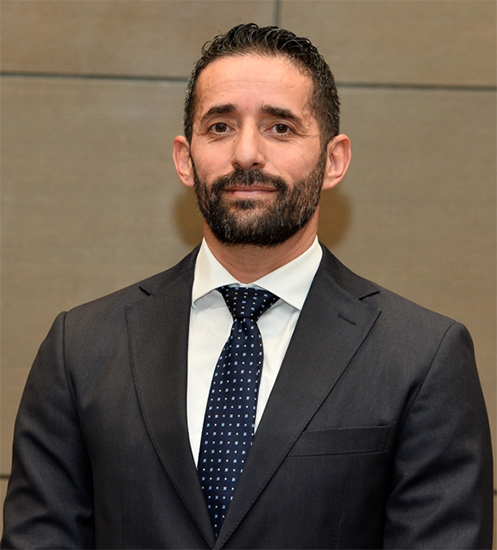
For more than 20 years, Saif Al-Shadfan has worked in high-hazard industries, helping organisations manage risk, strengthen safety culture, and achieve their objectives safely and sustainably. Having achieved four NEBOSH qualifications throughout his career, he shares how lifelong learning, effective leadership, and a commitment to supporting others have shaped his journey to becoming a Senior HSE Engineer.
When did you first decide to pursue a career in health and safety, and what sparked your interest?
I graduated with a degree in Chemical Engineering from Mu’tah University in Jordan. The subjects I studied provided a strong foundation in the technical aspects of health and safety and, shortly after graduation, I was offered a Junior HSE Engineer position with Consolidated Contractors International Company (CCC).
Accepting the role would mean relocating to a new country and adapting to a completely different environment. Joining a mega project also meant working alongside colleagues from diverse nationalities, which added to the challenge, as Arabic is my first language and at the time I had limited experience communicating in English.
After carefully considering these factors and the opportunities that a career in health and safety could offer, I decided to accept the role. What inspired me most was knowing that my work would help protect lives and preserve the environment. This aligned with my personal values and motivated me to build a long-term career in the HSE profession.
You passed your first NEBOSH qualification, the NEBOSH International General Certificate in Occupational Health and Safety, in 2012. Why did you choose it and how did achieving this qualification help your career?
When I joined CCC as a Junior HSE Engineer, I attended various HSE training programmes organised by both my employer and the client. These sessions inspired me to pursue a recognised qualification that would enhance my knowledge and strengthen my professional competence in the HSE field. At that time, there were only a few training centres in Qatar offering the NEBOSH International General Certificate (IGC). Together with a colleague, I enrolled on the programme and attended two classes per week, each lasting four hours. The training centre was in Doha, requiring an approximately one-hour journey from my accommodation camp for every session.
Pursuing the qualification required significant commitment and sacrifice, both in terms of time and financial investment. Looking back, every effort was worthwhile, and achieving the qualification proved to be one of the best decisions for my professional development. It not only expanded my technical knowledge but also increased my confidence, strengthened my motivation, and shaped my professional mindset. It marked the beginning of my commitment to continuous professional development and encouraged me to pursue further certifications and qualifications throughout my HSE career.
You have achieved three other NEBOSH qualifications since. Can you tell us why you did this and the benefits gained from studying these qualifications?
After having a positive experience with the NEBOSH International General Certificate, I was keen to pursue further NEBOSH qualifications. I strongly believe in their quality, practicality, and effectiveness, as well as the value of the associated learning materials. In my experience, NEBOSH study materials are well structured, easy to follow, and designed to help learners understand and apply health and safety principles effectively in the workplace.
I took the NEBOSH HSE Certificate in Process Safety Management to deepen my understanding of process safety principles and strengthen my knowledge of major accident hazards, risk management, and control measures within the oil and gas industry. Given the nature of the projects I was involved in, developing specialised understanding of process safety was essential for my professional growth and for supporting safe operations.
I also completed the NEBOSH HSE Certificate in Health and Safety Leadership Excellence and the NEBOSH HSE Introduction to Incident Investigation, studying both online during an extended holiday period. The flexibility of online learning enabled me to enhance my professional competencies while balancing my personal and work commitments. These courses strengthened my understanding of key HSE principles, enhanced my leadership capabilities, and improved my incident investigation skills.
All three qualifications provided valuable knowledge and practical tools that have contributed significantly to my professional development. By sharing knowledge, promoting best practice, and applying the concepts I gained through my studies, I have helped contribute to safer workplaces, improved operational performance, and a stronger safety culture.
In one sentence, what has been the best thing you have learned through your NEBOSH studies?
The most valuable lesson I learned is that effective health and safety management is not just about compliance, but about leading people, influencing behaviours, managing risks proactively, and creating a culture where safety is a shared value.
You have worked as a Senior HSE Engineer based in Qatar since 2024. Can you tell us about your leadership style and approach to health and safety?
My approach to health and safety is based on the belief that safety must be integrated into every aspect of planning, decision-making, and execution. My leadership style is collaborative, proactive, and people-focused. I strive to create an environment where employees and contractors feel empowered to identify hazards, raise concerns, and actively contribute to safety improvement initiatives.
I also view coaching and mentoring as important aspects of my role. I support the development of HSE personnel and operational teams by sharing knowledge, providing guidance, and encouraging continuous learning. My objective is not only to address immediate safety concerns but also to help people understand the reasons behind safety requirements, so that safe behaviours become embedded in everyday work practices.
Ultimately, my role as a Senior HSE Engineer is to support the organisation in achieving its business objectives safely and sustainably. I do this by providing expert HSE guidance, facilitating effective risk management, ensuring compliance with industry best practice, and fostering a culture where everyone understands and embraces their responsibility for health, safety, and environmental protection.
With over 20 years' experience in health and safety, what qualities do you believe define a successful health and safety professional?
As health and safety professionals, we should listen carefully, understand the challenges people face, and help solve problems in a way that allows work to be carried out safely and effectively. We should be partners to the business rather than its policers. To achieve this, we must combine technical expertise with strong communication, influencing, and leadership skills.
Throughout your career, what project or achievement are you most proud of, and why?
Looking back on more than two decades in the profession, I am most proud not of the projects I have delivered, but of the positive impact I have had on people, the relationships I have built, and the trust I have earned. In my view, these are the true measures of success for any health and safety professional.
The achievement that gives me the greatest sense of satisfaction is the professional reputation I have built throughout my career. I consider it a significant accomplishment that many colleagues, managers, and project teams have expressed a desire to work with me again. For me, this is one of the strongest indicators of professional success, reflecting the trust, respect, and credibility I have earned through consistently supporting people and helping organisations achieve their goals safely.
What advice would you give someone who wants to build a career in the health and safety profession?
Gain knowledge from recognised certified bodies, put it into practice, apply it consistently, and never stop learning, as our profession is constantly evolving.
You also need to be tenacious, which is why my personal motto is: "I don't hear the 't' in 'I can't', and I don't see the 'im' in 'impossible'."