
What it takes to lead safety on some of the world’s largest projects
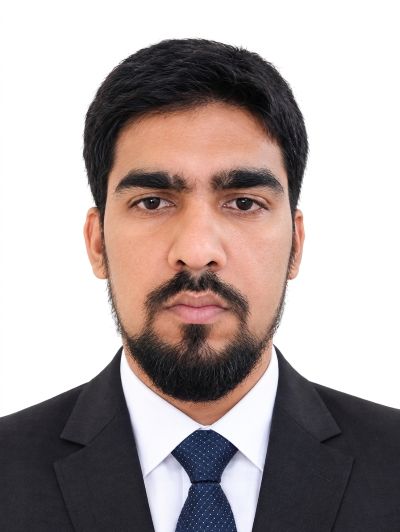
Case Study: Naseeb Haider
From his first role in an oil and gas refinery in Mumbai to overseeing health and safety on one of Saudi Arabia’s flagship stadium projects, Naseeb has built a career protecting people in high-hazard environments. In this case study, he shares how NEBOSH helped shape his journey, the lessons he has learned across three countries, and his advice for future safety leaders.
What first drew you to a career in health and safety, and how did you know it was the right path for you?
I started my career in health and safety as an HSE Officer at BPCL in Mumbai, stepping straight into the high-hazard environment of an oil and gas refinery. Working on the front lines exposed me to the reality of complex site risks and showed me early on that incidents are entirely preventable through structured risk management, technical discipline, and clear leadership.
I knew health and safety was the right path for me when I realised that behind every permit, risk assessment, and safety procedure is a worker with a family waiting for them at home. Watching every worker leave the site unharmed at the end of a shift gave me a deep sense of purpose—proving from day one that safeguarding human lives was not just a profession, but my true calling.
You completed the NEBOSH International General Certificate in 2016, and in 2025 you completed the NEBOSH Level 6 International Diploma for Occupational Health and Safety Management Professionals, for which you were named a Best Candidate. Congratulations, it’s quite an achievement! Please tell us:
Why did you choose to continue your learning journey by pursuing the diploma?
Thank you so much for the congratulations and kind words! After completing my NEBOSH International General Certificate in 2016, I spent nearly a decade gaining hands-on field experience across high-hazard mega-projects, including the Salalah LPG Project in Oman, the Duqm Refinery in Oman, and NEOM Oxagon Project in Saudi Arabia. I chose to pursue the NEBOSH International Diploma to support my transition from day-to-day site compliance to strategic safety leadership. I wanted to deepen my technical understanding of human factors, root-cause analysis, risk profiling and safety governance so I could design systems that eliminate hazards at the organisational level, rather than managing risks reactively in the field.
How have your NEBOSH qualifications benefited your career?
My NEBOSH qualifications provided me with a universally recognised framework to translate my experience into structured management systems. The NEBOSH International General Certificate built my core technical foundation, while the International Diploma gave me the confidence and authority to lead complex, high-hazard safety operations, such as LOTO governance, working at height, and critical lifting on major mega-projects like the Aramco Stadium Project in Saudi Arabia. Achieving the International Diploma also elevated my professional standing and being named a Best Candidate has enhanced this further.
What was the best thing you learned through your NEBOSH studies?
I have learned so many critical concepts from my NEBOSH Diploma—from visible safety leadership and handling psychosocial workplace hazards to high-level risk profiling and systemic root cause analysis. But my core takeaway is to prioritise proactive safety measures and ensure they are genuinely implemented on the ground, rather than stopping at paper compliance.
You have over 12 years of health and safety experience across construction, oil and gas and infrastructure sectors in Saudi Arabia, Oman and India. What advice would you give to ensure a successful transition between sectors and countries?
To successfully transition across different sectors and regions, I recommend focusing on:
- Hazard frameworks - Oil and gas environments prioritise process safety management, barrier controls, and strict static compliance. Construction and heavy infrastructure operate in dynamically changing environments where site conditions shift daily. Bridge this gap by bringing rigorous barrier thinking, Lockout/Tagout (LOTO) governance, and Permit-to-Work discipline from oil and gas into civil projects, while adapting execution speed to the dynamic nature of site work.
- Anchoring your practice in global standards whilst mastering client specifications - Use international frameworks like ISO 45001 and NEBOSH standards as the universal baseline across all jurisdictions. Rapidly master regional statutory requirements and major client standards (such as the Factories Act in India, Aramco Construction Safety Manuals or PDO specs in the Gulf). Operational credibility depends on knowing how global principles apply to specific local contractual requirements.
- Practicing culturally intelligent field leadership - Spend time in the field, engaging directly with the workforce will build operational trust faster than reviewing documentation behind a desk. Focus on closing the gap between work as prescribed and work as done. Effective transitions rely on clear visual communication, collaborative hazard hunts, and respectful workforce engagement rather than relying solely on paper compliance or rigid enforcement. Managing multi-national workforces, which are common in Asia and the Middle East, adds another layer of complexity because of the diverse backgrounds, language capabilities, and safety maturity levels this brings.
You’re currently a Freelance HSE Supervisor with Six Construct and Bawani JV at the Aramco Stadium Project in Saudi Arabia. Can you tell us a little bit about the company and what your role entails?
Six Construct brings decades of international engineering and complex infrastructure expertise across the Middle East, while Al Bawani is one of Saudi Arabia’s premier general contractors with an extensive regional footprint and capacity. Their joint venture was awarded the flagship Aramco Stadium project in Al Khobar/Dammam; spanning over 800,000 square meters, this state-of-the-art, 47,000-seat stadium is built to FIFA and AFC standards to host high-profile international events, including the 2027 AFC Asian Cup and the 2034 FIFA World Cup. Given its fast-track timeline, high structural complexity, and target for LEED Platinum certification, safety and environmental governance across the site is held to stringent client and international standards.
As HSE Supervisor, my core responsibility is driving field-level health, safety, and environmental compliance across high-risk, large-scale construction activities, ensuring that project execution strictly aligns with the Saudi statutory regulations, site HSE plan and SBJV’s ISO 45001 management framework.
In your opinion, what is the most rewarding part of being a health and safety professional?
The tangible human outcome: knowing that at the end of every high-risk shift, hundreds or thousands of workers return home safe to their families. In large-scale construction and heavy industry, safety is not an abstract concept—it is measured by the real lives protected through the barrier controls, LOTO systems, and daily risk management strategies implemented on the ground. What I find most rewarding is bridging the gap between theoretical standards and real-world execution. Solving complex site challenges—where you design a safe system of work for a high-risk lifting operation or deep excavation that is legally compliant, practically executable by site crews, and operationally efficient—proves that robust safety governance directly drives project quality and productivity.
What do you see as the biggest challenge facing health and safety professionals today?
The most pressing challenge is maintaining strict hazard barrier discipline in fast-paced, high-compression project environments. In modern mega-infrastructure and industrial developments, project timelines are aggressively fast-tracked, involving dozens of concurrent subcontractors and thousands of multi-cultural workers on active fronts. The challenge is ensuring that operational speed never compromises critical barrier governance—such as Permit-to-Work integrity, pre-task hazard assessments, and isolation protocols.
How do you see health and safety evolving in the future?
I see health and safety evolving from a reactive, paper-heavy compliance model into a predictive, data-driven discipline. With advancements in AI-driven hazard image analysis, wearable IoT sensors for fatigue and heat-stress tracking, and real-time site analytics, the industry is shifting from investigating failures after the fact to predicting and intercepting risks before they happen. However, technology is only an enabler—the real evolution is using these digital insights to help us make faster, smarter decisions. Health and safety continues to expand beyond enforcement to a more enterprise-level strategic imperative. Future safety leaders won't just focus on site compliance; they will act as executive business partners who prove that risk governance, workforce well-being, and operational excellence are inseparable drivers of organisational success.
What would your advice be to anyone at the start of their health and safety career?
My main recommendations would be:
- Get out on the ground and learn the operations: Safety cannot be managed effectively from an office chair. Spend your early years on the site floor or active work fronts, learning how work is executed. Talk to foremen, crane operators, electricians, and riggers. When you understand the operational pressure, technical constraints, and realities of 'Work-as-Done,' your safety guidance will be practically executable rather than just paper-compliant.
- Be an operational partner, not a 'safety cop': Build your reputation on problem-solving rather than rigid enforcement. Anyone can quote a rulebook or shut down a job; a true safety professional collaborates with site teams to find safe, efficient ways to complete high-risk tasks. Focus on coaching, open communication, and building trust so workers come to you with hazards before an incident occurs.
- Invest in continuous professional development: Treat education as an ongoing process. Build your credentials systematically—moving from foundational certifications to diploma-level qualifications and specialised knowledge—to stay ahead of evolving industry standards.
- Develop soft skills alongside technical competence: Technical qualifications get you in the door, but active listening, emotional intelligence, and cross-cultural communication are what allow you to influence safety behaviour across multi-national workforces.
- Maintain uncompromising personal integrity: In health and safety, your professional integrity is your most valuable asset. Never compromise on critical hazard barriers or sign off on unverified controls, because the ultimate measure of your success is ensuring every worker goes home safe at the end of every shift