
Remain curious, humble and willing to learn: Mirza’s health and safety leadership insights
Case Study: Mirza Md Adil Hussain
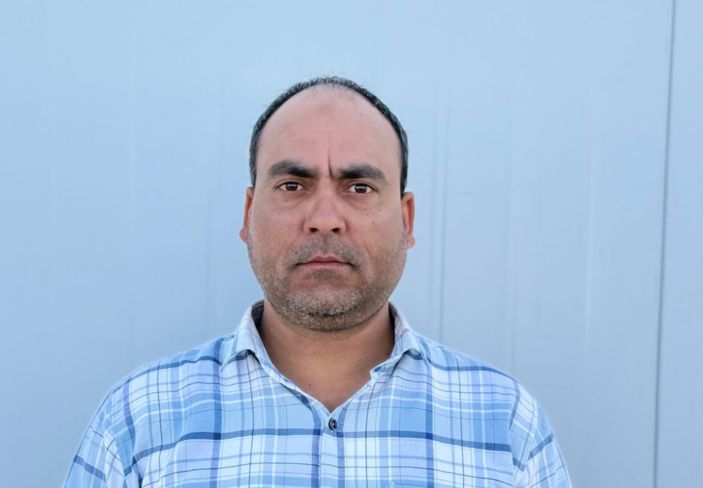
We spoke with Mirza Md Adil Hussain, an Assistant EHS Manager based in Uzbekistan, about the inspiration for building a career in health and safety and what continues to drive his commitment to positive change. Named a joint 2026 Best Candidate for Unit DI3 of the NEBOSH International Diploma, Mirza also shares his views on the qualities that make an effective health and safety leader.
When did you decide you wanted to work in health and safety, and how did you know it was the right career for you?
My interest in health and safety developed when I began working as a Safety Engineer in 2013 after completing my degree in Electrical and Electronics Engineering. As an engineer, I strongly believe that safety begins at the design stage and that many risks can be eliminated or significantly reduced through thoughtful design, proper risk assessment and effective risk management. I knew it was the right career for me when I realised how rewarding it was to prevent incidents, influence safe behaviour and help people return home safely every day.
You completed the NEBOSH International General Certificate in 2022 and were named a joint 2026 Best Candidate for Unit DI3 of the NEBOSH Level 6 International Diploma for Occupational Health and Safety Management Professionals. What first made you choose to pursue NEBOSH qualifications?
After gaining practical experience in manufacturing, construction and infrastructure projects, I wanted a globally recognised qualifications that would strengthen the technical knowledge behind my decisions. I chose NEBOSH because of its practical and risk-based approach to health and safety management. Completing the International General Certificate encouraged me to progress to the International Diploma, and receiving Best Candidate recognition made the achievement especially meaningful.
How have your NEBOSH qualifications influenced your career so far?
My NEBOSH qualifications have strengthened my technical knowledge, confidence and professional credibility. They have improved the way I conduct risk assessments, investigate incidents, interpret legal requirements and communicate safety recommendations to workers, contractors and senior management. They have also supported my progression into leadership roles on major metro, green-hydrogen, solar and battery-energy-storage projects across India, Saudi Arabia and Uzbekistan.
What was the best thing you learned through your NEBOSH studies?
The most valuable lesson was that the best safety control is to eliminate or reduce risk through effective design, planning and risk management before work begins.
You’re currently Assistant EHS Manager at Larsen & Toubro. Please tell us about the company and your role.
Larsen & Toubro is a leading engineering and construction organisation involved in major infrastructure, energy and technology projects internationally. I currently work as Assistant EHS Manager with Larsen & Toubro CIS FE LLC on the Sazagan Solar PV and BESS project in Samarkand, Uzbekistan, which includes solar power generation, battery energy storage and transmission-line activities. My role involves risk assessments, permit-to-work control, site inspections, training, contractor management, incident prevention, emergency preparedness and promoting a strong safety culture across the project.
Looking back on your career to date, what achievement are you most proud of?
I am most proud of progressing from a Safety Engineer in a manufacturing plant and heavy civil metro project to managing EHS responsibilities on major international infrastructure and renewable-energy projects. Completing the NEBOSH International Diploma with distinction and receiving Best Candidate recognition confirmed that my practical experience, continuous learning and commitment to protecting people were moving me in the right direction.
What is next for your professional development?
My next priority is to deepen my knowledge of renewable-energy safety, battery-energy-storage risks, process safety and digital EHS management. I also want to continue developing my leadership capabilities, work towards further internationally recognised professional status and mentor new safety professionals as they begin their careers.
What do you enjoy most about being a health and safety professional?
The most rewarding part of my profession is seeing people take genuine ownership of safety. When workers confidently report hazards, stop unsafe activities or recommend better controls without waiting to be instructed, it shows that safety has become part of the culture. I also enjoy working with people from different nationalities and technical backgrounds to find practical solutions to complex risks.
How do you see health and safety evolving in the future?
Health and safety will become increasingly proactive, predictive and integrated into project design. Technologies such as artificial intelligence, data analytics, drones, wearable devices and real-time monitoring will help organisations identify risks before incidents occur. However, technology must be supported by strong leadership, worker engagement and the principle of designing out hazards wherever reasonably practicable.
What would your advice be to anyone at the start of their health and safety career?
Build a strong technical foundation, but also spend time in the workplace understanding how tasks are performed. Listen to workers, ask questions and complete proper risk assessments before recommending controls. Remain curious, humble and willing to learn, because qualifications may open doors, but integrity, practical experience and the ability to positively influence people will define your success.