
From data analytics to environmental impact: How one Best Candidate is using data to drive sustainability
Case Study: Remya R S
As a technical trainer based in Saudi Arabia, 2026 NEBOSH International Diploma in Environmental Management Best Candidate Remya R S is focused on using data analysis to create a more sustainable future. In this interview she shares her career journey, proudest achievements, and ambitions to help organisations make more environmentally responsible decisions.
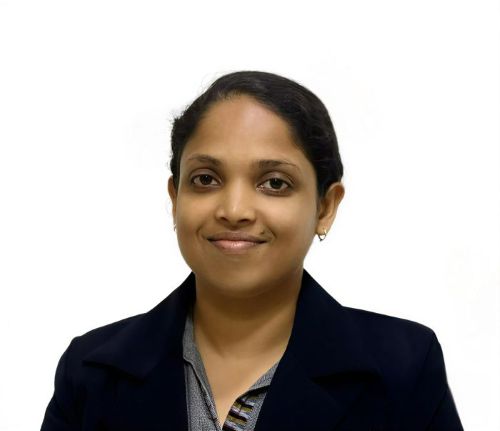
Please start by telling us about your career journey so far.
My career has been an exciting journey across the fields of education, data analytics, and, currently, environmental management. I started off as an Assistant Professor in Electronics and Communications Engineering, which made me fall in love with teaching and guiding students. Subsequently, I moved to data science and analytics and participated in many projects in renewable energy, procurement, business operations, and business intelligence practices, with the help of the software packages Power BI, Python, and SQL. Whilst working in the industry, I also continued to work as a trainer, guiding around 5,500 students and business professionals in data analytics and artificial intelligence.
With your background is in data science and analytics, what made you decide to pursue the NEBOSH International Diploma in Environmental Management, which you studied with NEBOSH Gold Learning Partner Ensign Safety Academy & Consultants?
While working on renewable energy and business analytics projects, I realised that organisations generate enormous amounts of environmental data, but the real challenge is transforming that data into meaningful actions that reduce environmental impact. I wanted to do more than merely analysing numbers; I wanted to learn about environmental management, sustainability, climate change, and environmental law. The NEBOSH International Diploma in Environmental Management offered me exactly that. In the future, it is my wish to merge my knowledge of environmental issues with experience in data analysis and artificial intelligence to assist companies in making reasonable decisions in favour of environmental protection and sustainable development.
You were named a 2026 Best Candidate for this qualification, which is an amazing achievement! How has completing the Diploma helped you professionally?
Receiving the Best Candidate award was both an honour and a responsibility. It helped boost my confidence in my abilities and recognise all my efforts throughout the course. Another significant aspect of this achievement is that it allowed me to have more comprehensive knowledge of environmental management systems, environmental risk assessment, sustainability, climate change, and legal compliance. My studies helped me adopt a more applied and organised manner of addressing environmental issues. Moreover, it motivated me to continue research in this field and contribute to it through training, consulting, and implementation of fact-based sustainability initiatives.
What was the best thing you learned through your NEBOSH studies?
I learned that protecting the environment requires informed decisions, systematic management, and the commitment to turn knowledge into meaningful action.
You mentioned that you have trained over 5,500 students as a technical trainer. What would you say is the most rewarding part of your work?
The most gratifying part is seeing the students develop confidence and accomplish their careers. Whether it is the first job, a career change, or discovery of the love for technology or sustainability, the fact that I contributed in one way or another makes me extremely delighted. Education, in my opinion, has a ripple effect; every learner has the potential to make a positive impact on society.
Looking back on your career to date, what achievement are you most proud of?
Receiving the NEBOSH Best Candidate award is one of my proudest achievements, but I am also happy with the contribution I have made as a teacher. Helping so many students to build flourishing careers has been extremely rewarding to me. I also take pride in using data analysis in the field of renewable energy and operational improvements. As a professional, using data analytics in renewable energy and efficiency development projects is something which I am very proud of because it has helped me make more effective decisions and achieve efficiency.
From your professional experience, give us an example of a challenge you faced that provided you with a real learning experience.
One challenge I encountered was the task of working with diverse datasets from different business departments that were presented in varied formats and with varying data quality. Prior to commencing any meaningful analysis, I had to first comprehend the company processes, verify the data, and collaborate with multiple stakeholders involved in the process of data collection. This experience showed me that technology alone is not enough for a solution to be successful—one must communicate, be patient, and understand what lies behind the data.
Can you tell us about your ambitions for the future?
I have an ambition to reach a position of being a prominent expert in environmental sustainability by applying data analytics and artificial intelligence to the field of environmental science. I would like to conduct research on tangible problems in the environment, especially climate change, resource-efficient management, and sustainable development. I want people and organisations to use my findings to make better and more reasonable decisions aimed at conserving the earth’s resources and contributing to the creation of a sustainable future.
What would your advice be to anyone at the start of their career, especially young women in STEM?
Do not let fear or self-doubt limit your abilities. Be curious, keep exploring, and be bold enough to do things that make you uncomfortable. Remember that the world of STEM is constantly changing, and continuously learning is one of your powers. Make sure to look for mentors, be inquisitive, and find enjoyment in your tasks. Most importantly, always make sure to take a position that reflects your values.