
From curiosity to commitment: Ikenna George Onuaguluchi's “Safety Odyssey”
Case Study: Ikenna George Onuaguluchi
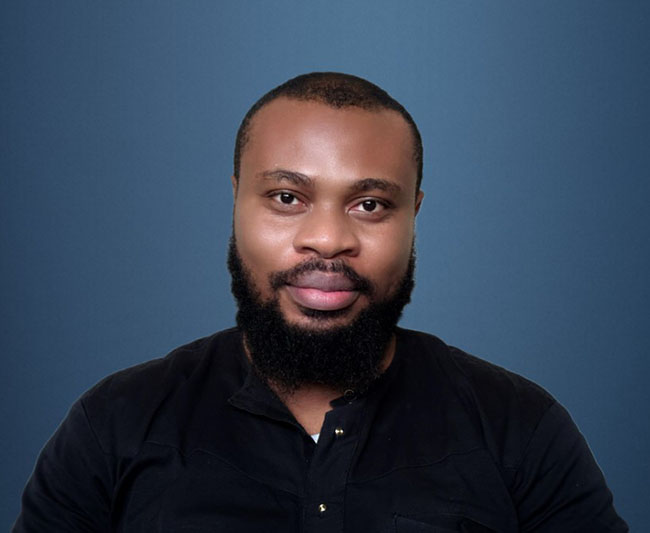
Having started his health and safety journey after reflecting on the devastating impact of a workplace accident, Ikenna George Onuaguluchi has built a successful international career across Nigeria, Angola, and the Middle East. Working in offshore and refinery environments, he combines technical expertise with a people-centred approach to safety, helping organisations manage risk in some of the world's most demanding operating conditions. In this interview NEBOSH Diploma holder, Ikenna shares the lessons he has learned about leadership, culture, risk management, and his thoughts on the future of the profession.
What sparked your interest in health and safety and how did you get started?
I never set out to work in health and safety. For me, the catalyst was hearing that a friend's brother had suffered life-altering injuries in a workplace accident. I couldn't stop thinking about him and the incident that caused his injuries. Why did it happen? Could anything have been done to prevent it? How many other people are affected by similar incidents each day?
Those questions stayed with me, and I felt compelled to do something that would make a difference. After researching my options, I decided that studying the NEBOSH International General Certificate would give me the knowledge I needed to help drive change.
After achieving the qualification, I wanted to put what I had learned into practice. In 2013, I attended a gathering of safety professionals in Nigeria, where I am originally from. At the end of the session, I approached the facilitator and explained that, as a newly qualified HSE professional, I was looking for an opportunity to apply what I had studied. He took a chance on me and offered me a placement on a construction site building storage infrastructure for the oil and gas sector. That was the beginning of what I now think of as my safety odyssey.
Why did you choose the NEBOSH International General Certificate in Occupational Health and Safety specifically?
I chose the NEBOSH International General Certificate because of its structure. It provides a strong grounding in the essentials of hazard identification, risk assessment, policies, and legislation, while also helping you understand the purpose and value of health and safety. That combination mattered to me, as did the qualification's recognition both locally and internationally.
Holding this qualification helped me get my foot in the door and gave me the credibility to be taken seriously as a new entrant to the profession. I still remember that one of the very first questions I was asked was whether I held the NEBOSH International General Certificate. Employers value the qualification because it provides a solid foundation of knowledge to build on. When I started my first role, I already understood key health and safety principles and what to expect when dealing with everyday topics such as hazard identification and risk assessment.
Much of your experience since you entered the profession in 2013 has been gained in offshore deepwater operations and refinery environments. What makes health and safety management in these high-hazard settings both challenging and rewarding?
What makes health and safety management challenging in high-hazard environments is the scale of what is at stake, both in terms of the human, financial, and legal consequences and the way hazards rarely occur in isolation. In offshore and refinery environments, energy sources, simultaneous operations, and process risks interact with one another, meaning a single oversight can escalate in ways that are not always obvious at first glance. Managing all of this demands constant vigilance and the discipline to think several steps ahead.
What makes it rewarding is the people. High-hazard work brings together crews, contractors, engineers, and managers from a wide range of backgrounds. Getting them to work safely is not about issuing instructions; it is about earning trust and influencing behaviour so that controls remain effective when it matters most. Knowing that people go home safely to their families, and that they come to recognise the value of health and safety in their own lives, is what makes it all worthwhile.
In 2024, you completed the NEBOSH HSE Certificate in Process Safety Management. What value did this qualification add to your work in high-hazard industries?
The NEBOSH HSE Process Safety Management Certificate changed how I engage with the technical side of the plant. It gave me a deeper understanding of how process safety and occupational safety are interconnected, which enabled me to work much more effectively with process and process safety engineers. I could follow their reasoning and contribute to discussions, rather than remaining within my own area of expertise.
The link between process safety and occupational safety is, ultimately, people. There will always be people interacting with the process and exposed to its risks through both routine and non-routine work. Process safety keeps hazards contained within the system, while occupational safety protects the people who work on or around that system.
A practical example was a management of change involving the replacement of a spool piece. My role was to ensure the correct isolations were in place to protect those carrying out the work. Achieving this through the proper application of a lock-out/tag-out/try-out (LOTOTO) system is exactly where process understanding and occupational safety come together. The PSM qualification helped me recognise that intersection more clearly, which is where much of the real risk in a live oil and gas facility exists.
In 2025, you completed the NEBOSH Level 6 International Diploma for Occupational Health and Safety Management Professionals. Why did you choose to study this qualification, and how has it benefited you professionally?
I took the qualification to support my continued career development and my aspiration to pivot from focusing primarily on compliance towards governance and strategy. I want to become a safety leader who is strategic, adaptable, and able to influence through effective governance. The NEBOSH Diploma gave me real insight into how to achieve this, particularly through its focus on leadership styles and the importance of aligning HSE objectives with wider business goals. It has also reinforced my confidence to continue building an international career because a NEBOSH qualification travels well; it carries the same value and recognition with employers wherever I go.
What was the most valuable lesson or insight you gained through your NEBOSH studies?
A key lesson I have learned through NEBOSH is that a safety professional's real product is not paperwork; it is moving people and organisations from compliance to commitment. This is achieved through the decisions that shape how people think and what happens in the field. Procedures, permits to work, and risk assessments are most effective when they change behaviour at the worksite, not because someone is enforcing them, but because people understand the reasons behind them and why they must be followed.
My NEBOSH studies immersed me in standards, regulations, and approved codes of practice, and that grounding enables me to anchor my advice and decisions in evidence. As a result, workplace conversations are about facts rather than personalities. More than once, this approach has helped protect both workers and the organisation.
Can you tell us about your current work?
I work as a health and safety professional in the oil and gas industry, in a large, high-hazard operating environment. My role is a blend of field-based and office activities. Day to day, I verify and validate compliance with procedures and assess the effectiveness of control measures for hazardous activities. I also make interventions when what is happening on the ground does not align with what has been authorised.
A large part of my role involves identifying and closing gaps while driving continual improvement through inspections, audits, risk assessments, and incident investigations. Alongside this, I develop tools and lead campaigns that strengthen the management of recurring risks and improve how frontline safety observations are captured, reported, and acted upon.
What do you consider to be the biggest challenges currently facing health and safety professionals today?
One growing challenge is the misuse of artificial intelligence (AI) in the production of safety documentation. I am seeing procedures and plans generated using AI that do not adequately address the real hazards and conditions of the workplace or project they are intended for. When a procedure is written without proper consultation and participation from the people it is designed to support, it fails to reflect the realities on the ground. This can make compliance requirements unrealistic, place unnecessary strain on the workers expected to follow them, and cause delays to the work. AI is a powerful tool, but it cannot replace expertise or the value of meaningful consultation with the workforce that carries out the job.
The second challenge is ensuring that risks are assessed and quantified accurately. Too often the risk of an activity is not adequately quantified, and when it isn’t, high-consequence hazards get downgraded to low residual risk on the strength of administrative controls alone. We sometimes forget that genuinely influencing both the likelihood and consequence of an event takes a combination of independent engineering controls and effective administrative ones, not administrative controls carrying the weight by themselves.
Having worked across different countries and cultures, what have you learned about building a positive safety culture in diverse workplaces?
Having worked in Nigeria, Angola, and the Middle East, the biggest thing I've learned is that no matter where workers are from, they respond positively to being listened to and treated with respect. When you respect people and genuinely listen to them, you begin to build a safety culture that belongs to the people you work with, rather than one that is imposed on them.
Language, hierarchy, and attitudes towards authority may vary from one country to another, but the positive response people have to being respected and listened to is universal. These qualities make a real difference to safety because workers who feel respected and heard are more likely to speak up before something goes wrong rather than remain silent.
What qualities do you believe are most important for success in the health and safety profession?
Technical competence comes first. Understanding how standards, regulations, and procedures apply to a particular workplace or scope of work is what builds credibility and earns people's trust in your judgement.
Resilience matters too, because there will be times when you are the only person in the room arguing that a risk has been understated, and the pressure to let it go can be significant.
Equally important is the ability to disagree without making enemies, which comes down to emotional intelligence. Most of my successes have come from holding a position firmly while keeping relationships intact, so that the same team is willing to involve me the next time a challenge arises.
To be successful in health and safety, you need both technical expertise and strong interpersonal skills. Knowing the standards means little if you cannot bring people with you.
What do you enjoy most about your chosen career?
Three things. On site, it's the moment prevention works, and something that could have gone wrong didn't because the controls identified in the job hazard analysis were effective. It quite often goes unnoticed, but it's what makes the day worthwhile.
Second, the problem-solving. I enjoy working with people from different specialities to think through the technical challenges involved in managing simultaneous operations, projects, and change. Getting those decisions right takes a mix of perspectives, and I find the collaborative process genuinely satisfying.
Away from the day job, it's sharing what I've learned with friends, colleagues, and those who aspire to make health and safety their career through the content I create on LinkedIn as "George the Safety Guy". I remember being new to the profession and benefiting from people who supported me and gave me a chance. Now that I am in a position to give back, I relish the opportunity to do so. Sharing knowledge sharpens my own understanding; I find that having to explain why something matters helps me understand it more fully.
How do you see the profession evolving over the next decade?
As organisations increasingly adopt customised AI agents to support their processes, the value of a safety professional will lie in having a strong grasp of the fundamental principles of health and safety. That is what enables you to contribute meaningfully, ensuring AI agents are shaped around the real needs of the organisation so that they help make the safety management system more efficient and effective rather than less.
Just as important will be soft skills, particularly communication and leadership. The way we drive commitment and compliance will need to evolve because the next generation brings a different perspective on the workplace and different expectations of how their health and safety is managed. Understanding these expectations, and leading people effectively, is where communication and leadership really come into their own. The professionals who adapt to that change will be the ones who thrive.
If you could give your younger self one piece of career advice, what would it be?
Trust your path in health and safety. You may face delays in securing your first role and encounter resistance when you try to introduce change, but do not fold under pressure. Stay courageous and persistent, and sooner than you expect, the path you have chosen will start to reward you.
And do not wait until you feel ready to speak up. Sometimes, your role is to be the uncomfortable voice in the room, and that only becomes easier the sooner you start. Qualifications matter, but the courage to apply what you learned through your NEBOSH studies matters just as much.