
Driving safer workplaces through learning, technology and leadership
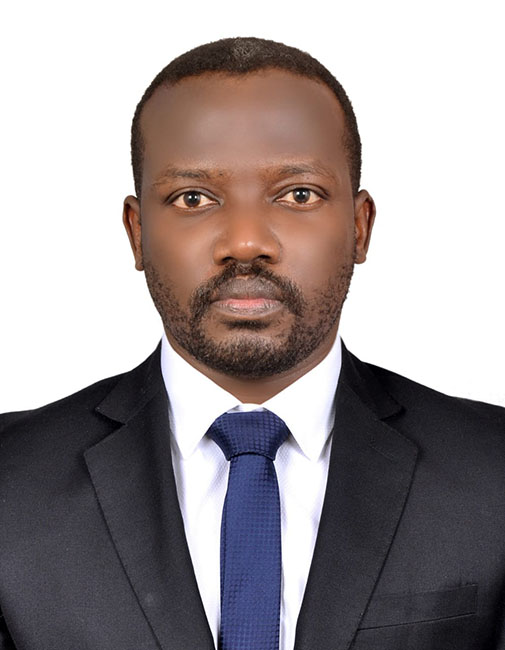
Case Study: Mohamed Fadul Mohamed
After beginning his career in geology, Mohamed Fadul Mohamed discovered a passion for helping organisations manage risk and protect their people. Now an HSE Manager in Saudi Arabia, he combines scientific expertise, professional qualifications, and innovative thinking to improve safety performance. In this case study, he reflects on his NEBOSH learning journey, the value of continuous professional development, and his ambition to transform safety training through virtual reality technology.
What first led you to pursue a career in occupational health and safety?
My academic background is in geology. I hold a Bachelor's degree in Petroleum Geology and a Master's degree in Geology with a specialisation in Geophysics (Petroleum Exploration). My studies provided a strong technical and analytical foundation, particularly in understanding natural hazards, field environments, risk, data analysis, and systematic problem-solving.
My transition into occupational health and safety happened gradually through exposure to field-based work environments. I became increasingly interested in the risks associated with workplace activities and, most importantly, how they could be anticipated, assessed, and controlled before resulting in injuries or incidents. What attracted me to health and safety was the direct human impact of the profession. Working in HSE provides an opportunity to use technical knowledge to protect people, improve working conditions, and influence how organisations manage risk. Combining my scientific background with professional safety and environmental knowledge has enabled me to build a rewarding career in HSE, where I can contribute to protecting people, improving workplace performance, and supporting sustainable business.
You achieved the NEBOSH International General Certificate in Occupational Health and Safety in 2023.
- Why did you choose this qualification? - I wanted an internationally recognised qualification that would provide a structured understanding of occupational health and safety to complement my practical experience. The NEBOSH International General Certificate offered exactly that, covering the principles behind risk assessment, incident prevention, and effective safety management systems. It was an important step in my development as an HSE professional.
- What knowledge or skills did you gain from studying it? - The qualification strengthened my understanding of risk management, hazard identification, risk assessment, the hierarchy of controls, and incident investigation. Most importantly, it taught me to look beyond immediate unsafe acts or conditions and identify their underlying causes. My focus shifted from seeking to understand what had happened to why, which is essential for preventing similar incidents from recurring.
- How did it support your career development? - By strengthening my understanding of internationally recognised HSE principles and increasing my confidence in explaining and applying them, my NEBOSH studies improved my effectiveness as an HSE Officer. The qualification also supported my progression into HSE Manager roles by developing a more systematic approach to risk prevention and reinforcing my commitment to continuous improvement. Completing the NEBOSH International General Certificate also motivated me to pursue further professional qualifications.
In 2025 you completed the NEBOSH Environmental Management Certificate. What made you decide to broaden your expertise and how has this qualification benefited you?
As my HSE responsibilities increased, I realised that safety and environmental management are closely connected, particularly in construction and infrastructure projects. My background in geology also made environmental issues a natural area for further professional development.
The NEBOSH Environmental Management Certificate strengthened my understanding of environmental impacts, pollution prevention, waste management, and environmental management systems. It has enabled me to take a more holistic approach to HSE, ensuring that both worker safety and environmental considerations are integrated into decision-making and risk management.
What was the most valuable thing you learned through your NEBOSH studies?
I would say that the most valuable lesson was understanding that effective health and safety management is proactive rather than reactive. Incidents are often symptoms of deeper issues related to planning, supervision, communication, or risk management. Identifying and addressing those root causes is essential for preventing recurrence.
My NEBOSH studies also reinforced the importance of building a positive safety culture, where everyone has a role to play in managing risk. Ultimately, the purpose of every HSE measure is to protect people and ensure they return home safely at the end of the day.
How has continuous professional development helped you build your career?
Continuous professional development has been essential to my career. Alongside my NEBOSH qualifications, I became a qualified ISO 9001, ISO 14001, and ISO 45001 Lead Auditor which broadened my understanding of integrated management systems, auditing, risk management, and continual improvement. This has helped me look beyond individual observations and identify wider system weaknesses and opportunities for improvement.
My goal in continuing to invest in my professional development is not simply to collect certificates, but to gain practical knowledge that enables me to make better decisions, lead teams more effectively, and create safer, more responsible workplaces.
What is next for you in terms of your professional development?
I am currently working towards the NEBOSH Level 6 International Diploma for Occupational Health and Safety Management Professionals and plan to sit the DI2 assessment in November 2026. I also aim to further develop my expertise in process safety and incident investigation.
In the longer term, I intend to pursue advanced environmental qualifications and postgraduate studies related to HSE. As my career progresses, I will continue to combine professional experience, academic knowledge, and emerging technologies to help create safer, healthier, and more sustainable workplaces.
You work as an HSE Manager for Zaid Alhussain & Brothers Group in Saudi Arabia. Can you tell us about:
- The organisation and projects you support - I work for Zaid Alhussain & Brothers Group, a company that manages, designs, implements, operates, and maintains large-scale projects across Saudi Arabia. The organisation strives to make a positive impact on the Kingdom's environment and the wellbeing of its communities by adhering to the highest professional standards and delivering high-quality products and services. I support major landscaping, infrastructure, and development projects, including initiatives associated with the Royal Commission for Riyadh City and the Green Riyadh programme.
- Your role and key responsibilities - I joined the organisation as an HSE Lead before progressing to an HSE Manager position. My role is to provide HSE leadership and ensure that health, safety, and environmental requirements are effectively integrated into day-to-day project operations. My responsibilities include implementing HSE plans and procedures, reviewing risk assessments and method statements, conducting inspections and audits, monitoring high-risk activities, and ensuring compliance with HSE requirements. I also lead the HSE team and liaise with management, engineers, subcontractors, consultants, and clients. A key part of my role is developing a positive safety culture through worker engagement, effective training, learning from incidents, and continuous improvement, helping to ensure that everyone goes home safe at the end of the day.
You are currently developing a Virtual Reality (VR) safety training concept. What inspired this idea, and how do you think technologies such as VR could improve health and safety training in the future?
The idea came about from a practical challenge I was facing. When workforces are diverse, with different educational backgrounds, literacy levels, first languages, and levels of experience, it can be difficult to ensure that everyone leaves an in-person training session with a comprehensive understanding of the hazards and controls in place. Not everyone feels comfortable speaking up or asking questions in a group environment.
I was keen to explore a more visual, practical, and interactive approach to overcome these challenges. My concept is to place workers inside realistic VR simulations of their work environment, allowing them to recognise hazards, make decisions, and experience workplace scenarios without being exposed to the real-world consequences of mistakes.
To reduce language barriers and ensure that safety information is clearly understood by all, the VR training and associated assessments will be available in five languages.
I believe VR has significant potential to transform safety training by making it more immersive and engaging. It could help organisations standardise training across multilingual workforces, improve worker engagement, and provide measurable insights into learning outcomes.
Technology should not replace HSE professionals or practical workplace training, but it can be a powerful tool for enhancing learning and preparing workers for the risks they may encounter in a controlled and safe environment.
What achievement in your health and safety career are you most proud of, and why?
I am proud that my understanding of HSE has developed beyond qualifications and job titles. I see HSE as not only a professional responsibility, but also as an opportunity to solve real workplace problems, drive innovation, and protect people from harm.
My VR safety training project illustrates this perfectly as through this innovation I aim to make learning more accessible, engaging, and understandable for all workers, regardless of their language or educational background.
Ultimately, I believe success in HSE is measured by the practical impact we make in protecting people, preventing harm, and helping everyone return home safely.
How do you see the health and safety profession evolving over the next decade, and what opportunities do you think this will create for future practitioners?
I believe the HSE profession will become increasingly proactive, technology-driven, and closely connected with sustainability. Technologies such as AI, VR, wearable devices, smart sensors, and real-time monitoring will help organisations identify hazards earlier, enhance training, and make better risk-based decisions. HSE professionals will be key to realising the benefits these technologies offer, with the ability to interpret and act on data becoming an increasingly important skill. However, the growing use of technology will not diminish the need for HSE professionals to lead, communicate effectively, and engage workers. These skills will remain essential for creating safer, healthier, and more sustainable workplaces.
What advice would you give to someone looking to build a similar career to your own?
To succeed as an HSE professional requires a combination of knowledge, experience, and personal qualities. Achieving relevant HSE qualifications is important, but so too are curiosity, practical experience, effective communication skills, and a commitment to continuous learning, as there is always something new to learn in our profession.
I recommend building a strong understanding of risk management and learning from workers and real workplace situations. Do not assume there is only one pathway into health and safety. My own transition from geology to HSE demonstrates that having a different background can be an advantage, as it allows you to bring valuable alternative perspectives to the profession.
Most importantly, focus not only on what the profession can give you, but also on what you can contribute to it. Use your knowledge and experience to solve real problems, make workplaces safer, and protect people from harm.