
Building safer operations in high-hazard environments
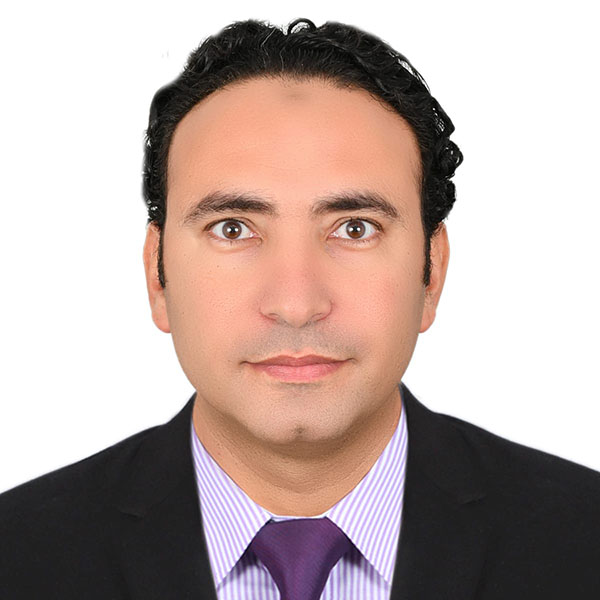
Case Study: Mohamed Reda
With more than 15 years' experience in onshore and offshore drilling operations, Mohamed Reda has dedicated his career to protecting people in some of the world's most challenging working environments. In this interview, he reflects on how NEBOSH qualifications helped shape his career, the realities of managing health and safety on drilling rigs, and why leadership, culture and continuous learning are critical to success in the profession.
When did you first decide to pursue a career in health and safety, and what sparked your interest in the profession?
I entered the energy sector as a field crew member on oil and gas drilling rigs. Working in demanding onshore desert environments and participating in complex drilling operations gave me a deep appreciation of the hazards associated with high-risk industries and the importance of effective health and safety management. Those early experiences inspired me to pursue a career in HSE, where I felt I could make a meaningful contribution to protecting people and supporting safer, more efficient operations.
Over the years, I have worked across onshore rigs, offshore jack-up units and international assignments. Throughout my career, I have focused on identifying operational gaps, driving continuous improvement and cultivating a proactive safety culture, with workforce involvement at the heart of every HSE initiative.
You achieved the NEBOSH International General Certificate in Occupational Health and Safety, in 2016.
- Why did you choose this qualification?
After gaining field experience, I chose to pursue the NEBOSH International General Certificate to ensure my approach aligned with internationally recognised best practice in health and safety management. I was delighted to achieve a Distinction. My goal was not simply to gain a qualification. I wanted to deepen my understanding of the fundamental principles of health and safety, better understand the rationale behind policies and procedures, and bridge the gap between recognised best practice and the realities of working on drilling rigs. The qualification helped me combine practical experience with a stronger technical foundation, giving me greater confidence in supporting safe and effective operations.
- How did achieving this qualification help your career development?
I immediately applied the knowledge and insights I gained through my studies in the workplace. The practical assessments allowed me to reflect on real operational challenges in my work environment, and I continued to apply those lessons in my day-to-day activities.
This helped me drive meaningful improvements, and on two occasions the worksites where I was based achieved the highest performance rankings, being recognised as Rig of the Year. These achievements are particularly significant to me because the operators and clients involved place a strong emphasis on workforce welfare and maintaining high standards of health, safety and environmental performance.
In addition, the qualification helped open the door to international opportunities. It enabled me to work on high-profile projects, including the pre-commissioning of new drilling rigs in the Gulf region for leading clients with outstanding safety records.
In 2025 you completed the NEBOSH Level 6 International Diploma for Occupational Health and Safety Management Professionals. Why did you choose to study this qualification and how has it has benefited you?
Driven by a desire to influence safety at a strategic level, I enrolled on the NEBOSH Level 6 International Diploma. Achieving the qualification was a major career milestone. It strengthened my leadership and management capabilities, enhanced my understanding of risk governance and gave me the confidence to bridge the gap between frontline operations and executive decision-making.
Many organisations measure safety performance through dashboards, incident statistics and other lagging indicators. While these metrics are important, effective safety leadership requires you to look beyond the numbers to identify emerging risks and weaknesses in operational controls.
Leaders need to ask critical questions: Are employees bypassing procedures because they are impractical? Are known hazards being accepted as normal? Are corrective actions addressing root causes or simply improving performance metrics?
The NEBOSH Diploma reinforced the importance of taking a proactive approach to risk management. Rather than focusing solely on past incidents and headline statistics, high-performing organisations seek to identify and address hidden risks before they result in harm.
What was most valuable thing you learned through your NEBOSH studies?
The most valuable lesson I gained from my NEBOSH studies was understanding what it takes to build and sustain a strong health, safety and environmental (HSE) culture. Throughout my career, I have found that operational excellence depends on three key principles:
- HSE is a continuous process, not a static system. Every day brings opportunities to learn, adapt and improve. Continuous improvement is essential, whether in high-risk drilling operations or everyday activities.
- Professional judgement must be supported by recognised standards and best practice. Experience is invaluable, but relying solely on personal knowledge is not enough. Regularly referring to established guidance helps ensure consistency, rigour and informed decision-making.
- People must remain at the centre of safety. Engaged, well-trained workers are the foundation of a strong safety culture. Maintaining high levels of awareness and involvement helps ensure that safety procedures are followed proactively, both during routine work and critical operations. Our crews are our most valuable asset, which is why we invest heavily in training and development to give them the knowledge and confidence to make safe decisions.
Ultimately, I believe safety cannot be switched on and off with a shift pattern. It must be embedded in an organisation's culture and in the mindset of every individual. I encourage my teams to apply the same principles outside work because when hazard awareness becomes second nature, people return to the workplace as stronger advocates for safety.
You have worked in offshore and onshore drilling for over 15 years. How does this challenging environment add to the complexity of managing health and safety?
Drilling is inherently high risk, often combining remote locations, complex operations and demanding working conditions.
One of the biggest challenges is isolation and emergency preparedness. Drilling operations frequently take place in remote locations where external support may be limited. This means every crew member must understand their role in an emergency, and must be regularly tested to maintain readiness.
Environmental conditions also add significant complexity. Onshore operations can involve extreme heat, dust and severe weather, while offshore crews contend with high winds, humidity and constant vessel motion. These factors can increase the likelihood of incidents such as slips, trips and dropped objects, even during routine tasks.
Another critical challenge is the management of simultaneous operations (SIMOPS). Multiple high-risk activities often take place at the same time and in close proximity. Effective coordination, dynamic risk assessment and robust permit-to-work systems are essential to prevent conflicting activities from creating process safety risks.
Perhaps the most important factor is managing the physical and psychological demands of the job. Drilling rigs operate around the clock, with personnel often working 12-hour shifts for several weeks at a time while living within an active worksite. Fatigue management, workforce wellbeing and human performance are therefore just as important as maintaining the integrity of equipment and systems.
These conditions reinforce the importance of strong process safety management, major accident hazard prevention and the importance of involving crew in all aspects of HSE. In drilling operations, success depends on managing both technical and human risks with equal diligence.
You are currently employed as a Drilling Safety Engineer. Can you tell us what your role and its key responsibilities.
As a Drilling Safety Engineer, my primary responsibility is to protect the health, safety and wellbeing of everyone working on site. A drilling rig is a complex environment involving not only drilling crews, but also catering teams, maintenance personnel and specialist contractors, all working together to support operational objectives.
As a member of the rig's senior leadership team, I help bridge the gap between field operations and corporate safety strategy. My role involves ensuring compliance with HSE requirements, supporting safe and efficient operations, and promoting a strong safety culture across both onshore and offshore drilling environments.
Key responsibilities include conducting rig pre-commissioning and acceptance inspections, delivering HSE and process safety training, supporting 24/7 operational activities, managing critical safety processes such as permit-to-work, SIMOPS, Management of Change (MOC) and emergency response planning, and leading incident and near-miss investigations using structured root cause analysis techniques.
At its core and heart my role is about create an environment where people can work safely, risks are managed effectively and operational excellence is achieved without compromising safety.
With over 15 years' experience in the profession, what qualities do you believe health and safety professionals need to succeed?
My experience has been gained in high-hazard onshore and offshore drilling environments, where technical HSE knowledge is only the starting point. True success depends on leadership, credibility, active listening and the ability to influence others. In my experience, three qualities are particularly important:
- Empathy and human-centred communication: Many incidents have human factors at their core. Safety professionals must look beyond physical hazards and understand the pressures people face, including long shifts, remote locations, separation from family and the demands of working in high-risk environments. By combining empathy with behavioural safety principles, we can better support workforce wellbeing, engagement and performance.
- Problem-solving and adaptability: Planning is critical in drilling operations, but conditions can change rapidly due to factors such as severe weather or operational challenges. Safety professionals need to assess changing risks in real time and adapt plans without compromising safety or operational efficiency.
- Visible leadership and active listening: Credibility is built by being out in the field, involved in operations. Actively listening to the workforce helps safety professionals understand operational realities, build trust and strengthen the connection between management and frontline teams. This is essential for creating an open and sustainable safety culture.
While technical competence is important, it is the ability to understand people, respond to changing circumstances and lead by example that enables safety professionals to make a lasting impact.
What do you enjoy most about your chosen career in health and safety?
After more than 15 years working in high-hazard onshore and offshore environments, there are three aspects of health and safety that I find most rewarding.
- The opportunity to protect people. Knowing that the controls, safeguards and safety measures we put in place can prevent life-changing injuries and major incidents gives the role real purpose and meaning.
- The challenge of solving complex operational problems safely. Drilling operations are dynamic, technically demanding and high risk. I find it rewarding to work with crews to bridge the gap between written procedures and real-world operations, identifying practical solutions that maintain both safety and efficiency.
- The opportunity to build a strong safety culture. The greatest impact comes when safety becomes more than a set of procedures and is embraced as a shared value. Earning the trust of the workforce, encouraging people to use their Stop Work Authority when necessary, and seeing teams actively look out for one another creates a safer and more resilient workplace.
For me, the most satisfying part of the profession is helping to create an environment where people feel empowered to work safely, speak up and take responsibility for one another's wellbeing.
How do you see the health and safety profession evolving over the next few years, and what opportunities and challenges do you think this will create for practitioners?
We have made significant progress in managing risk through engineering controls, barrier management and the hierarchy of controls. However, incidents and injuries still occur, particularly in high-hazard industries such as oil and gas drilling. Reducing these risks requires a collective effort across the workforce and the effective use of new technologies to move safety management from reactive compliance to proactive prevention.
For safety professionals, this represents an important shift. Our role is no longer just to monitor performance and respond to incidents. We must help identify emerging risks, influence behaviours and drive continuous improvement before something goes wrong. Artificial intelligence (AI) has the potential to support this approach. AI-powered systems can monitor high-risk activities, identify unsafe conditions and highlight potential gaps in safety performance. For example, AI-enabled cameras can help detect line-of-fire hazards, unsafe behaviours or conflicts between simultaneous operations, giving supervisors the opportunity to intervene before an incident occurs. These tools can also provide valuable learning opportunities by helping teams understand and address risks in real time. AI can also improve the way organisations manage information. It can analyse large volumes of safety data, identify trends, track training and competency records, and support incident investigations by quickly reviewing historical reports and root-cause analyses. This enables leaders to make more informed decisions and focus their attention where it is needed most.
However, technology is only part of the solution. Safety professionals must avoid becoming overly reliant on AI and other digital tools. Technology can support decision-making, but it cannot replace field observations, practical experience, professional judgement or meaningful engagement with the workforce.
Looking ahead, the future of health and safety lies in combining the strengths of people and technology. AI can help us identify risks earlier and make better use of data, but building trust, influencing behaviour and strong leadership will always remain fundamentally human responsibilities.
What advice would you give someone who is considering a career in the health and safety profession?
It is important to build a strong foundation and recognise the importance of continuous learning. A recognised qualification such as the NEBOSH International General Certificate provides the knowledge and understanding needed to begin a successful career, while further qualifications can help you progress into more senior roles.
However, technical knowledge is only part of the job. Spend time in the workplace, learn from experienced colleagues, ask questions and understand how work is actually carried out. The most effective safety professionals combine technical expertise with practical operational knowledge.
It is also important to build credibility and strong relationships. When people see that you understand their challenges and are focused on helping them work safely and efficiently, they are far more likely to trust your advice and engage with safety initiatives.
Strong communication and behavioural skills are vital. Many incidents involve human factors, so understanding what influences behaviour and being able to communicate clearly can make a real difference to safety performance.
Stay open to new ideas and technologies. The profession is evolving rapidly, with tools such as AI helping organisations identify risks and make better use of safety data. At the same time, never lose sight of the importance of professional judgement and the courage to speak up when safety is at risk.
Ultimately, the role of a safety professional is to protect people. When operational pressures and safety priorities conflict, having the confidence to do the right thing will define your success more than any qualification or job title.