
The future of HSE lies at the intersection of safety, sustainability, and digital transformation
Case Study: Ahmed Mohamed Tolba
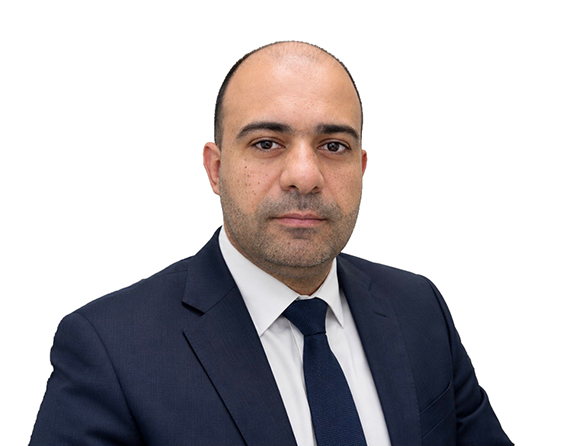
NEBOSH Diplomate Ahmed Mohamed Tolba is Senior HSE and Facility Manager for ABS Construction Company in Saudi Arabia. In this interview, he shares valuable insights to help others succeed in health and safety, outlines his career journey, and explores how the profession is evolving.
When did you decide you wanted to work in health and safety and how did you secure your first opportunity in the profession?
My professional journey began in 2007 when I was working as a Chemist in a petrochemical raw materials laboratory in Egypt. While my role focused on chemical testing and quality assurance, I was constantly exposed to the importance of process controls, hazard management, and safe working practices. Over time, I became increasingly interested in understanding how organisations protect people, assets, and the environment, which led me to pursue a career in health and safety. In 2008, I secured my first opportunity as an HSE Specialist in Egypt after passing the national OHS Specialist Certificate (NIOSH-Egypt), achieving first place among the attendees.
Those early years provided invaluable practical experience in risk assessment, inspections, incident investigations, safety training, and compliance activities. They also helped me understand that effective health and safety management is not simply about preventing accidents; it is about building systems that enable people and organisations to perform safely and sustainably.
You passed your first NEBOSH qualification, the NEBOSH International General Certificate in Occupational Health and Safety with distinction in 2011.
- Why did you choose it? I chose the NEBOSH International General Certificate because it is internationally recognised and respected across multiple industries. I wanted a qualification that would provide a strong foundation in occupational health and safety while supporting my long-term career ambitions. What attracted me most was its practical approach to hazard identification, risk assessment, and risk control. It provided a structured framework that could be applied immediately in real workplace environments.
- How did achieving this qualification help your career? Achieving the qualification with distinction was a significant milestone in my professional development. It enhanced my technical competence, strengthened my confidence, and increased my credibility as a health and safety practitioner. The qualification also helped me secure opportunities beyond my home country. In January 2012, I joined Arabian Drilling in Saudi Arabia, where I enjoyed a fourteen-year career with one of the region’s leading drilling contractors.
In 2024 you completed the NEBOSH Level 6 International Diploma for Occupational Health and Safety Management Professionals. Can you tell us why you chose this qualification and what benefits you gained from this success?
After many years in operational and leadership roles, I wanted to strengthen my strategic understanding of health and safety management. The NEBOSH International Diploma was the natural next step, as it focuses on leadership, governance, organisational culture, human factors, and strategic risk management. It moves beyond operational safety and develops the skills required to influence organisational performance at a higher level.
Completing the Diploma significantly enhanced my ability to evaluate management systems, advise senior leaders, conduct assurance activities, and contribute to continual improvement initiatives. The qualification also supported my transition into a corporate HSE compliance role, where the focus extends beyond checking compliance against requirements to ensuring the effectiveness of management systems.
What has been the best thing you have learned through your NEBOSH studies?
The greatest lesson I learned is that world-class safety performance is achieved by building effective systems and fostering positive cultures, not by relying solely on procedures and compliance.
During your career, you’ve worked in both industry and consultancy. Is it easy to transition between the two, and what do you enjoy about each role?
While the transition can be challenging, both environments complement each other.
Operational roles require ownership, implementation, and accountability for day-to-day performance, while assurance and consultancy roles require objectivity, analytical thinking, strong communication skills, and the ability to evaluate systems independently.
I enjoy operational roles because they allow me to engage directly with people and observe the impact of safety initiatives on workplace performance. I also value assurance and compliance roles, as they provide opportunities to identify areas for improvement, benchmark best practice, and support organisations in strengthening their management systems. Together, these experiences have given me a balanced perspective on both implementation and assurance.
You have just secured a new role as Senior HSE and Facility Manager for ABS Construction Company based in Saudi Arabia. Can you tell us about the company and your role?
ABS Construction Company operates within Saudi Arabia’s growing construction sector and contributes to projects aligned with the Kingdom’s development objectives. As Senior HSE and Facility Manager, I am responsible for developing and maintaining HSE programmes, ensuring compliance with legal and client requirements, supporting facility management activities, promoting a positive safety culture, and driving continual improvement across the organisation.
A key part of my role is integrating safety management, operational excellence, and sustainability principles to support long-term business success.
What do you enjoy most about being a health and safety professional?
What I enjoy most is helping organisations achieve positive, sustainable change. Whether improving systems, developing people, strengthening culture, reducing risk, or supporting strategic decisions, it is rewarding to know that this work contributes to protecting lives while improving organisational performance.
In your opinion, what qualities do you believe a health and safety professional needs to be successful?
Technical competence is essential, but it is only one part of success. Effective health and safety professionals also require integrity, leadership, communication skills, emotional intelligence, resilience, business awareness, and the ability to influence people at all levels of an organisation.
They must be able to translate risk information into practical business decisions and support organisations in achieving both safety and operational objectives. Most importantly, they must remain committed to lifelong learning, as workplace risks, technologies, and expectations continue to evolve.
How has your perception of HSE Compliance evolved throughout your career?
Throughout my career, I have seen that HSE compliance is often misunderstood. Many in industry associate HSE with inspections, audits, and identifying non-conformities. While these activities are important, I do not view compliance as an objective in itself.
Our purpose is not to police operations. We should work in partnership with our colleagues to identify ways to improve performance while ensuring health and safety standards are maintained. I learnt this important lesson from my role model, M Gomaa, Chief Compliance Manager at Maaden, who believes we should focus on creating sustainable excellence rather than simply meeting minimum requirements.
How do you see the future of health and safety evolving?
I believe the future of health and safety lies at the intersection of safety, sustainability, and digital transformation. In addition to completing the MIT Chief Sustainability Officer programme, I am currently pursuing an MSc in Digital Transformation at the University of Hull. My academic research focuses on the impact of digital transformation on incident reduction within the oil and gas drilling industry.
I am also contributing to industry discussions through an ADIPEC 2026 abstract that explores a socio-technical approach to safety digital transformation, recognising that successful adoption depends not only on technology but also on people, leadership, culture, and organisational readiness.
The future of HSE will increasingly rely on predictive analytics, artificial intelligence, connected worker technologies, and data-driven decision-making. However, technology will never replace leadership, trust, and human judgement. Organisations that succeed will be those that effectively integrate people, processes, technology, and sustainability to create a coherent vision of operational excellence.
What advice would you give to someone who wants to build their career in health and safety?
Build strong technical foundations but never stop learning. Gain operational experience, understand how businesses function, develop communication and leadership skills, and learn to influence rather than simply enforce.
I would also encourage future professionals to expand their knowledge beyond traditional safety disciplines by exploring sustainability, digital transformation, organisational resilience, and emerging technologies.
The future HSE professional will be expected to support organisations not only in managing risk, but also in driving innovation and long-term value creation.