
Protecting people, powering progress: A Safety Engineer’s journey in Iraq
Case Study: Dheyaa Al-Wattar
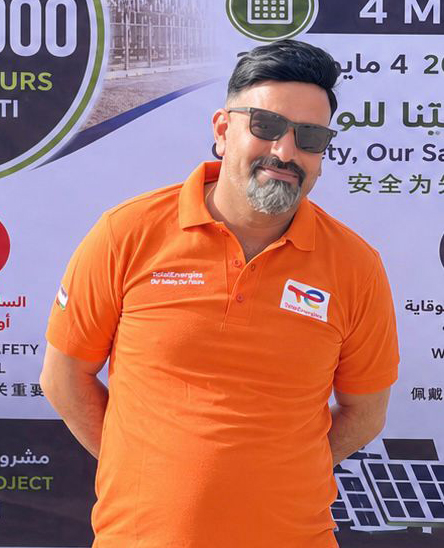
NEBOSH Diplomate Dheyaa Al-Wattar is a Safety Engineer based in Basra, Iraq, who has over 15 years’ experience in the health and safety profession. A combination of practical experience and internationally recognised qualifications have helped him secure work on major oil and gas, power, infrastructure and renewable energy projects across Iraq. In this interview, he shares his insights on building a career in health and safety, developing strong safety cultures and adapting to an evolving profession.
When did you decide you wanted to work in health and safety and how did you make it a reality?
I did not originally plan to work in health and safety. Before entering the profession, I was working in a small grocery business in Basra. At the time, Iraq was experiencing major economic and social changes, and I wanted a more stable and rewarding career. In 2010, a friend introduced me to an opportunity on the Tuba Tank Farm project in southern Iraq. I joined as an HSE Officer, which marked the beginning of my journey.
In the early stages, I focused on learning the fundamentals — confined space requirements, gas testing, risk assessments, and permit to work systems. I was fortunate to work in an environment where international standards were applied daily. One of the most memorable experiences was working on the construction of a crude oil tank which was completed without a major incident. Being part of that success showed me that the real value of health and safety was protecting people and assets whilst enabling project delivery.
That experience motivated me to pursue health and safety as a long term career. I committed to continuous learning, completing OSHA, IOSH and NEBOSH qualifications. Over the years, this dedication helped me progress from HSE Officer to roles such as HSE Supervisor, Coordinator, Engineer, and Superintendent across major oil and gas, power, infrastructure, and renewable energy projects in Iraq. Looking back, I believe that continuous learning, practical experience, and a genuine passion for protecting people transformed a single opportunity into a fulfilling career.
You completed the NEBOSH International General Certificate, in 2021. Why did you choose it?
I enrolled on this qualification after gaining several years of hands on experience on major oil and gas projects in Iraq. Although that experience taught me a great deal about workplace safety, I wanted to understand the principles behind the systems, procedures and international standards used by global companies. I was particularly interested in strengthening my knowledge of risk management, hazard identification, incident prevention and the structured approaches that leading organisations adopt worldwide.
The NEBOSH International General Certificate stood out because of its global reputation and its balance of practical application and theoretical understanding. It was also widely recognised by the international companies I worked with, so I saw it as an opportunity to develop professionally and build a stronger foundation for future career growth. Ultimately, I chose the NEBOSH International General Certificate to deepen my understanding of health and safety management and to strengthen my professional capability.
How did achieving this qualification help your career?
Achieving the NEBOSH International General Certificate helped me bridge the gap between my practical experience—in areas such as hazard identification, site inspections, permit to work systems and contractor safety management—and a more structured understanding of health and safety principles. It clarified the reasoning behind many of the systems I was already using and provided a solid framework for risk management, hazard control, incident prevention and safety leadership.
As a result, I became more confident in reviewing risk assessments, evaluating method statements and ensuring that control measures were suitable for the work being carried out. I gained a deeper understanding of how likelihood and consequence influence risk levels, and how effective controls can reduce those risks to acceptable levels. This changed the way I approached risk management and strengthened my ability to anticipate potential issues before they developed into incidents.
Professionally, the qualification enhanced my credibility when working with international contractors, consultants and clients. It also supported my progression into roles with greater responsibility on major oil and gas, power generation and infrastructure projects. Completing this qualification also gave me the confidence to pursue further development, ultimately leading me to achieve the NEBOSH Level 6 International Diploma.
Overall, the NEBOSH International General Certificate helped me connect my practical site experience with internationally recognised health and safety principles. It broadened my perspective on risk management and reinforced my commitment to continuous learning—something that has remained central to my professional journey.
In 2025 you completed the NEBOSH Level 6 International Diploma in Occupational Health and Safety Management Professionals. Can you tell us why you chose this qualification and what benefits you gained from this success?
The NEBOSH Level 6 International Diploma is one of the most respected health and safety qualifications in the world. When I enrolled, I knew it would challenge me intellectually and help me move beyond compliance based thinking toward a more proactive and strategic approach. By that point, I had gained more than a decade of experience working with international companies across oil and gas, power generation, infrastructure and construction projects. What I wanted was a broader perspective on leadership, organisational culture and risk management beyond day to day site activities.
The Diploma significantly changed the way I think about risk and safety management. It deepened my understanding of human factors, organisational culture, leadership influence and continuous improvement. It also gave me greater confidence in managing complex projects and high risk activities, as my ability to analyse situations, evaluate management systems and identify weaknesses before they developed into incidents improved. Today, I find that I can assess situations more critically, anticipate potential problems earlier and contribute more effectively to decision making processes.
Completing the Diploma was not only a professional achievement but also a personal milestone. It reinforced the value of continuous learning and confirmed a principle that has guided my entire career: experience is essential but combining it with knowledge creates the greatest opportunity to make a positive impact on people, projects and organisations.
In one sentence, what has been the best thing you have learned through your NEBOSH studies so far?
The best thing I have learned through my NEBOSH studies is that experience helps me recognise hazards, while a structured understanding of risk assessment, likelihood and consequences helps prevent them from becoming incidents.
Your career to date spans over 15 years and most of your experience has been gained in the oil and gas sector. What are the key health and safety issues that need to be considered in this sector?
The oil and gas sector is one of the most challenging industries from a health and safety perspective. It combines high-risk activities, complex operations and large workforces operating in dynamic environments. Over the course of my career, I have worked on construction projects, power generation facilities, gas compression plants, storage tank projects and operational sites. While each project had its own unique hazards, several key health and safety issues were common and required careful attention.
Process safety is one of the most critical areas. The industry deals with hydrocarbons, high pressures, flammable materials and complex process systems, meaning that failures can have serious consequences for people, assets and the environment. Effective management of process safety barriers, permit-to-work systems, isolation procedures and emergency response planning is therefore essential.
Another major consideration is risk management. In my experience one of the most important responsibilities of a health and safety professional is ensuring that risk assessments accurately reflect the work being carried out and that the control measures are effectively implemented. Understanding the relationship between likelihood and consequence is fundamental to making sound decisions.
Contractor management is also a significant challenge. Large oil and gas projects often involve multiple contractors and subcontractors. Ensuring consistent standards, effective communication, competency verification and strong supervision is critical to maintaining a safe working environment.
Confined space entry, lifting operations, working at height, energy isolation, hot work and vehicle movements continue to be among the highest-risk tasks within the industry. These activities require robust planning, competent personnel and strict compliance with established procedures.
After more than fifteen years in the profession, I believe that building a strong safety culture is critical to ensuring safe operations. Procedures and systems are essential, but they are most effective when supported by strong leadership, workforce engagement and a shared commitment to protecting people. In my experience the most successful projects are those where safety is viewed not as a requirement, but as a core value which is integrated into every decision and activity.
Ultimately, the key challenge in oil and gas is maintaining control of major risks while ensuring that everyone involved returns home safely at the end of the day. That responsibility remains at the heart of the profession and continues to motivate me in my work.
Can you tell us about your role as a HSE Engineer for an International Company in Iraq?
Since 2024, I have been working as an HSE Engineer on a major renewable energy project in Iraq. The project involves constructing a large scale solar photovoltaic (PV) power plant as part of Iraq’s efforts to diversify its energy sources and support a more sustainable future. It is being delivered within an international EPC environment, with multiple contractors, subcontractors and stakeholders from different countries. This creates a dynamic setting where coordination, communication and strong safety leadership are essential.
My role focuses on supporting and monitoring the implementation of health, safety and environmental requirements throughout the construction phase. This includes reviewing risk assessments and method statements, conducting site inspections and audits, participating in incident investigations, monitoring contractor performance and ensuring compliance with project standards, legal requirements and international best practices.
A key part of my responsibilities is identifying and evaluating risks associated with construction activities such as electrical works, lifting operations, work at height, excavations, traffic management and contractor interfaces. I work closely with project teams to ensure that appropriate control measures are in place and maintained.
An aspect of the role that I particularly enjoy is helping to strengthen safety culture. Construction projects bring together people from different organisations, cultures and levels of experience, and building a shared commitment to safety is both challenging and rewarding.
What makes this role especially meaningful is the opportunity to contribute to a project that supports the growth of renewable energy in Iraq. After spending much of my career in oil and gas, it has been both professionally interesting and personally rewarding to apply my HSE experience to a project that will play an important role in the country’s future energy infrastructure.
In your opinion what qualities do you believe a health and safety professional needs to be successful?
A successful health and safety professional needs a blend of technical knowledge, practical experience, communication skills and strong leadership. Understanding hazards, risk assessment, legal requirements and safety management systems is essential, but technical competence alone is not enough. One of the most important qualities is the ability to communicate effectively with people at all levels. Building trust and positive relationships with workers, supervisors, managers, contractors and clients is critical, because people engage more with safety when they feel respected and valued.
Professional ethics, integrity and credibility are equally important. A safety professional must be fair, consistent and willing to make difficult decisions, while remaining approachable and open to discussion. In my experience, earning the trust of the workforce is often just as important as technical expertise. Long term improvement comes from giving people the opportunity to take the first step themselves, not simply enforcing compliance. When people understand the reasons behind safety requirements and are involved in finding solutions, they take ownership and this helps to strengthen the safety culture.
Finally, an effective health and safety professional never stops learning. Industries, technologies and risks continue to evolve, so continuous professional development is essential. The ability to learn, adapt and anticipate problems before they occur is what transforms a competent safety practitioner into an exceptional one.
What do you enjoy most about being a health and safety professional?
What I enjoy most about being a health and safety professional is the opportunity to make a positive difference while supporting the successful delivery of important projects. One of the most rewarding aspects is analysing work activities, identifying potential risks and helping teams prevent problems before they occur. There is a real sense of satisfaction in recognising a hazard, implementing effective controls and knowing an incident has been avoided.
I also value the opportunity to work with people from different backgrounds, professions and cultures. Over time, I have learned that health and safety is not just about procedures and regulations, it is about communication, trust and helping people understand the importance of working safely. Seeing individuals and teams improve their awareness and take ownership of safety is particularly rewarding.
Another aspect I enjoy is being involved in projects that create something meaningful. Throughout my career, I have supported oil and gas facilities, power generation projects, substations and renewable energy developments. When I visit a project that I have contributed to, I feel a strong sense of pride in its safe and successful delivery.
Finally, one of the most satisfying elements of the profession is seeing the bigger picture. Early in my career, I focused mainly on the hazards in front of me. Today, experience and continuous learning allow me to anticipate potential issues and prevent them before they develop into incidents. Knowing this helps protect people, support project success and ensure workers return home safely to their families is what I value most.
How is the role of health and safety evolving, based on your experience?
When I first entered the profession in 2010, health and safety in Iraq was often seen primarily as a compliance function, focused on meeting minimum requirements, preventing accidents and ensuring procedures were followed. While these aspects remain important, there has been a clear shift towards a more proactive and risk-based approach.
Today, leading organisations place much greater emphasis on risk management, safety culture, leadership and workforce engagement. Health and safety professionals are increasingly involved in project planning. I have also seen significant improvements in the quality of risk assessment and control measures and better alignment between risk assessments and method statements. This has strengthened the overall effectiveness of safety management systems.
Another important development is the recognition that health and safety is not solely the responsibility of the HSE department. Successful organisations now encourage supervisors, engineers, managers and workers to take an active role in safety performance. In my view, this shared ownership is one of the most positive changes in the profession.
More recently, particularly with the growth of renewable energy projects and increased international investment in Iraq, there has been greater focus on environmental protection, sustainability, contractor management and international best practice. Health and safety professionals are now expected to contribute not only to accident prevention but also to wider organisational priorities, including ESG commitments.
Looking ahead, I believe the future of health and safety in Iraq will continue to centre on stronger safety cultures, greater workforce involvement, improved use of technology and a more proactive approach to managing risk. The role is becoming less about enforcing rules and more about influencing behaviours, supporting decision-making and creating environments where safe working is a shared value rather than simply a requirement.
What advice would you give to someone who wants to build their career in health and safety?
My advice to anyone building a career in health and safety is to stay curious, committed to learning and open to gaining practical experience at every opportunity. The profession requires both knowledge and experience. Qualifications provide a strong technical foundation, but real understanding comes from applying that knowledge in the workplace and learning from real situations, challenges and people.
I would also encourage new professionals not to focus solely on compliance and procedures. Take time to understand why controls are needed, how risks are assessed and how decisions are made. Developing a strong grasp of risk assessment, particularly the relationship between likelihood and consequence, will help build sound professional judgement throughout your career.
Communication and professional ethics are equally important. Technical knowledge is essential, but success also depends on earning the trust and respect of the people you work with. Listen to workers, learn from experienced colleagues and always treat people fairly and professionally. In my experience, people are far more willing to embrace safety when they feel respected and involved.
Most importantly, never stop learning. Industries, technologies and risks continue to evolve, so continuous professional development is essential. Looking back on my own journey, I started as an HSE Officer on a tank construction project and progressed through roles across oil and gas, power generation, infrastructure and renewable energy. Each stage brought new lessons and helped me grow both professionally and personally.
If I had to summarise my advice in one sentence, it would be this: experience helps you recognise hazards, but knowledge helps you prevent them from becoming incidents.