
“At its heart, safety is about people. Everyone deserves to return home safely at the end of the day, and NEBOSH gave me tools that help me contribute towards that goal.”
Case Study: Daniel Penfold
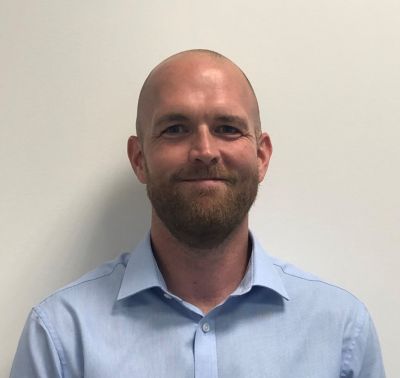
We recently spoke with Daniel who spent 22 years working for the Royal Navy. Now, the Marine Fleet Manager at Tarmac, he tells us about his transition from the Royal Navy into a civilian career in marine engineering, underpinned by health and safety.
Can you tell me about your career in the Royal Navy? Why did you join?
I joined the Royal Navy in 1997 straight from school, as a Marine Engineering Mechanic.
At the time, I was looking for three things: adventure, travel and the opportunity to build a better future for myself. The Royal Navy offered all three.
My career took me all over the world, from Antarctica to the Middle East and Far East. It gave me opportunities and experiences I could never have imagined as a teenager leaving school, and it taught me lessons in leadership, teamwork and resilience that still shape how I work today.
Most importantly, it gave me a trade, a profession and a sense of purpose.
Throughout my career, I continued to develop professionally, completing an Artificer Engineer apprenticeship, earning a degree in Mechanical Engineering from the University of Portsmouth and later a Postgraduate Diploma in Nuclear Reactor Technology.
I served on destroyers, patrol vessels, minehunters, submarines and HMS Endurance, supporting scientific operations in Antarctica. Later in my career I moved into more senior engineering and fleet support roles within the submarine enterprise.
Why did you decide to leave the Royal Navy?
After 22 years, it felt like the right time for a new challenge. I had achieved far more than I ever expected when I joined as a 16-year-old and I wanted to see how my skills would translate into the "real" world. At the same time, my priorities were changing. I had a young family and wanted to spend more time at home. Like many people who serve in the Armed Forces, there comes a point where you realise that family milestones are becoming more important than career milestones.
Today I have three children, William, Thomas and Grace, and being present as they grow up has been one of the best decisions I have ever made.
Your first civilian role after leaving the Royal Navy was a Marine Safety Advisor at Tarmac, what made you decide on a career in health and safety?
The simple answer is that I have never really saw safety as a separate career.
Throughout my time in the Royal Navy, particularly in engineering and nuclear environments, safety was simply part of doing the job properly.
When I left the Navy, I was keen to move into the wider maritime industry. The Marine Safety Advisor role provided an opportunity to combine my engineering background with my interest in risk management and safe operations.
What attracted me was the opportunity to make a real difference. Whether you're operating ships, maintaining machinery or working in ports, the decisions we make affect real people. Done well, health and safety protects lives, protects the environment and enables businesses to perform effectively.
The role gave me a much deeper understanding of human factors, risk management and organisational learning, all of which continue to influence how I lead teams today.
What NEBOSH qualifications do you hold, and why did you choose NEBOSH?
I currently hold:
• NEBOSH National General Certificate in Occupational Health and Safety
• NEBOSH National Certificate in Fire Safety and Risk Management
• NEBOSH Certificate in Environmental Management
I completed all three NEBOSH qualifications as part of my resettlement package when leaving the Royal Navy, using Enhanced Learning Credits (ELCAS) funding to support my studies.
I chose NEBOSH because it is widely recognised across industry and is considered the gold standard in health and safety qualifications. Having gained significant safety knowledge and experience during my naval career, I wanted to formalise that expertise and demonstrate my commitment to continuous professional development as I transitioned into civilian employment.
The qualifications played an important part in helping me secure my first civilian role as a Marine Safety Advisor at Tarmac. They provided employers with confidence that I could translate the safety principles and experience I had developed in the Armed Forces into a commercial environment.
They have also continued to support my progression throughout my career at Tarmac. Safety sits at the forefront of everything we do, and across both Tarmac and our parent company, CRH, there is a strong commitment to protecting people, the environment and our assets. The knowledge and framework provided by NEBOSH have helped me contribute to that culture while developing as both a leader and a safety professional.
Throughout my career, I have always worked in environments where mistakes can have serious consequences. NEBOSH gave me a structured framework for understanding risk and strengthened my ability to identify hazards, challenge unsafe practices and influence positive change.
At its heart, safety is about people. Everyone deserves to return home safely at the end of the day, and NEBOSH gave me tools that help me contribute towards that goal.
How have the NEBOSH qualifications helped you in your roles?
The biggest benefit has been learning to look beyond compliance.
It is relatively easy to write procedures and complete audits. The real challenge is understanding why people behave the way they do and creating an environment where safe decisions become the natural decisions.
NEBOSH helped me develop a broader understanding of risk, human factors, incident investigation and environmental management. Those skills have been valuable throughout my career, not only in dedicated safety roles but also in operational leadership positions.
It has made me a better engineer, a better manager and, I hope, a better leader.
Can you tell me about your transition from Marine Safety Advisor to Marine Fleet Manager?
Not long after joining Tarmac, an opportunity arose to move into a Ship Manager role.
The position aligned closely with work I had undertaken towards the end of my Royal Navy career, supporting submarine operations and maintenance from a shore-based organisation.
The transition felt very natural because it allowed me to combine engineering, asset management and leadership in a commercial setting.
After three years as a Ship Manager, I was promoted to Marine Fleet Manager.
Today I am responsible for the technical and operational management of Tarmac Marine's fleet. My role is to ensure our vessels are safe, reliable and available to support the business while meeting the highest standards of safety, environmental performance and regulatory compliance.
How important is health and safety within your current role?
Health and safety sits at the centre of everything we do.
We operate ships in challenging environments, around heavy machinery, changing weather conditions and complex operations. There is no aspect of the business that is untouched by safety.
That said, I do not believe safety and operational performance are competing priorities. In my experience, the safest organisations are often the most reliable and effective organisations as well.
Good safety management creates consistency, trust and professionalism. It allows people to do their jobs with confidence and gives organisations the foundation they need to succeed.
Ultimately, my responsibility is simple: to ensure our people have the tools, training and support they need to do their jobs safely, and to make sure they go home to their families at the end of every trip.
What advice would you give to someone leaving the Armed Forces to begin a career in health and safety?
Don't underestimate the value of the experience you already have.
Many people leave the Armed Forces assuming they need to start again when they move into civilian industry, but the reality is that the military develops many of the skills that make great health and safety professionals. Leadership, risk management, decision-making under pressure, communication and personal accountability are all highly transferable.
My advice would be to remain curious, be willing to learn and focus on understanding the "why" behind health and safety, not just the rules and regulations. The best safety professionals are not there to police people; they are there to help organisations understand risk and enable people to work safely and effectively.
I would also encourage anyone making the transition to gain recognised qualifications such as NEBOSH. They provide a common language and framework that helps bridge the gap between military and civilian industry.
Most importantly, be confident in what you bring to the table. The Armed Forces develop exceptional people, and the skills gained through service are often far more valuable than individuals realise.
What is the biggest lesson learnt in your career so far?
The biggest lesson I have learned is that success is always about people.
As a young engineer, I thought success came from technical knowledge and having the right answers. As I progressed through my career, I realised that the most successful teams are not necessarily the ones with the smartest individuals or the best equipment. They are the teams built on trust, shared purpose and strong relationships.
Whether in the Royal Navy, the nuclear industry or commercial shipping, the common factor behind every success or failure has been people.
Technical problems can usually be solved. Building a culture where people feel valued, listened to and empowered to do the right thing is much harder, but it is also far more important.
That lesson has shaped my leadership style and remains at the heart of how I approach both safety and management today.