
More than compliance: Elhadi’s commitment to protecting people
Case Study: Elhadi El Sayed Elhadi Mohamed
After graduating with a degree in Mechanical Engineering in 2012, Elhadi El Sayed Elhadi Mohamed developed a growing interest in managing risks and protecting people from harm. This led to a career in Health and Safety spanning more than 12 years and his current role as a Senior HSE Consultant Engineer in Saudi Arabia. In this case study, he shares how his NEBOSH studies have helped to shape his approach to HSE, why practical experience and continuous learning go hand in hand, and what motivates his commitment to protecting people.
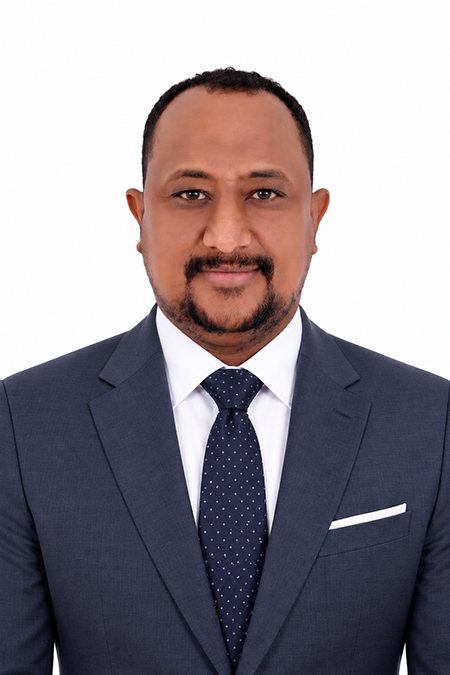
You have worked in Health and Safety for over 10 years, having initially completed a degree in Mechanical Engineering. Can you tell us how this transition came about?
I graduated in 2012 with a degree in Mechanical Engineering, and my initial experience was in the engineering field. This gave me a strong understanding of equipment, industrial operations, and the technical aspects of workplace activities.
As my experience grew, I became increasingly interested in how risks could be identified and controlled before injuries, damage, or harm to the environment occurred. I came to see that Health and Safety is not simply about rules, procedures, or compliance. It is about protecting people, preventing incidents, and ensuring that everyone can return home safely at the end of the working day. That sense of purpose really appealed to me.
My engineering background has given me a valuable advantage throughout this journey, as it enables me to approach safety challenges with both technical understanding and a risk-based mindset. Over the years, Health and Safety has developed from a career choice into a responsibility that I take personally.
Why did you take the NEBOSH International General Certificate in 2022?
I chose the NEBOSH International General Certificate because I wanted to strengthen my professional knowledge with a recognised international qualification. Although practical experience in Health and Safety is essential, I believe that experience becomes even more valuable when it is supported by a strong understanding of risk management principles, hazard identification, and the systematic prevention of workplace incidents.
The NEBOSH International General Certificate helped me develop a more structured approach to identifying hazards, assessing risks, and selecting appropriate control measures. It also strengthened my understanding of how effective Health and Safety management can support wider organisational performance.
For me, achieving the qualification was not simply about adding another certificate to my CV. It was an important step in developing my competence, increasing my confidence, and building a stronger foundation for the next stage of my career.
Your next NEBOSH qualification was the NEBOSH Certificate in Environmental Management. How has this achievement helped you?
Completing the NEBOSH Certificate in Environmental Management helped me broaden my perspective beyond occupational Health and Safety and develop a better understanding of environmental protection as an integral part of responsible project delivery.
In construction and industrial projects, activities can create environmental risks relating to waste, water, fuel, chemicals, emissions, and pollution. These risks need to be identified and managed alongside those affecting workers and others.
The qualification strengthened my understanding of environmental aspects and impacts, environmental risk management, and the importance of effective controls and monitoring.
It also reinforced my belief that Health, Safety and Environment should be managed as interconnected responsibilities rather than separate activities. This broader perspective is particularly valuable in my professional role, where effective oversight requires balancing worker safety with environmental performance.
In 2026 you passed the NEBOSH Level 6 International Diploma for Occupational Health and Safety Management Professionals. Why did you choose to study this qualification, and how has it benefited you?
I wanted to progress beyond the operational aspects of Health and Safety and strengthen my ability to manage risks at a more strategic and professional level.
As my experience developed, I recognised that senior HSE professionals need more than the ability to identify hazards or respond to unsafe conditions. They must understand how to develop effective management systems, evaluate complex risks, interpret relevant legislation and guidance, and influence decisions that drive improvements in safety performance across an organisation.
The Diploma challenged me to examine Health and Safety issues in greater depth, apply a more systematic and evidence-based approach, and consider the wider organisational factors that influence workplace behaviour and risk control.
Successfully passing the NEBOSH Diploma in 2026 was an important milestone in my career. It strengthened my confidence in applying theoretical knowledge to practical situations and helped prepare me for the demands of my role as a Senior HSE Consultant Engineer.
Most importantly, it reinforced my commitment to continuous professional development. I see this achievement not as the end of my learning journey, but as another step towards becoming a more capable and effective HSE professional.
What were the key takeaways from your NEBOSH studies?
One of the most valuable lessons I learned is that effective Health and Safety management must be proactive rather than reactive. We should not wait for an accident to reveal weaknesses in our systems. We need to identify hazards early, assess risks properly, implement appropriate controls, and ensure they are working effectively in practice.
My studies also reinforced the importance of understanding why unsafe conditions and behaviours occur. Procedures and training are important, but they must be supported by strong leadership, worker involvement, appropriate supervision, and a positive safety culture.
I have learned to look beyond whether a document or procedure exists and ask whether it is being implemented properly and achieving its intended purpose. This is particularly important in consultancy, where reviewing documentation must go hand in hand with site inspections, communication, and verification of actual working practices.
Ultimately, the purpose of Health and Safety is not simply to produce paperwork or achieve compliance on paper. It is about preventing harm, protecting people, and making sure everyone can return home safely at the end of the working day.
I understand that you have both a busy professional and family life. How did you manage to fit your studies in, and do you have any tips you could share with others?
Balancing professional responsibilities, family commitments, and studying was a challenge that required discipline, patience, and careful time management. Like many working professionals, I had to find a way to continue learning without neglecting my responsibilities at work or at home.
I learned that progress does not always depend on having long periods of free time. It is often about making effective use of the time you have, establishing a consistent study routine, and staying focused on your goal, even when progress feels slow.
My advice to others is to set realistic targets, break the learning process into manageable stages, and avoid waiting for the perfect time to start. Consistency is more valuable than occasional periods of intensive study.
It is also important to remember why you started. Having a clear professional goal can help you stay motivated when balancing work, study, and family life becomes difficult.
For me, professional development has been a long-term commitment rather than a one-time effort. Every qualification represents not only an academic achievement, but also the time, perseverance, and determination required to keep learning and developing professionally.
Can you tell us about your current role?
I currently work as a Senior HSE Consultant Engineer for a leading engineering consultancy in the construction sector in Saudi Arabia. My role involves providing Health, Safety and Environmental oversight and supporting the implementation of HSE requirements across project activities.
My responsibilities include reviewing HSE plans, risk assessments, method statements, and other safety-related documentation; conducting site inspections; monitoring compliance with project requirements; identifying unsafe conditions and practices; and following up on corrective actions with contractors.
An important part of my role is ensuring that documented arrangements are put into practice effectively on site. This means looking beyond what is written in a procedure and verifying that workers understand the risks, appropriate controls are in place, and the necessary supervision is provided.
I also work closely with project teams and contractor representatives to communicate findings, address gaps, and encourage continuous improvement. Where deficiencies are identified, it is important to establish clear corrective actions and ensure they are implemented appropriately.
Working in a consultancy role has strengthened my understanding of the importance of professional independence, sound judgement, clear communication, and evidence-based decision-making. My objective is not simply to identify shortcomings, but to support project teams in managing risks effectively and maintaining high standards of Health, Safety and Environmental performance throughout project delivery.
Given your extensive experience, what qualities do you think Health and Safety professionals need to be successful?
I believe successful HSE professionals need a combination of technical competence, integrity, communication skills, practical experience, and the confidence to challenge unsafe conditions when necessary.
Technical knowledge is essential, but it must be supported by sound judgement and an understanding of how work is actually carried out. A good HSE professional needs to recognise the difference between a control that exists on paper and one that works effectively in practice.
Communication is equally important. We need to explain risks clearly, listen to workers and supervisors, and work constructively with different teams. Safety should not be seen as the responsibility of the HSE department alone. It requires commitment from management, supervisors, workers, and everyone involved in the work.
Integrity is also fundamental. HSE professionals must be willing to report findings honestly, remain objective under pressure, and prioritise preventing harm over simply satisfying processes or paperwork.
Finally, I believe humility and continuous learning are essential. Regulations, technologies, working environments, and risks continue to evolve, so we must remain open to learning and committed to developing our knowledge and professional practice.
What do you enjoy most about working in Health and Safety?
What I value most is the opportunity to make a practical difference by protecting people. Behind every risk assessment, inspection, corrective action, or safety discussion are people whose health and safety matter.
I find it particularly rewarding when an identified risk is properly addressed, an unsafe condition is corrected, or a team develops a better understanding of how to work safely.
I also enjoy the problem-solving aspect of the profession. Every project has its own challenges, and effective HSE management requires us to understand the work, identify realistic solutions, and ensure that safety measures are practical and appropriate.
For me, success in Health and Safety is not measured only by the absence of recorded incidents. It is also reflected in the quality of risk management, the level of worker engagement, and the extent to which people genuinely understand and take responsibility for working safely.
Ultimately, knowing that our work can help prevent an injury, protect someone’s health, or even save a life is what gives the profession its greatest sense of purpose.
What advice would you give to someone looking to build a similar career to your own?
My advice is to build a strong foundation of knowledge, gain practical experience, and commit to continuous learning. Professional qualifications such as NEBOSH can provide valuable knowledge and structure, but they should be complemented by real workplace experience and a willingness to learn from others.
Do not focus only on collecting certificates. Focus on understanding the principles behind them and applying that knowledge to real situations. Spend time in the workplace, learn how activities are carried out, listen to workers, understand the risks, and develop the confidence to make informed professional decisions.
I would also encourage anyone entering the profession to develop their communication skills, integrity, and ability to work collaboratively. Technical knowledge alone is not enough. We must also be able to influence others, explain why controls matter, and help organisations make better decisions.
Finally, do not be discouraged by the time it takes to progress. Career development is a continuous journey, and every stage provides an opportunity to learn. My own journey from Mechanical Engineering into Health and Safety has taught me that a different starting point can become a strength when combined with commitment, practical experience, and a willingness to keep learning.
My message is simple: keep learning, remain committed to protecting people, and remember that the real value of an HSE professional lies not in the qualifications they hold, but in the difference they make.