
More than compliance: A career dedicated to protecting people
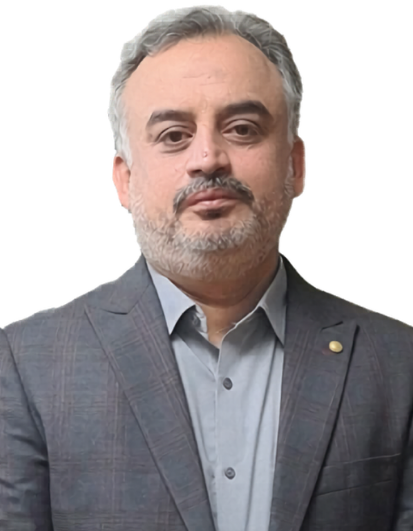
Case Study: Hammad Raza
From Trainee Engineer to Group General Manager HSE, Hammad Raza has spent more than two decades building safer workplaces across complex industrial settings in Pakistan and the UAE. In this case study, he shares how key moments early in his career drew him into health and safety, how NEBOSH qualifications supported his professional growth, and why worker wellbeing continues to be the focus of his leadership.
When did you decide you wanted to work in health and safety and how did you secure your first opportunity in the profession?
Twenty-two years ago, whilst working as an engineer, I chose a different priority to many of my peers. I chose health and safety over production, purpose over popularity, and it is a decision I have never regretted.
My journey began with a BSc in Chemical Engineering. I joined one of Pakistan’s largest cement companies as a trainee engineer in production and quality assurance, where I was entrusted with implementing the ISO management system and API Q1 certification for oil well cement production. This work introduced me to the connection between operational discipline, compliance, and worker safety.
At that time, health and safety was still an emerging profession in Pakistan. Hazard awareness was limited, formal systems were weak, and structured HSE knowledge was difficult to access. While working closely with plant operations, I realised that risks were not managed with the same seriousness as production targets or quality standards. That understanding gradually led me towards HSE.
Looking back, it was one of the most important decisions of my career.
Was there a defining moment that drew you fully into health and safety?
Two incidents that occurred while I was working at the cement plant shaped my thinking permanently.
The first was a compressor room fire. Our CEO contacted me directly to understand the cause, and in that moment, I realised that even a contained operational incident can quickly reach the highest levels of an organisation. However, while the business impact was being assessed, people on the ground were still exposed to risk. I understood then that safety is not simply about equipment or procedures. It is about building systems that prevent incidents from happening in the first place.
The second incident affected me much more personally. During cyclone cleaning, a worker opened an inspection door while blasting activity was still ongoing. Hot material struck him, causing serious burns. When the accident was investigated, a communication failure and a missed isolation step were identified as contributory factors. His life was permanently changed as a result. That incident fundamentally changed how I viewed HSE. I stopped seeing safety as a compliance function and started seeing it as a responsibility to protect people before incidents occur.
You passed your first NEBOSH qualification, the NEBOSH International General Certificate in Occupational Health and Safety, in 2014. Why did you choose it and how did achieving it help your career?
By 2014, I had gained significant practical experience across cement, mining and industrial operations. However, I felt that experience alone was no longer enough in increasingly international, compliance-driven environments.
I had relocated to the UAE and was working in a dedicated QHSE leadership role across construction materials, logistics and power generation operations. International employers and clients expected globally recognised qualifications, and NEBOSH stood out for its practical relevance and international credibility.
I enrolled with NEBOSH Gold Learning Partner, SHEilds, whose structured learning materials and consistent support enabled me to study while managing a demanding operational role.
The impact of the qualification was immediate. One of the first things I changed was our approach to risk assessment and permit-to-work systems. I reviewed operational activities from the ground up and applied the hierarchy of controls more systematically.
The qualification strengthened not my technical capability and confidence in engaging with regulators, management teams and operational leaders. More importantly, NEBOSH gave me a structured framework for thinking about risk, leadership and prevention in a much deeper way than experience alone had provided.
In 2018 you completed the NEBOSH International Diploma for Occupational Health and Safety, again choosing to study with SHEilds. Why did you choose this qualification and what benefits did you gain?
The International General Certificate gave me a strong operational foundation, but after more than a decade in industry, I wanted to deepen my understanding of HSE at a strategic and organisational level.
The NEBOSH International Diploma was the natural progression. I chose SHEilds once again because of the positive experience I had during my General Certificate studies.
Completing the Diploma while managing a demanding leadership role was challenging and required significant personal sacrifice, particularly time with my family. However, the learning experience transformed the way I approached HSE leadership.
The Diploma strengthened my understanding of occupational health, human factors, organisational culture, root cause analysis and management system governance. It also improved my ability to design and implement ISO 45001-aligned systems across large, complex operations.
Most significantly, the qualification opened the pathway to Chartered Membership of IOSH. Achieving CMIOSH was a major professional milestone and strengthened my credibility as an HSE leader within internationally connected industries.
The progression from the International General Certificate to the International Diploma, and on to CMIOSH, remains one of the most valuable professional journeys of my career.
In one sentence, what has been the best thing you have learned through your NEBOSH studies?
Occupational health is as important as physical safety, and protecting people from long-term health risks requires the same discipline and commitment as preventing injuries.
Your 22 years of experience spans cement, mining, power generation and textile operations across the UAE and Pakistan. What advice would you give to make the transition between sectors a success?
Every industry initially believes its challenges are unique, and there is often scepticism towards professionals coming from outside the sector. I experienced this during nearly every transition in my career.
What I learned is that while industries differ operationally, the fundamentals of risk management, leadership and worker engagement remain remarkably similar. A professionally qualified HSE leader brings a transferable skill set that can be adapted successfully across sectors when combined with humility and a willingness to learn.
The key is to spend time understanding the realities of each environment, including its hazards, workforce culture and operational pressures. Workers themselves taught me that practical trust matters far more than formal authority. Visible leadership on the ground matters far more than slogans in presentations.
You have worked for Artistic Milliners since 2023. Can you tell us about the company and its health and safety ethos?
Artistic Milliners is one of Pakistan’s leading vertically integrated denim and apparel manufacturers, supplying international premium brands. In Pakistan alone, the organisation employs more than 20,000 people across multiple manufacturing sites.
The company’s commitment to responsible manufacturing is closely linked to worker welfare, sustainability and international compliance expectations. Certifications under programmes such as ILO Better Work and the Accord on Fire and Building Safety reflect a broader commitment to improving working conditions and operational standards.
The organisation’s vision extends beyond basic compliance to creating a workplace culture where safety becomes part of everyday thinking and behaviour.
Can you tell us about your role as Group General Manager HSE with the company?
Managing HSE for a workforce of this scale within Pakistan’s textile sector requires much more than technical compliance.
The workforce is large and dynamic, with varying educational backgrounds and high operational pressures linked to global buyer timelines. Heat stress, ergonomics, chemical exposure, machine safety and contractor management all require continuous focus. A significant proportion of the workforce is female, which brings important welfare, dignity and psychosocial considerations that must be addressed thoughtfully and respectfully.
One of the biggest challenges when I joined was helping to shift the organisation from a largely compliance-driven safety system to a more people-centred culture. Today, one of the most encouraging changes is seeing workers openly engage with HSE teams, raise concerns, and participate in safety discussions with confidence.
That cultural shift is something I value more than any audit score or presentation.
My role includes leading HSE managers across multiple sites, carrying out operational floor visits, overseeing audits and investigations, supporting corrective action programmes, and strengthening leadership engagement throughout the organisation.
We are also exploring digital tools, computer vision and data-driven approaches to strengthen proactive hazard identification and improve response times, while ensuring that technology supports, rather than replaces, human leadership and worker engagement.
What qualities do you believe a health and safety professional needs to be successful?
Twenty-two years across demanding industrial environments has taught me that three qualities matter most:
- Psychological intelligence: the ability to communicate effectively with everyone from senior leadership to frontline workers. People change behaviour when they feel respected and understood.
- Treating HSE as a responsibility rather than an authority: the moment safety professionals begin acting solely as enforcement officers, they lose trust and influence.
- Continuous learning: the profession is evolving rapidly through developments in ISO systems, ESG expectations, digitalisation and risk management practices. Strong qualifications such as NEBOSH provide an important foundation, but genuine learning must continue throughout your career.
What do you enjoy most about being a health and safety professional?
It is not titles or professional recognition, although those are important for career development.
What matters most to me are the quiet moments on the factory floor when workers stop to say thank you. Thank you for improving ventilation. Thank you for clean drinking water. Thank you for making the workplace safer.
Knowing that someone returned home safely because of a system I helped build is worth more than any promotion or award.
That is why this profession continues to matter deeply to me.
What advice would you give to someone who wants to build their career in health and safety?
Pakistan’s industrial sector has improved significantly in recent years through stronger legislation and growing international expectations. However, challenges remain around enforcement consistency, contractor capability, hazard awareness and the gap between compliance on paper and operational reality.
One of the hardest lessons of my career came after a fatal incident occurred at a site while I was on leave. That experience reinforced something I strongly believe today: safety culture cannot exist only in meetings or written procedures. It must be visible in operational decisions, supervision and day-to-day behaviours, especially under production pressure.
This profession needs committed and qualified people who are willing to work honestly on the ground, where safety genuinely matters.
My advice is simple: work hard, continue learning and never treat safety as paperwork. Build relationships with workers, understand operational realities and focus on creating a culture where people feel responsible for one another’s wellbeing.
Invest in strong professional qualifications. For me, NEBOSH provided the foundation that shaped my entire career pathway and ultimately supported my progression to Chartered Membership of IOSH.
If more professionals commit themselves seriously to this field, we can collectively strengthen workplace safety standards and protect the dignity and wellbeing of workers across Pakistan.
What is next for you in terms of professional development?
My professional development journey is ongoing.
I intend to pursue the NEBOSH International Diploma in Environmental Management to strengthen my understanding of sustainability and environmental risk, areas that are becoming increasingly important in global manufacturing and industrial operations.
I also hope to contribute more actively to the development of future HSE professionals in Pakistan through mentoring, knowledge sharing and practical guidance.
NEBOSH gave me the foundation to build my career. Supporting the next generation of safety professionals is something I now see as an equally important responsibility.