
Looking beyond what’s visible: Managing risk where it matters most
Case Study: Ashiqur Rahman
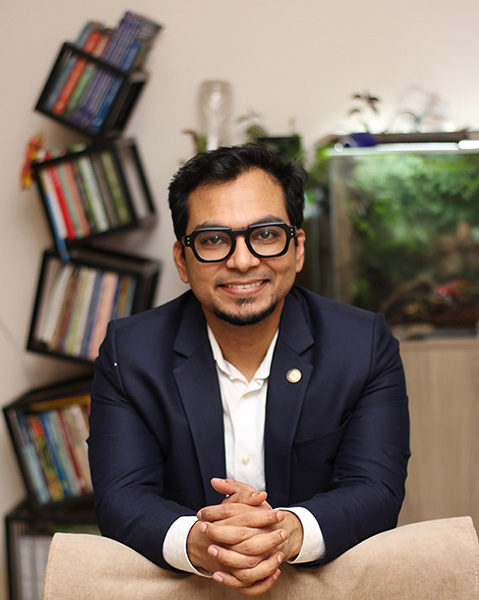
NEBOSH Diplomate Ashiqur Rahman is a Factory HSE Manager at Berger Paints Bangladesh Limited. In this interview, he shares what first attracted him to the profession and offers advice for those looking to build a career in health and safety.
Did you always know you wanted to build your career in this profession, and how did you make it a reality?
As a civil and environmental engineering graduate, I was initially inclined to build my career in structural design. However, during my university years, I met an HSE professional and was introduced to a completely different side of engineering.
What attracted me most was the profession’s versatility and the opportunity to work across different sectors, rather than being confined to a single industry. I’ve always been curious, and this variety, combined with the ability to make a direct impact on people’s lives, was particularly appealing. I therefore became open to opportunities in this field.
The first role I secured after graduating was in HSE, and from then on, I made a conscious decision to build my career in this profession. Looking back, my civil and environmental engineering background also gave me a unique advantage that I hadn’t anticipated.
You passed your first NEBOSH qualification, the NEBOSH International General Certificate in Occupational Health and Safety, in 2022.
- Why did you choose it?
When I signed up to take this qualification, I had already gained substantial practical experience in HSE, particularly through the mega projects I worked on. However, I wanted to align my knowledge with globally recognised practices. I also saw it as an important step in preparing myself for roles with greater responsibility.
- How did achieving this qualification help your career?
While studying, I realised that much of the content was already familiar to me. However, the most valuable learning was understanding how to connect all the pieces of the jigsaw in a structured way and apply these more effectively in real situations.
The IG2 assessment continues to guide how I approach risk assessments, including prioritising risks and applying the hierarchy of controls. The scenario-based IG1 exam strengthened my critical thinking. In my opinion, one of its strongest aspects is how it requires you to extract many points from a relatively short scenario. It trains you to look deeper and pay closer attention to fine details that may initially seem irrelevant. I still apply this learning when dealing with real-life situations.
In 2024, you also completed your NEBOSH Level 6 International Diploma for Occupational Health and Safety Management Professionals:
- Why did you take this Diploma-level qualification?
As I progressed in my career, I became increasingly involved in more complex situations and critical decision-making. I was performing well in these areas, but I wanted to take a qualification designed for those leading and shaping HSE systems to further strengthen my performance. I felt the NEBOSH Diploma met this brief, and as I had enjoyed my experience with the NEBOSH International General Certificate, I decided to sign up. I suppose I was curious to see how this higher-level qualification could further develop my thinking and capabilities.
- How has achieving this qualification benefited you?
Before taking this qualification, I was already actively involved in driving the safety culture at the factory. Completing the NEBOSH International Diploma boosted my confidence, and I now feel more comfortable negotiating with contractors and supporting top- and mid-level management to make informed decisions.
You went on to pass the NEBOSH HSE Certificate in Process Safety Management in 2025, studying for a second time with NEBOSH Gold Learning Partner, NIST Global:
- Why did you choose this qualification in particular?
In 2021, my career took a major turn when I transitioned into the chemical industry, securing a position with my current employer, Berger Paints Bangladesh Limited. The manufacturing environment for these products involves flammable materials and complex systems, which means conventional HSE practices alone are not sufficient. This became even clearer to me when I was preparing to initiate a HAZOP study for one of our plants. When I signed up for this qualification, I was looking to strengthen my understanding and gain a more structured approach to process safety.
- How this qualification helped you?
This qualification helped me look beyond routine risk assessments and focus on low-likelihood, high-consequence events, which are often underestimated in qualitative risk assessments. In practice, this has changed how I consider fire protection systems for storage tanks. I now look more critically at what could go wrong if a control fails and whether existing safeguards are appropriate. This has strengthened my contribution to HAZOP discussions and overall risk management at the plant. I still refer to my NEBOSH Process Safety coursebook as a key resource as I continue to deepen my understanding of process safety.
What has been the best thing you have learned through your NEBOSH studies?
The most valuable thing I learned is that I need to look beyond what’s visible and identify underlying risks before they escalate.
You have worked for Berger Paints Bangladesh Limited since 2021. Can you tell us about the company and its health and safety ethos?
Berger Paints Bangladesh Limited is the leading paint and coatings manufacturer in the country. Operating in a chemical manufacturing environment, the company handles a wide range of hazardous materials and complex processes, making health, safety, and environmental management a critical part of its operations.
The company’s HSE ethos is driven by strong commitment from top management and active employee involvement. Safety is not treated as a compliance requirement alone, but as an integral part of day-to-day operations.
One notable aspect is that most department heads responsible for critical or hazardous processes, despite not being HSE professionals, hold either a NEBOSH International General Certificate or the NEBOSH HSE Certificate in Process Safety Management. Employees at all levels are encouraged to participate in safety initiatives, which are embedded into their KPIs. Overall, the organisation promotes a culture where safety comes before production, with a continuous focus on improving both safety performance and environmental sustainability.
In April 2026, you were promoted to Factory HSE Manager. Please can you tell us about your role and responsibilities?
As the Factory HSE Manager, I lead and oversee all health, safety, and environmental activities at the plant, working closely with the Central Head of HSE.
A significant part of my role focuses on training and capability development. I actively deliver and promote HSE training programmes, aiming to cover 100% of non-management staff and a large proportion of management personnel each year.
I work closely with maintenance and project teams, as well as contractors, particularly when reviewing technical drawings such as fire protection and detection systems, to ensure building designs comply with relevant codes.
I also coordinate a wide range of audits, including internal, third-party, certification, and legislative audits. I am responsible for developing and approving corrective action plans, as well as planning and managing the HSE budget.
With over 10 years’ experience in health and safety, what qualities do you believe define a successful health and safety professional?
In my experience, a successful health and safety professional needs confidence, which comes from sound knowledge and situational intelligence. They also need a solution-oriented rather than problem-oriented mindset. This means that, rather than simply identifying issues, they can propose practical, context-driven solutions that work without overburdening operations. Most professionals are knowledgeable, but if they are not solution-oriented they can become a blocker.
It is equally important to be able to influence others, as the role involves working across functions and guiding people towards decisions without direct authority. This requires the ability to see situations from others’ perspectives and understand their operational challenges.
One thing I have realised throughout my journey is that health and safety is not just about systems, audits, or compliance. It is about understanding people, their behaviour, and their limitations. The most effective solutions are often simple and built around how work is actually done.
What do you enjoy most about being a health and safety professional?
The sense of purpose the role brings is what motivates me most. Through our work, we can make a real difference to people’s lives by helping them go home safe every day. I also enjoy how dynamic the role is. I work with almost all departments across the organisation, and no two days are the same. It is hard to get bored when you are constantly facing new situations and challenges.
I particularly value the opportunity to change people’s perceptions in a positive way through training. It is rewarding to help someone see their everyday work from a new perspective and open their mind to things they may not have considered before.
What advice would you give to someone who wants to build their career in health and safety?
Don’t chase certificates alone. Focus on the knowledge and mindset you gain. Even a single insight from a course can change how you think and influence your entire career.
Spend time on the shop floor, so you can see how work is actually done, and interact with people. This is where the most valuable learning happens.
The final thing I would encourage, which is really important is to develop a practical mindset. Health and safety is not just about identifying problems, but about finding workable solutions that people can realistically implement.