
Lessons from Ravi Chhabra’s 18 years of experience in high-risk, offshore environments
Case Study: Ravi Chhabra
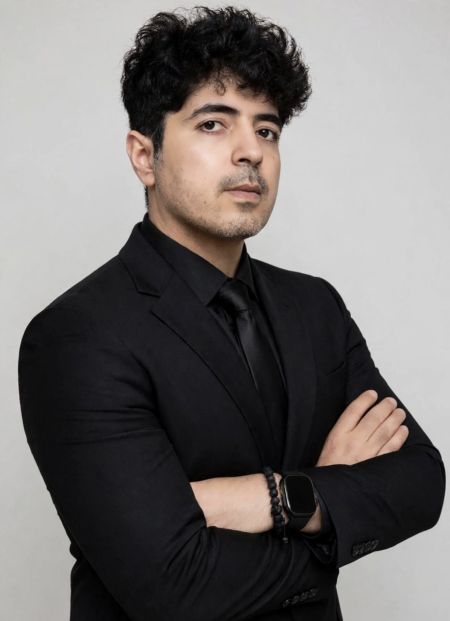
Ravi Chhabra knows all too well how one small mistake in a high-risk environment can have devastating consequences. A Best Candidate Joint Winner for Unit DI3 of the NEBOSH Level 6 International Diploma for Occupational Health and Safety Management Professionals, Ravi sat down with us to discuss the lessons he’s learned so far and the inspiration behind his health and safety career out at sea.
When did you decide you wanted to work in health and safety, and how did you know it was the right career for you?
My path into health and safety wasn’t something I planned overnight—it grew naturally from my experiences working at sea. As a deck officer on offshore vessels, my days involved managing complex simultaneous operations, navigating unpredictable weather, and keeping everything running smoothly. While I loved the thrill of navigation, what really made my heart light up was looking out for the crew on deck and ensuring every single person was safe.
That simple realisation was my green light. I decided to step off the navigation bridge and dive headfirst into a dedicated HSE Officer role. It didn't take long to learn that safety isn't just about ticking boxes, filling out risk assessments, or following strict manuals. At its very core, it’s all about people.
I knew 100% that I was in the right place when I started building real trust with the crew working out on those high-risk offshore decks. There’s nothing more rewarding than seeing the difference it made when people felt truly heard, respected, and looked after.
Congratulations on being named a Best Candidate Joint Winner for the NEBOSH Level 6 International Diploma for Occupational Health and Safety Management Professionals, unit DI3, which you studied with 3s Life Safe Akademie Private Limited.
A) Why did you choose this qualification?
First of all, thank you so much! I am thrilled and honoured to receive this recognition. Having worked for years across complex offshore environments, I wanted to challenge myself and deepen my technical understanding of modern safety management. I was managing high-risk operations, heavy lifting, and subsea projects, and I knew that experience alone wasn't enough. I needed my practical experience to be backed by strong governance and technical processes.
The NEBOSH Level 6 International Diploma for Occupational Health and Safety Management Professionals is widely recognised as the gold standard in our profession. I specifically wanted to do well in Unit DI3 (controlling workplace safety) because it directly addresses the complex operational hazards our crews face daily on deck and at sea.
Balancing my studies with full-time offshore commitments required immense discipline, late nights, and sacrifices. However, I wanted to build my confidence, sharpen my risk assessment mindset, and prove to myself that I could lead health and safety at the highest technical level.
B) How has achieving this qualification helped you so far?
Being named a Best Candidate has been a deeply humbling and proud milestone. For me, this achievement is not about a score or a title; it is about the practical value it brings to the workforce I serve.
The qualification has fundamentally transformed how I view risk, leadership, and workplace culture. It strengthened my technical competence in evaluating complex workplace controls, managing high-risk operations like SIMOPS, and driving continuous safety improvements. More than anything, it has boosted my confidence as an HSE professional. It allows me to bridge the gap between high-level management strategy and ground-level execution.
What is the most valuable thing you learned through your NEBOSH studies?
I would say it’s that safety isn't about eliminating human error, it's about building systems that mitigate human error. Early in my career, I viewed safety purely as compliance. But over time, I realised you need to understand why people make mistakes under operational stress. On a 4,000-ton lift, a mistake usually happens because someone was tired, rushed, or squeezed by tight deadlines, not because they were careless.
Today, my focus isn't on playing referee; it's about designing safeguards that work around human fatigue and real pressure. It’s what changed my job from just enforcing rules to actively keeping people safe.
You have 18 years of health and safety experience in the offshore oil and gas industry. What are the key health and safety issues that need to be considered in this sector?
Working offshore is unlike almost anything on land. Over the years at sea, I have operated high-pressure industrial complexes in the middle of the ocean, isolated from immediate help.
Living and working atop a floating high-pressure facility taught me that safety out here requires extraordinary care. Through my journey managing heavy lifts, subsea ROV launches, and SIMOPS in tight spaces, I learned that Permit-to-Work systems are not just paperwork, but our thin red line against dropped objects and vessel instability.
Standing on deck at midnight, surrounded by miles of dark water, I felt the gravity of extreme isolation and realised that our emergency drills, fire protection checks, and strict ISM and SOLAS compliance are literally the only things standing between us and catastrophe.
I have also personally managed the human side, working 12-hour shifts above noisy engine rooms, far from family, which proved to me that worker fatigue degrades situational awareness long before physical errors happen. Operating around volatile gases on a moving deck gave me a deep respect for process safety, because a minor leak can escalate instantly.
But above all, my greatest realisation has been the power of psychological safety. All technical systems fail if a junior deckhand feels too intimidated to raise their voice. That is why I believe in teamwork and in building trust.
What is next for your professional development?
My journey in health and safety has always been rooted in continuous learning. Right now, my main focus is wrapping up my NEBOSH Level 6 International Diploma in Occupational Health and Safety. Being named a joint Best Candidate for Unit DI3 was a deeply humbling milestone, but it has also inspired me to push even further.
I am committed to staying ahead of industry changes, actively updating my technical knowledge of digital risk-tracking tools, cloud-based reporting systems, and evolving environmental regulations in the oil and gas and energy sectors. Ultimately, professional development for me isn't about collecting certificates—it is about sharpening my skills so I can better serve, empower, and protect the crew on deck every single day.
Having worked in several high-risk environments, particularly in marine safety as a Second Mate, what is one challenge you encountered that taught you an important lesson?
Early in my career as a Second Mate, I faced a situation that completely changed how I look at risk. We were out at sea in rough weather with a 4000-ton crane, trying to move a heavy load. The sea swells were rising, the wind was picking up, and the client was really pushing us to finish fast to save time and money.
On paper, my bridge sensors were indicating that it was still safe to operate. But as I watched from the bridge, I could see the crane operator looking quite hesitant. He was under huge pressure to keep going, so he didn't call a stop. I decided to pause the job anyway and went down to talk to him. It turned out that while my bridge instruments showed safe average wind speeds, sudden gusts were violently swinging the load up at the top of that huge crane. The crane sensors were picking up hidden spikes that the bridge sensors couldn't see. If we had kept going, that crane structure could have failed completely.
That moment taught me a huge lesson: a screen in a comfortable office only tells you half the story. Real safety isn't about blindly trusting a checklist or rushing to meet a deadline. It's about combining real-time data with what’s happening on the ground—and having the guts to hit pause when the numbers don't add up.
What do you enjoy most about being a health and safety professional?
Honestly, what I love most is that the job is basically one big, high-stakes puzzle. When you're working out at sea, there are so many moving parts. What really gets me excited is watching how everything works together and spotting the tiny problems before they turn into huge ones.
You become a bit of a detective; you're looking at equipment reports, watching how the team handles heavy gear, and noticing where things get slow or frustrating. I’ve found that whenever a task is super complicated or annoying to do, people naturally try to find a quicker way around it. That’s usually where things go wrong!
So the fun part for me is stepping back, looking at the data, and fixing the process so it makes sense for the guys doing the work. When you can redesign a job so it's easier, faster, and safer—that’s the sweet spot. You just fixed a hidden problem, kept the ship running smoothly, and nobody had to stress about it. It keeps your brain moving as no two days are ever the same.
How do you see health and safety evolving in the future?
When I look at how fast the world is moving, it’s really exciting to see where health and safety is heading. For a long time, our work was mostly about looking backwards. I’ve spent countless hours filling out paper JSAs, logging near-misses, and reading audit reports long after a shift was finished. That paperwork was necessary, but it often felt like trying to drive the car while looking in the rear mirror.
What excites me most about the future is how technology helps us look forward. We’re moving away from just writing down what went wrong after an incident, and moving toward using data and AI to spot danger before anyone gets hurt.
Think about how much information is floating around an offshore deck—weather patterns, machine temperatures, ocean swells, and how many hours the crew has been working. On their own, those are just random numbers. But when we feed that data into smart AI systems, the computer can connect the dots in seconds. It can warn us, "Hey, these three things together make this job too risky right now—let's pause and double-check."
We’re also seeing smart camera systems and wearable sensors that act like extra eyes. A camera can instantly spot a tiny gas leak or alert someone if they accidentally walk into a blind spot under a heavy load. Wearable tech can even notice when a worker’s body is getting dangerously overheated or tired, long before they realise it themselves
To me, AI and data aren't here to replace human judgment. They're just incredible tools that clear away our blind spots. The tech processes the heavy numbers so that we, as safety professionals, can make smarter, faster decisions on the deck. It’s a huge shift, and it’s making our workplaces safer and smarter than ever before.
What would your advice be to anyone at the start of their health and safety career?
If I were sitting down with someone just starting out in health and safety, my single biggest piece of advice would be just go out in the field—witness every detail and be mindful about every aspect of safety.
When you're starting out, it’s so easy to treat safety as a textbook exercise of regulations, certifications, and compliance checklists. But true competence comes from blending that formal training with ground-level reality.
I always tell new professionals to learn the why behind a rule, because when you understand human psychology and operational pressures, you apply safety with empathy rather than just throwing a rule book at someone.
If you humbly ask an operator, "Walk me through how you do this job?" you’ll learn more about real-world hazards in a ten-minute conversation than in a hundred-page manual.
Of course, you need qualifications like NEBOSH to give you a technical and structured approach towards safety. But if you blend that with field learning, the outcome is skills that can save people, property and the environment.