
Learning never stops: Lessons from a HSE Leader
Case Study: Vicky Pagare
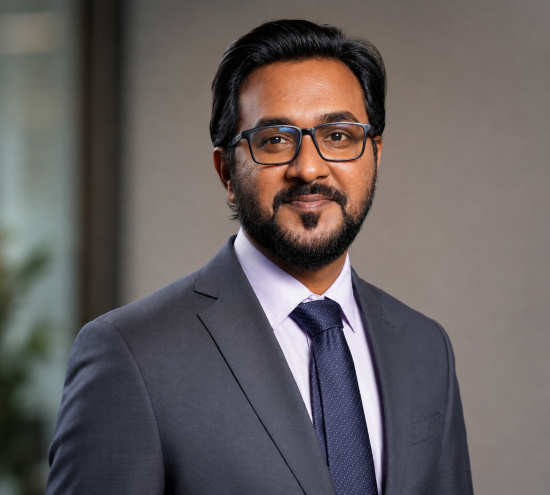
Our latest case study explores the career of Vicky Pagare, an India-based HSE Leader who is driven by the belief that the most important outcome of any high-risk operation is that everyone returns home safely. From starting out in offshore construction in one of India’s most demanding oil and gas environments to leading HSE strategy across major infrastructure assets, he reflects on the experiences that shaped his approach, the value of the NEBOSH International General Certificate, and the lessons learned from working across diverse, high-hazard industries.
When did you first decide to pursue a career in health and safety, and what sparked your interest?
My decision was made during my studies. I became drawn to the safety side of how things are built and operated, and the importance of ensuring the safety of workers on high-risk projects.
What sparked it was a simple realisation. In any high-hazard operation, what matters most is not that the work gets done, its whether everyone goes home safely once it is. I found that I was far more interested in preventing harm than in any other part of engineering, and I wanted that to be my actual job rather than something I did on the side.
So, when I entered the workforce in 2009, I started in safety itself — in offshore construction and hook-up operations at ONGC Mumbai High, one of India's most demanding live oil and gas environments. Beginning my career directly in such a high-consequence setting confirmed I'd made the right choice. Out there, a missed isolation or a lapse in communication can cost someone their life, with no second chances — and that reinforced, from day one, that prevention was the work I was meant to do. Every role since (in power plants, refineries, infrastructure assets) has built on that early conviction.
You achieved the NEBOSH International General Certificate — why did you take this qualification, and how has it supported your career?
I had built strong practical experience through hands-on roles across offshore oil and gas, oilfield services, refineries, and infrastructure assets. However, as I progressed into more senior roles and began working within increasingly international and compliance-driven environments, I realised that experience alone was not enough. Clients, employers, and stakeholders operating to global standards expected a recognised qualification, and NEBOSH stood out because of its international credibility and practical, real-world focus.
What the NEBOSH International General Certificate gave me was a structured way of thinking about health and safety. It strengthened my understanding of hazard identification, risk assessment, and safety management systems, while complementing the practical knowledge I had gained in the field. More importantly, it gave me the confidence and credibility to engage effectively with frontline workers, clients, regulators, and senior leadership, and to clearly explain the rationale behind safety decisions.
NEBOSH provided a strong professional foundation that has supported my career progression from frontline operational safety roles to leading health, safety, environment and social governance across large infrastructure portfolios. It remains one of the most valuable qualifications in my professional journey.
In one sentence, what was the best thing you learned through your NEBOSH studies?
That controlling risk at its source through the hierarchy of controls will always protect people more reliably than depending on people to behave perfectly — engineer the hazard out before you ask anyone to be careful around it.
You’ve worked across oil and gas, infrastructure and power — what have been the key lessons from working in such varied environments?
The first lesson is that the fundamentals travel. Whether I was on an offshore platform, on a land rig with Weatherford, or across live national highways, the core discipline is the same: identify the critical risks, design controls that don’t rely on luck, and verify that they’re actually working in the field.
The second is humility on entry. Every sector believes its challenges are unique, and there’s often quiet scepticism toward someone arriving from a different industry. I learned to spend time on the ground first — understanding the real hazards, the workforce culture and the operational pressures — before proposing anything. Workers taught me that visible, practical presence earns far more trust than authority or a polished presentation.
The third is that high-hazard environments teach you a respect for consequence that you carry everywhere. Offshore work, where the margin for error is unforgiving, gave me a standard I’ve never let drop, even in settings that look less hazardous on the surface but expose far more people.
You’re now in a senior HSE/ESG leadership role — can you tell us about your responsibilities and what a typical day looks like?
I lead the Health, Safety, Environment and Social function at Vertis Infrastructure Trust. I hold accountability for HSSE and ESG strategy across the portfolio — setting the annual plan, running the management system, overseeing regulatory compliance, managing safety budgets, and reporting performance to senior leadership and the Board.
There isn’t really a “typical” day, which is part of what I enjoy. A morning might start with reviewing leading and lagging indicators across the projects on our digital dashboard, spotting where a trend is moving the wrong way. From there it could move to a governance review or Board reporting pack, a discussion on a capital project’s risk profile, or working through an incident investigation and its corrective actions. I try to protect time for what matters most — engaging with site teams and frontline workers. The data may tell you where to look, but only the people on the ground can tell you what’s really happening.
How do you drive improvements in safety culture and performance across multiple sites or projects at Vertis Infrastructure Trust?
I can’t be everywhere at once across a pan-India portfolio, so the answer can’t be personal supervision — it has to be a system that makes the right behaviour the default. I designed and deployed our integrated HSSE management system from the ground up, so that governance, risk identification, controls, monitoring and assurance work consistently regardless of which project you’re standing on.
On top of that structure, three things drive the culture. First, visible leadership: I’ve worked to make safety leadership an expectation of every manager, not just the HSE team, through leadership forums and coaching. Second, behaviour-based safety: I developed various tools like the Green Card / Red card system, look for each other program, animation videos, incentives for consistent adherence of safety practices which helped to influence the safety behaviour and culture of workers at ground level. Third, focusing relentlessly on the few risks that can actually kill someone — reinforcing life-saving rules and critical controls rather than diluting attention across hundreds of minor items. The shift I’m proudest of is when site teams start raising concerns and stopping unsafe work themselves, without waiting to be told.
What has been the biggest challenge you’ve faced in improving health and safety, and how did you overcome it?
One of the biggest challenges has been influencing behaviours and building a consistent safety culture across diverse organisations and operational environments. Policies and procedures can be implemented relatively quickly, but changing mindsets takes time.
I have found that sustainable change comes from engaging leaders at all levels, encouraging open communication, recognising positive behaviours, and demonstrating how safety contributes to operational success. By focusing on leadership commitment and creating opportunities for meaningful workforce participation, we have been able to improve both safety ownership and performance.
How do you measure the impact of health and safety, and how can it contribute to wider business performance?
I’ve moved away from judging the function purely on lagging indicators like incident counts, because they tell you about the past and can lull you into a false sense of safety. The more honest measures are leading: the quality and closure of risk assessments, contractor pre-qualification and assurance, the rate of proactive hazard reporting, corrective action closure, and how visibly leaders are engaging in the field. A rise in people reporting near-misses and concerns is often a sign the culture is getting healthier, not worse.
On the business side, the link is direct. Strong HSSE performance reduces high-consequence risk, protects operational continuity, and underpins our standing with investors and regulators. For any company, robust governance and credible HSE performance is never a cost — they’re part of how the business demonstrates its well-run and investable. Safety and commercial performance pull in the same direction far more often than people assume.
How is the role of health and safety evolving, based on your experience?
The role of health and safety is becoming increasingly strategic. Today's HSE professionals are expected to not only manage compliance and operational risks but also to contribute to organisational resilience, sustainability, wellbeing, and business performance.
There is also a growing emphasis on data-driven decision-making, psychological safety, human factors, and leadership capability. Modern HSE leaders must be able to engage with executive teams, influence organisational culture, and demonstrate how safety creates value for the business. Focus should be towards supporting the business goals for safety, and not on being an inspector of safety.
What advice would you give to someone just starting out in health and safety today?
Earn your credibility on the ground first. Spend time with the people doing the work, understand their realities and the pressures they face, and never treat safety as paperwork to be completed. The best safety professionals are those who understand both the risks and the operational challenges of the workplace.
Build a strong foundation early through recognised qualifications. For me, NEBOSH provided the structured thinking that much of my career has been built upon. It helped me understand not just what to do, but why it matters. At the same time, remember that learning never stops. Every project, incident, and interaction offers an opportunity to grow, and every learning helps you build a better and improved system.
Qualifications may open doors, but relationships, credibility, and integrity are what enable you to influence people and drive meaningful change. Most importantly, never lose sight of your purpose. At the end of the day, the most meaningful measure of success is knowing that people returned home safely because of a decision, culture, or system that you helped create.