
I found my calling in Environmental Health and Safety and I’m as excited about the profession today as I was two decades ago
Case Study: Kieran Doona
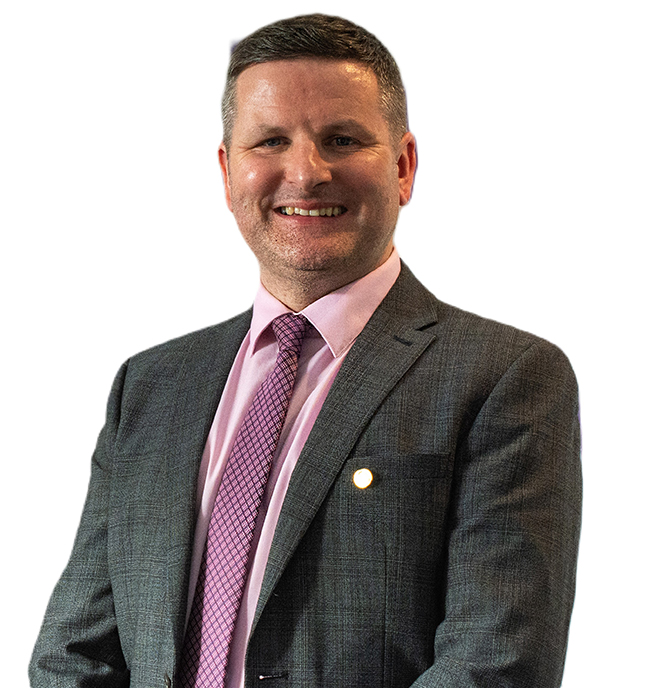
NEBOSH Diplomate Kieran Doona is HSE Manager for Wills Bros Group. In this interview, he shares his story which charts a path from procurement to a senior HSE role. His career progression has been shaped by determination, strong values, and a commitment to protecting people and improving workplace culture.
When did you decide you wanted to build your career in health and safety, and how did you make it happen?
I started my career as a Procurement Manager in 2004. In 2006, my employer enrolled me on a Health and Safety at Work certificate course at University College Dublin. I found that I really enjoyed the subject, and my employer gave me opportunities to build practical experience.
In 2008, I secured my first full time role as a Health and Safety Advisor on a large road infrastructure project in the west of Ireland. I was very inexperienced, but the support from my employer was second to none. I received positive feedback that I was doing a good job, and from that point on, I was hooked. I had found my career calling, and I’ve been doing it ever since. I know I’m still in the right profession because I’m just as excited about the work today as I was back then.
You clearly have a passion for learning, as you hold numerous qualifications up to master's level. What drives this passion?
I only discovered my passion for academic learning after I left school and started working. During the financial crisis in the late 2000's, the economy was struggling and I wanted to make myself as employable as possible. Anyone who works in civil engineering knows how transient it can be, which means you have to go where the work is. I spent my evenings going to night classes and broadening my mind. Almost 20 years later, I still feel the benefit of everything I learned during that period. I would recommend it to anyone in similar circumstances. Education is never a waste.
The qualifications you have achieved include two NEBOSH qualifications. Can you explain why each appealed to you and the benefits you gained from taking them:
- NEBOSH National Diploma in Environmental Management - When I started working as a Health and Safety Advisor in the civil engineering industry, it quickly became apparent that expanding my knowledge of environmental management would benefit my career development. I explored the options available and was particularly drawn to the NEBOSH Diploma in Environmental Management via distance learning. It provided the strong knowledge base I was looking for and ultimately became a stepping stone to completing a master’s degree in environmental science a few years later. The course content and materials were excellent and still serve as a valuable reference today.
- NEBOSH HSE Introduction to Incident Investigation - At the start of my health and safety career, I didn’t have access to any formal training in incident investigation. I learned on the job, supported by the helpful critique and oversight of my line manager. A decade later, I was keen to organise training for my own team and chose the NEBOSH HSE Introduction to Incident Investigation. I attended the course myself and found the content genuinely interesting, with some great conversations taking place throughout the day.
I feel that formal training in this area is particularly important for every HSE professional. A good investigation is essential to ensure lessons are learned so that similar incidents can be prevented in the future. Investigation reports are often shared externally with clients, insurers, lawyers, or regulators, so it’s important that they are completed to the highest professional standards. You don’t get a second chance
What was the best thing you learned through your NEBOSH studies?
My NEBOSH training was fundamental in developing my confidence and competence, which has helped me progress throughout my career. I also take great reassurance in knowing that NEBOSH qualifications are internationally recognised, wherever my career may take me. My NEBOSH studies also gave me access to a network of fellow practitioners who will offer support and friendship for the rest of my professional life.
You have worked for Wills Bros Group since 2008. Can you tell us about the company and its health and safety ethos?
Yes, I feel very fortunate to have had such longevity with Wills Bros Group. This is my eighteenth year with the company, which I’m incredibly grateful for and proud of. Wills Bros is a privately owned, family run UK and Ireland civil engineering contractor. The Wills family are very much involved in the day to day running of the business and caring for employees and delivering for clients is genuinely part of our DNA. Our health and safety ethos is centred on maintaining a strong focus on high risk activities so that everyone goes home safe and well every day. I think my long service is testament to the fact that I believe in the company’s approach which focuses on the things that truly matter. I work in an organisation where safety, health, and wellbeing are valued; my views are listened to and respected; and I feel I’m making a real difference. That’s worth its weight in gold.
As UK HSE Manager for the organisation what are your key responsibilities?
My role and responsibilities have evolved quite organically over my eighteen years with the company. It’s been an interesting journey—starting out as a Health and Safety Advisor in Ireland and growing into the role of HSE Manager overseeing UK operations.
In recent years, my role has become more strategic. I ensure we have the right systems in place while continuing to nurture a personal and caring safety culture. I like to stay close to the detail—tracking emerging trends and developing modern policies and procedures that keep us at the cutting edge of industry standards and client expectations. I’m also very hands on in ensuring we have the best technology to support our work as a self delivering design and build contractor.
Alongside this, I have a strong interest in Corporate Social Responsibility and Sustainability, and I am deeply involved in ensuring our team are trained to the highest standards so they can perform at their very best.
Most of your health and safety experience has been gained in construction. What do you consider to be the key health and safety considerations in this sector?
When I started out in my career, the focus was very much on the hazards that cause physical injury at work. Over the years, the data available to us has become far more sophisticated. We now know that construction workers are four times more likely to die by suicide than from a workplace accident. We are also much better informed about debilitating health conditions and the causes of long term sickness absence.
While we must continue to focus on the causes of Serious Injuries and Fatalities (SIFs), the construction industry is now far more aware and proactive in addressing health, inclusivity, and identifying signs of poor mental health. In my view, the three most important considerations are reducing physical injury, preventing ill health, and supporting mental wellbeing.
What do you enjoy most about being a health and safety professional?
No two days are ever the same. I really enjoy the many layers of the profession—legal, systems, strategic, interpersonal, and behavioural. I love the balance between being out on site and working in the office, and I enjoy being part of a team that delivers projects safely while driving continuous improvement in working standards and organisational culture. I also value the broadness of the profession and the fact that there is always something new to get my teeth into. I can honestly say I’ve never been bored, which is quite something after more than twenty years.
With your extensive experience in health and safety, what qualities do you believe define a successful H&S professional?
I believe that, above all else, strong interpersonal skills and emotional intelligence have guided me through the many phases of my career. Technical knowledge on its own is never enough — you need integrity, and you need to be able to communicate a clear vision to decision makers. Over the past twenty plus years, I’ve worked through the Celtic Tiger, the global financial crash, Brexit, and COVID 19, to name just a few major milestones. These experiences have taught me to be patient during tight budget periods and to seize opportunities to raise standards when conditions allow.
Being a good communicator, winning people over to your point of view, understanding the bigger picture, and focusing on the critical risks that truly matter have all been invaluable qualities throughout my career. You can’t burn yourself out fighting the wrong battles.
What advice would you give to someone looking to build a career in health and safety?
There is very high demand for EHS professionals at present, so there are great opportunities to gain experience. However, you shouldn’t expect opportunities to fall into your lap. You need to make the commitment to getting qualified and then put yourself out there to secure them.
I think the next generation of EHS professionals will need to be very well rounded. To give yourself an advantage in the jobs market, you should be building knowledge in areas such as occupational health, sustainability, corporate social responsibility, ESG, artificial intelligence, new technologies, and gaining specialist training and experience.
In recent years, I’ve found volunteering and networking incredibly beneficial, so I would recommend joining professional membership organisations or the NEBOSH Alumni as a first step. Attending events and expos and meeting peers and prospective employers can also be extremely helpful — you can almost always make a stronger first impression in person than through your CV.