
How Commonwealth War Graves Commission is building a positive safety culture with NEBOSH Endorsed training
Case Study: Commonwealth War Graves Commission
The Commonwealth War Graves Commission (CWGC) has introduced a Leading Safely programme to strengthen leadership capability and further embed a proactive health and safety culture across its international operations. NEBOSH spoke to Adam Blunt, Senior Technical Training Consultant and discussed the thinking behind the programme, how it aligns with CWGC’s values, and the impact the training is designed to achieve.
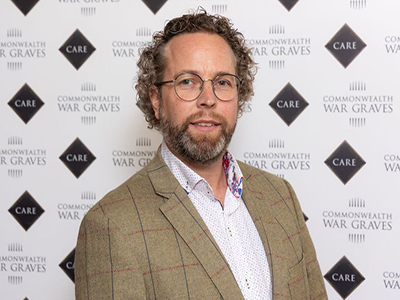
Can you tell us about CWGC and your role within the organisation?
The Commonwealth War Graves Commission (CWGC) is a global organisation responsible for commemorating the 1.7 million men and women of the Commonwealth forces who died during the First and Second World Wars. The Commission cares for cemeteries, memorials, records, and archives across more than 150 countries and territories, ensuring the fallen are remembered with dignity and respect.
As the Senior Technical Training Consultant at CWGC, I am responsible for designing, developing, and delivering learning programmes that support our operational teams. My role is centred on building workforce capability across key areas such as health and safety, craft skills, and machinery operations. Working closely with operational leaders, I ensure that our training is practical, accessible, and directly aligned with organisational priorities, regulatory requirements, and CWGC’s values, enabling our teams to perform safely and effectively in their roles.
How do you identify health and safety training priorities at CWGC?
At CWGC, our health and safety training priorities are shaped through an evidence-based approach, ensuring that we focus on what matters most. We carefully analyse incident and near-miss data, audit findings, and risk assessments to identify patterns, emerging risks, and areas of concern. We also regularly review compliance requirements, legislation, and industry best practice to make sure our training stays current, relevant, and effective.
We also work closely with teams across the organisation to understand capability gaps, behavioural challenges and operational pressures. This gives us a clearer view of where support is needed most. Feedback from previous training programmes and internal surveys also helps shape our approach. This combination of data, compliance insight and employee feedback helps us deliver learning interventions that are targeted, practical and designed to improve safety performance and reduce risk.
What prompted CWGC to introduce the Leading Safely course?
We introduced the Leading Safely course because we recognised that strong leadership behaviours are essential to building and maintaining a positive safety culture. Previous off-the-shelf health and safety programmes helped us meet basic requirements, but they did not always reflect the scale, diversity or geographical spread of our operations. We saw a need for a more tailored programme that not only met legal and ethical standards but also felt relevant to our own working environment through practical examples and bespoke case studies.
The programme was designed to help leaders feel more confident in having meaningful conversations about safety, while reinforcing accountability at every level and encouraging a more proactive approach to managing risk. A key objective was to create greater consistency in how safety expectations are understood, communicated and applied across our global workforce. Ultimately, Leading Safely helps make health and safety a core part of leadership and day-to-day operations, rather than something viewed purely as compliance.
How does the course reinforce CWGC’s CARE values in day-to-day leadership behaviours?
The programme has been designed around CWGC’s CARE values — Commitment, Ambition, Respect and Excellence — bringing these principles to life through clear, practical leadership behaviours.
Commitment is reflected in leaders taking ownership of safety, setting clear expectations, and leading by example. Ambition is demonstrated through a focus on continuous improvement and a determination to raise safety standards across all operations. Respect is embedded in open, honest dialogue, encouraging active listening, valuing different perspectives, and creating an environment where colleagues feel confident speaking up. Excellence is reinforced through the consistent application of best practice and a clear emphasis on delivering high-quality, safe outcomes.
By directly aligning safety leadership with the CARE values, the programme ensures that health and safety is not seen as a separate priority, but as an integral part of everyday decision-making and leadership practice across CWGC.
Why did CWGC choose to have the course NEBOSH Endorsed?
CWGC chose NEBOSH Endorsed to provide independent validation of the training programme’s quality, relevance, and robustness. As one of the world’s most recognised health and safety awarding bodies, NEBOSH endorsement gives our employees and stakeholders the confidence that the course aligns with recognised professional standards.
As CWGC operates across a wide range of international locations, it was important to partner with an organisation that has strong global recognition and credibility. NEBOSH’s international reputation made it a natural choice for CWGC. Having the NEBOSH Endorsed logo on the training enhances employee engagement and reinforces the long-term value and impact of the programme.
Who will take part in the training?
The training will be rolled out in phases to people managers and supervisors across CWGC’s global operations.
Over time, the training will play a role in succession planning and in bringing new leaders on board, helping to embed strong safety leadership across the organisation for the long term.
How will CWGC measure the impact of the programme?
The impact of the training programme will be measured through a multi-level evaluation approach, designed to capture both individual learning outcomes and wider organisational impact.
At an individual level, we will assess changes in knowledge, confidence, and practical application through post-course feedback and supported workplace activities. This will provide insight into how effectively learners are translating key concepts into their day-to-day roles. At a behavioural level, feedback from line managers and day-to-day observations of leadership will help us see where improvements are being made, particularly in the quality of safety conversations, proactive risk management and team engagement.
Across the organisation, we will track key health and safety indicators including incident rates, near-miss reporting, and audit outcomes to identify trends and measure progress over time. Ongoing feedback will also help us refine and strengthen the programme over time, so it stays relevant, effective and closely aligned with CWGC’s commitment to continuous improvement in health and safety.
NEBOSH look forward to speaking with Adam again in the future to learn more about the impact the training has had across CWGC. As the training programme becomes embedded across the organisation, it will be valuable to see how it supports leaders in shaping a stronger safety culture, encouraging more proactive risk management and creating greater consistency in leadership behaviours across CWGC’s global operations.