
From the Army to environmental management: A Best Candidate’s career journey
Case Study: Steve Meagre
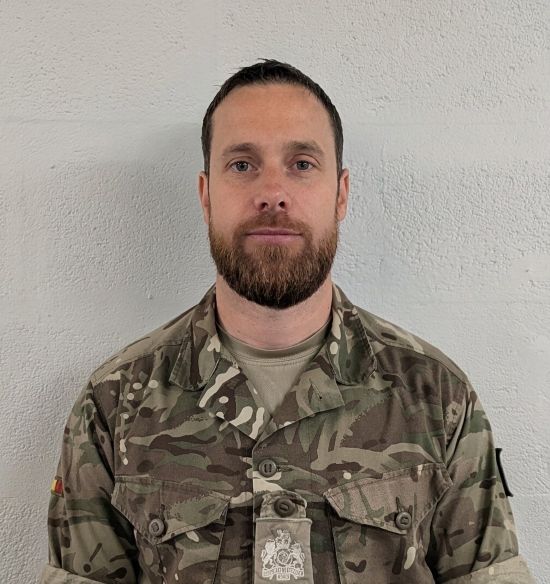
With over 23 years of experience in the British Army, Steve Meagre's career has been built on leadership, risk management, and continuous development. In this interview, he reflects on attaining WO1 rank, becoming a 2026 NEBOSH Best Candidate, and preparing for life beyond military service.
What first inspired you to join the Army, and how did that journey lead you into health and safety?
I was inspired to join the Army because it offered the opportunity to travel, gain a recognised trade as a vehicle mechanic, and be part of something bigger than myself. Those opportunities really appealed to me and provided a strong foundation for both my personal and professional development.
As a vehicle mechanic, health and safety has always been a fundamental part of my day-to-day role. Working with vehicles, tools, equipment and hazardous substances requires strict adherence to safe working practices to protect both personnel and equipment.
As I progressed through the ranks into leadership and management positions, my focus on health and safety grew even further. Managing health and safety became a key responsibility, ensuring that my team and workshop operate safely, comply with regulations, and maintain a positive safety culture. Protecting the wellbeing of my personnel is always a priority, and this has naturally led to a strong interest in health and safety management throughout my career.
You recently completed the Environmental Management Certificate, with NEBOSH Gold Learning Partner, TSW Training, for which you were a 2026 Best Candidate. Congratulations! Can you tell me what made you choose this qualification and how it has helped you so far?
I chose to complete the NEBOSH Environmental Management Certificate because I have been dealing with environmental issues in the workplace for most of my Army career. I wanted to gain a recognised civilian qualification that would validate and strengthen my existing experience.
The qualification gave me a much deeper understanding of environmental management and sustainability, particularly how organisations can reduce their environmental impact while maintaining operational effectiveness. It helped me move beyond practical experience and understand the wider principles, legislation, and best practices that underpin environmental management.
Since completing the course, I have been able to apply what I learned to improve sustainability within the workshop. This has included identifying opportunities to reduce waste, improve resource efficiency, and promote more environmentally responsible working practices. The qualification has given me greater confidence in advising on environmental matters and has enhanced my ability to contribute to both operational and sustainability objectives.
What was the best thing you learned through your NEBOSH studies?
Through my NEBOSH studies I have learned how to effectively identify, assess and manage environmental risks using practical assessment techniques, which has enabled me to make informed improvements within the workplace.
Can you tell us about your role in the British Army and what it entails?
As an Artificer Sergeant Major in the British Army, I lead a high-readiness workshop responsible for the maintenance and repair of over 400 pieces of equipment, ranging from vehicles to weapon systems. Much of this equipment is held at high readiness, meaning it could be required to deploy at very short notice. My role is to oversee the maintenance and engineering processes that ensure this equipment remains operationally ready, while also providing technical and engineering advice to the chain of command on a wide range of equipment and capability issues. In addition, I am responsible for managing personnel, resources, and safety standards to ensure the workshop can consistently support operational requirements.
What is the most enjoyable aspect of your job?
What I find most rewarding is the opportunity to develop soldiers by building their engineering knowledge and experience, helping them improve their skills, confidence, and professional abilities. Seeing individuals grow, take on greater responsibility, and progress in their careers, partially because of the guidance and support I have provided, is extremely satisfying. Knowing that I have contributed to both their personal development and the team's operational effectiveness makes the role particularly rewarding.
How would you say the skills from your career in the Army are similar to those needed for working in health and safety?
I would say there are a great deal of transferable skills between a career in the Army, particularly within the Royal Electrical and Mechanical Engineers (REME), and working in health and safety. Health and safety is a daily consideration in military engineering, where ensuring the safety of personnel is essential while maintaining equipment and supporting operations.
Risk assessments are a routine part of everyday life, helping us identify hazards, control risks, and ensure tasks are carried out safely and effectively. We also regularly conduct health and safety inspections and audits to maintain compliance and promote a strong safety culture within the workplace.
Throughout my career, I have developed skills in risk management, leadership, communication, problem-solving, auditing, and maintaining safe systems of work, all of which are directly applicable to a health and safety role. The experience of managing teams and ensuring safe working practices in a high-pressure environment has provided me with a strong foundation that will transfer naturally into the health and safety profession.
Looking back on your career to date, what achievement are you most proud of?
The achievement I am most proud of is attaining the rank of Warrant Officer Class 1 (WO1). Reaching this rank was the culmination of many years of hard work, professional development, and leadership experience within the Army.
Achieving WO1 gave me the opportunity to serve as an Artificer Sergeant Major within a Light Aid Detachment (LAD), a role that carries significant responsibility for both personnel and equipment. It has allowed me to lead highly skilled teams, provide technical and engineering expertise, and contribute directly to operational capability.
For me, this achievement represents not only personal success but also the trust and confidence placed in me to lead, mentor, and develop others while delivering engineering support at the highest level.
Can you tell us about your ambitions for the future?
My ambitions for the future are focused on preparing for my transition from the Army, as I am due to leave within the next two years. After a long and rewarding military career, my priority is to make the most of the resettlement process and ensure I am well prepared for life in the civilian world.
I am keen to build on the skills, experience, and qualifications I have gained throughout my service and apply them in a new environment. I see this as an exciting opportunity to continue developing professionally while taking on fresh challenges and experiences.
Although leaving the Army will be a significant change, I am looking forward to the next chapter of my career and the opportunities it will bring, particularly within areas such as engineering, health and safety, and environmental management, where I can continue to make a positive contribution.
What would your advice be to anyone at the start of their career?
My advice to anyone at the start of their career would be to make the most of every opportunity that comes your way and always push yourself to be the best you can be. Don't be afraid to step outside your comfort zone, take on new challenges, and continually develop your skills and knowledge.
Throughout my Army career, some of my greatest achievements and experiences have come from seizing opportunities for development and progression. By maintaining a positive attitude, working hard, and being willing to learn, you can build a successful and rewarding career while opening doors to opportunities you may never have expected.