
Developing safer operations through training, process safety, and leadership
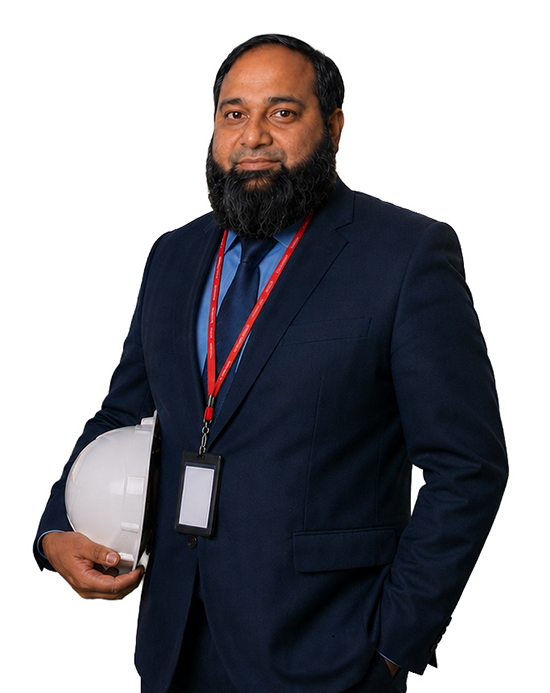
Case Study: Mirza Shoaib Ahmed
From an early exposure to operational risk during his engineering studies to a senior role shaping training and safety performance in one of Saudi Arabia’s leading energy companies, this case study explores Mirza Shoaib Ahmed’s career which is built on continuous learning, research, practical experience, and a strong commitment to protecting people and assets. Through NEBOSH qualifications and hands-on experience across oil, gas, and aviation segments, he has developed a holistic approach to health and safety, combining technical expertise with leadership, training, and a deep understanding of human factors.
When did you decide you wanted to work in health and safety, and how did you secure your first opportunity in the profession?
I trace my interest in health and safety back to my final year engineering project, which I conducted with a well-known multinational company. During my time with the organisation, I witnessed how operational incidents can affect people, assets, business continuity and reputation of an organisation.
I then went on to work for Pakistan State Oil (PSO), Pakistan’s leading energy company, where I realised that achieving operational excellence requires more than technical competence alone. A strong safety culture and effective risk management are also essential. This realisation motivated me to pursue professional development in occupational health and safety and to seek opportunities to get involved in HSE tasks. I demonstrated a strong commitment to operational safety by participating in risk assessments, supporting incident investigations, and actively contributing to safety improvement initiatives within the organisation. My efforts were recognised, and I became part of the HSE team at PSO. My professional journey in HSE has continued ever since.
You passed your first NEBOSH qualification, the NEBOSH International General Certificate in Occupational Health and Safety, in 2010. Why did you choose it?
At that time, I was seeking an internationally recognised qualification that would provide a structured understanding of workplace health and safety principles to complement my engineering background.
My manager and I both viewed the NEBOSH International General Certificate as an ideal foundation for developing the competencies required for me to contribute more effectively in high-risk operational environments. It is widely respected across the global energy industry and provides practical knowledge in hazard identification, risk assessment, accident prevention, and safety management systems.
It proved to be a pivotal decision, giving me greater clarity in occupational health and safety and broadening my professional perspective.
How did achieving this qualification help your career?
The qualification significantly widened my perspective beyond engineering and operational performance, introducing a more systematic approach to managing workplace risks. It enhanced my ability to identify hazards, conduct effective risk assessments, support compliance initiatives, and contribute to corporate safety objectives.
More importantly, it helped to establish my credibility as a safety professional and opened up opportunities to take on greater responsibilities in areas such as training, industry research, safety leadership, incident prevention, and operational risk management within the oil and gas sector.
Why did you choose to complete the NEBOSH International Technical Certificate in Oil & Gas Operational Safety in 2012?
I wanted to deepen my understanding of the specific hazards and risk controls associated with the oil and gas sector, where I was building my career. This qualification offered a more specialised focus on hydrocarbon hazards, permit-to-work systems, confined space entry, emergency response, asset integrity, and the prevention of major accident events.
The qualification enabled me to better understand the unique challenges of the oil and gas industry. It also strengthened my ability to contribute to safe operations in environments where a single failure can have significant consequences for people, assets, the environment, and business continuity.
In 2025 you passed another two NEBOSH qualifications, studying with NEBOSH Gold Learning Partner, SHEilds. Can you share what benefits you gained from completing:
- NEBOSH HSE Certificate in Process Safety Management:
The Process Safety Management qualification provided me with a deeper understanding of major accident hazards and the systems required to prevent catastrophic incidents in process safety industries.
As a professional, I found the course particularly valuable as it strengthened my knowledge of process safety barriers, management of change, asset integrity, human factors, and permit-to-work systems. I also valued learning from major industry incidents.
The qualification has enabled me to better integrate process safety concepts into my research work, operational training programmes and promote a stronger safety culture across fuel handling and aviation operations.
- NEBOSH Health and Safety Management for Construction (International):
Although I primarily specialise in oil and gas and aviation fuelling operations, supporting construction and infrastructure projects frequently intersect with my operational training role.
This qualification enhanced my understanding of construction-specific hazards, including contractor management, temporary works, excavation safety, work at height, contractor training, and project risk management.
It has improved my ability to support safe project execution, evaluate contractor training and competency, and ensure that construction activities are effectively integrated into existing operational safety management systems.
In one sentence, what has been the best thing you have learned through your NEBOSH studies?
I would say that health and safety is part of every activity performed in the workplace. A strong safety culture is built not only through procedures and compliance, but also through leadership, communication, human factors awareness, and continuous engagement at every level of an organisation.
From your professional experience, give us an example of a challenge you faced that provided you with a real learning experience.
One of the most valuable learning experiences in my career occurred while serving as Superintendent EHS and Training at UGAFCO in Saudi Arabia. In addition to my assigned responsibilities, I was periodically entrusted with overseeing operations in the absence of the Country Manager (Operations and Sales). This opportunity exposed me to the realities of managing operational performance, customer expectations, resource constraints, and safety and training requirements simultaneously.
The experience transformed my understanding of health and safety management. While safety professionals often focus on compliance, procedures, and risk controls, operational leadership requires balancing business objectives with risk management in real time.
It was during this period that I truly understood the practical meaning of ALARP (As Low As Reasonably Practicable). I learned that effective safety management is not about stopping operations, but about enabling safe and efficient operations through informed decision-making, strong leadership, and proportionate risk controls. This experience continues to influence my approach to safety, training, and operational excellence to this day.
Since 2020, you have served as the Arabian Petroleum Supply Company’s Training Manager. Can you tell us about the company and your role?
The Arabian Petroleum Supply Company (APSCO) has been a pioneer in energy solutions for over 60 years. It specialises in aviation fuels, motor and industrial lubricants, and renewable energy. As a respected partner in Saudi Arabia’s energy sector, APSCO is a proud contributor to Vision 2030 and is committed to quality, reliability, and innovation.
As Training Manager, I am responsible for developing, researching, implementing, and delivering competency-based training programmes that support operational excellence, health and safety performance, regulatory compliance, and workforce development. My role includes conducting training needs analysis by industry research, managing competency evaluations, overseeing technical and safety training initiatives, supporting compliance with industry standards such as JIG and GACA, and meeting broader industry requirements through training, while fostering a culture of continuous learning.
As the Training Manager for your organisation, how do you identify training needs and measure the impact of training that is delivered?
Training needs are identified through a structured process that includes competency assessments, industry research, operational risk assessments, incident investigation findings, regulatory requirements, management reviews, performance evaluations, internal audits, and changes in operational processes, standards, or technology. I also work closely with the operational team and subject matter experts to understand emerging competency requirements.
To measure training effectiveness, multiple evaluation methods are used, including supervisor feedback, knowledge assessments, spot checks to verify competency, workplace observations during routine tasks, audit findings, safety performance indicators, incident trends, and compliance results. The ultimate objective is to ensure that training leads to measurable improvements in both individual competency and organisational performance, rather than simply completing training hours.
Does your health and safety background help you in your role as Training Manager?
Effective health and safety performance relies on workforce competence, which is developed through continuous professional development, including well-designed training. Many of the challenges organisations face, whether related to human error, procedural non-compliance, or operational incidents, can often be addressed through a combination of safety leadership, competency assurance, and targeted training interventions.
Having a strong health and safety background enables me to design training programmes that go beyond simply meeting compliance requirements. I like to focus on developing risk awareness, strengthening safety culture, improving decision-making, and addressing the human factors that influence workplace performance.
Although the responsibilities may appear different, they are closely aligned. Health and safety professionals identify what needs to be controlled, while training professionals ensure people have the competence and confidence to manage those risks effectively. My experience in both areas has allowed me to contribute more holistically to operational excellence and organisational safety performance.
In addition to your assigned responsibilities, you have also been involved in research activities. Can you tell us about this aspect of your career path?
Throughout my career, I have believed that continuous learning and knowledge sharing are key to improving health, safety, and training performance. Alongside my professional responsibilities, I have conducted research on various areas linking training effectiveness, safety culture, human factors, workforce competency, process safety, and operational performance in the oil and gas and energy sector. My research aims to bridge the gap between theory and practice by exploring practical solutions to real-world challenges.
To date, I have authored seven published research papers covering critical issues in the oil and gas and energy sector, including the role of human factors training in strengthening safety culture, the development of future-ready safety professionals, and the importance of effective safety and functional training. Conducting this research has helped me stay up to date with emerging industry trends, evaluate best practices, and contribute to professional discussions on improving workplace safety and training. It has also strengthened my analytical thinking and enabled me to design more effective training and competency development programmes for operational personnel.
In your opinion, what qualities do you believe a health and safety professional needs to be successful?
A successful health and safety professional must possess strong technical knowledge, integrity, leadership capability, effective communication skills, analytical thinking, and a genuine commitment to protecting people and assets.
Equally important is the ability to positively influence behaviour, understand human factors, engage with employees at all levels, and balance operational realities with safety requirements.
In today’s rapidly evolving industries, adaptability and continuous learning are also essential.
What do you enjoy most about being a health and safety professional?
The opportunity to make a meaningful difference by helping to prevent injuries, improve operational reliability, and contribute to safer workplaces is what motivates me most. I find satisfaction in developing people through training and seeing how increased competence and awareness can positively influence safety culture, operational performance, and organisational resilience.
Knowing that my work helps protect lives and valuable assets, while supporting business success, is highly rewarding.
What advice would you give to someone who wants to build their career in health and safety?
My advice would be to build a strong foundation in safety principles, continuously invest in professional development (NEBOSH is an excellent option), and gain practical experience in real operational environments.
Health and safety is not solely about compliance; it is about understanding how work is performed, proactively identifying risks, and helping organisations achieve sustainable performance. Developing technical competence, communication skills, leadership capability, and an understanding of human factors will greatly support long-term career success.
Most importantly, remain curious, keep learning, and remember that effective safety professionals create value by helping people work safely and efficiently, rather than simply enforcing rules. Build connections with other professionals wherever possible, and do not hesitate to take on challenges that push you beyond your comfort zone.