
Working Underground: Making a difference in Ghana’s mining industry
Case Study: Winifred Ayelsum
We spoke with Winifred Ayelsum, a 2023 recipient of the Michael Adamson NEBOSH Diploma Scholarship, about her journey into health and safety following a workplace incident that impacted her family, and how her NEBOSH scholarship and qualifications have helped her succeed in the industry.
Based in Ghana, Winifred used her scholarship to complete her NEBOSH Level 6 International Diploma for Occupational Health and Safety Management Professionals through NEBOSH Gold Learning Partner RRC International.
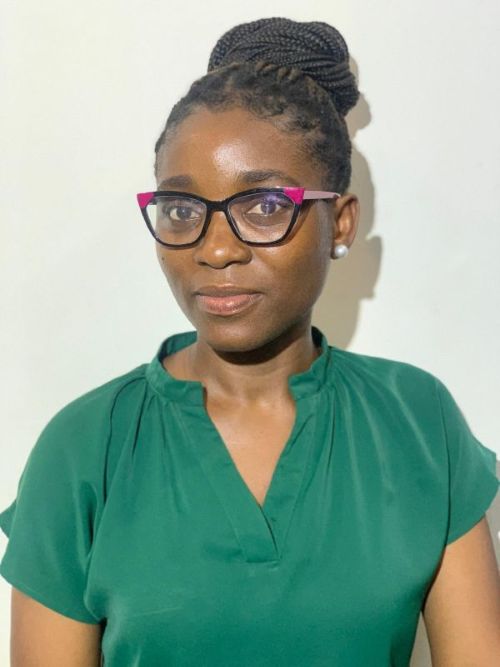
Winifred, please can you tell us what attracted you to a career in health and safety?
My journey into health and safety was not something I originally planned. After completing my first degree in Biochemistry, I began my career as a quality control and assurance officer, before moving into a role as a chemical analyst in a manufacturing company. In 2019, I relocated to Obuasi, a mining community in the Ashanti Region of Ghana, to join my family. There were far fewer employment opportunities in my field there than in larger cities such as Accra and Takoradi, and this ultimately led to a change in my career path.
I applied for several roles, ranging from teaching to medical laboratory positions, but none worked out. I became increasingly frustrated and worried, and it was during this time that someone recommended I look into safety courses that I could study from home. I decided to take their advice and enrolled on the NEBOSH International General Certificate in June 2022, initially with the simple aim of improving my chances of securing a job and earning an income.
Later that year, however, something happened that completely changed my perspective. My uncle was involved in a serious accident at an underground mine, which resulted in the amputation of his leg. It was a near-death experience. Visiting him in hospital and seeing the excruciating pain he was in was deeply upsetting. In those moments, I kept thinking that no one deserves to go through such an experience. I found myself wishing I could go back in time to before the incident and put the right controls in place to prevent it.
That experience transformed the way I viewed health and safety. What began as a course taken simply to improve my employment prospects became something far more meaningful. I started to see health and safety as a way to protect people from experiencing the kind of pain that my uncle, and our family, went through. From that moment, my motivation changed. It was no longer just about finding a job; it was about making a real difference by helping to prevent accidents and protect lives.
Why did you choose the NEBOSH International General Certificate in particular?
When I decided to pursue a safety course, I came across several options offered by different organisations. However, the NEBOSH International General Certificate (IGC) stood out to me for a number of reasons.
Firstly, it is an internationally recognised qualification. I did not want to invest my time and effort in a course that would only be recognised within Ghana. I wanted a qualification that could validate my competence wherever I found myself in the world, and NEBOSH offered that global recognition.
Secondly, I was particularly drawn to the structure of the course. The combination of IG1, which focuses on the theoretical foundations of health and safety, and IG2, which is a practical risk assessment, appealed to me greatly. As someone who was new to health and safety, I wanted a programme that would give me both the knowledge and the opportunity to apply that knowledge in a real workplace environment.
Unlike some shorter courses it is structured to be both comprehensive and practical. The practical requires you to carry out a real risk assessment in a workplace and develop a detailed report with recommendations for improvement. For me, this felt like a valuable learning experience because it allowed me to observe workplace activities, identify hazards, and think critically about suitable control measures. I felt that this blend of theory and practical learning would better prepare me for a career in health and safety.
How did gaining the NEBOSH International General Certificate help you?
Achieving this qualification significantly strengthened my understanding of workplace health and safety and gave me practical skills that I continue to use in my role today.
One of the most valuable skills I gained was the ability to conduct effective and comprehensive risk assessments. Through the course, I learned how to systematically identify workplace hazards, evaluate the risks they pose, and recommend appropriate control measures to reduce or eliminate those risks. This structured approach has become a core part of how I manage safety in the workplace.
Beyond risk assessment, the qualification also helped me develop a deeper appreciation of proactive safety management. I learned the importance of investigating incidents, promoting a positive safety culture, and implementing preventive measures rather than simply reacting after accidents occur. This has enabled me to approach safety issues with greater confidence and professionalism.
Importantly, achieving the NEBOSH IGC also opened the door to further development. It was the key requirement that made me eligible to apply for the Michael Adamson NEBOSH Diploma Scholarship. Having this qualification at the time gave me the opportunity to take the next step in my professional journey, which ultimately had a significant impact on my career progression.
Overall, the NEBOSH IGC provided a strong foundation in health and safety practice. It equipped me with the knowledge, practical skills, and confidence needed to contribute meaningfully to improving workplace safety while also creating opportunities for further growth in the profession.
In 2023, you were one of 20 recipients of the Michael Adamson NEBOSH Diploma Scholarship. Congratulations! Can you share how you felt when you found out?
When I found out I had been awarded a Michael Adamson NEBOSH Diploma Scholarship, my emotions were all over the place. There was this surge of happiness that brought emotional overload (tears and laughter at the same time). I remember it clearly: it was a very sunny day, and I had just returned from the market. On a whim, I checked my phone and saw the email from NEBOSH. As I opened it, I read the congratulatory message confirming my scholarship.
I literally jumped in my room and kept shouting. It was one of the happiest and most surreal moments of my life. The long nights I had spent carefully writing and reviewing my application had paid off. That single application, which I had poured my heart into, had succeeded.
In that moment, it felt like the universe was confirming something I had long sensed: that my journey into health and safety was not by chance. What started as a course I took to get a job had grown into a real calling, a path to develop a solid, meaningful, and lasting career in this field. Being chosen from a pool of thousands of applicants made me feel seen and validated. It reassured me that my story, my motivations, and my dedication mattered, and it gave me renewed confidence in the trajectory I had set for my life and career.
You have now passed your NEBOSH Level 6 International Diploma for Health and Safety Management Professionals and have also secured your first dedicated health and safety role. How do you feel your scholarship helped progress your career?
Since being awarded the scholarship, my career visibility and opportunities in health and safety have grown significantly. I remember attending a safety training session where the attendance sheet was being circulated. As I wrote my name, someone tapped me on the shoulder and said, “You are the Winifred lady from the NEBOSH scholarship!” We connected after the meeting, and that brief recognition highlighted how the scholarship had increased my professional profile.
The scholarship also played a key role in helping me secure my first dedicated health and safety role. Remarkably, the person who recommended me for the position had never met me before. They simply saw my CV, noticed that I was a NEBOSH Diploma scholar, and recognised the commitment and expertise it represented. The interview itself felt more like a conversation than a formal assessment, which allowed me to express my passion for health and safety fully.
Passing the NEBOSH Level 6 International Diploma has reinforced my potential and confidence in the field. It confirmed that the investment of effort, time, and learning was worth it, and it has motivated me to continue growing, contributing, and making a meaningful impact in health and safety management.
What was the best thing you learned through your NEBOSH studies?
I would say the real human impact of health and safety. My NEBOSH studies have helped me understand that behind every workplace incident statistic is a real person, a family, and a community whose lives can be deeply affected. Injuries and fatalities do not only impact the individual involved; they often leave lasting emotional, financial, and social consequences for the people who depend on them.
Through my studies, I also came to appreciate an important but sobering truth in the safety profession: many of the controls, procedures, and standards we rely on today were developed because something went wrong in the past. In many cases, someone was seriously injured or even lost their life before those lessons were learned. In that sense, it is often said that “safety rules are written in blood.” This realisation had a profound impact on me. It reinforced the importance of not waiting for accidents to happen before taking action.
NEBOSH has helped me develop the mindset that effective safety management must always be proactive. Instead of reacting to incidents, we must constantly identify hazards, assess risks, and implement appropriate controls to prevent harm before it occurs. To me, this is about fairness and responsibility—no one should have to suffer an injury for a workplace to realise that a control measure was necessary.
This understanding has strengthened my personal commitment to health and safety. It motivates me to take my role seriously and to advocate for safer working conditions, ensuring that workers can carry out their duties in an environment where risks are properly managed. Ultimately, my goal as a health and safety professional is simple but meaningful: to help ensure that people return home safely to their families at the end of every working day.
Can you tell us about your current role and responsibilities?
I work as a health and safety officer at Mining and Building Contractors (MBC), a contractor for AngloGold Ashanti (AGA), Obuasi Mine. My role focuses on ensuring that high-risk activities are carried out safely and in line with the client (AGA) standards.
A key part of my work involves supervising ground support activities which are essential for stabilising underground excavations and preventing hazards such as rock falls or ground collapse. This responsibility is particularly personal to me because a ground collapse was the exact incident that led to my uncle’s accident and the amputation of his leg. Being involved in work that helps prevent such occurrences reminds me daily why effective safety controls are so important.
I also supervise bulkhead construction as part of a sealing project led by the ventilation department at AngloGold Ashanti. The purpose of these bulkheads is to seal off certain cross-cuts or remnant areas that are no longer in use, preventing fresh air from flowing into those spaces. This allows the ventilation team to redirect and maximise the fresh air supply to active working areas where miners are currently operating. My role is to ensure that the bulkheads are constructed to AGA standards and are of high structural quality to prevent failure or collapse, which could create secondary hazards underground. These ventilation control measures also play a critical role in protecting worker health by ensuring that active work areas are properly ventilated, helping to control heat and remove fumes that could be harmful to workers' respiratory health.
Beyond these technical responsibilities, I engage closely with workers by conducting toolbox talks, planned task observations, inspections, critical control verifications, and safety audits. I find great value in these interactions because they help me understand the realities of underground work and reinforce the shared responsibility we all have in maintaining a safe working environment.
What do you enjoy most about being a health and safety professional?
Its the opportunity I have to make a meaningful difference in people’s lives. When I applied for the NEBOSH Diploma Scholarship, I shared two statements that truly reflect how I view this profession. The first was a quote by Michelle Obama: “Success is not about how much money you make; it is about the difference you make in other people’s lives.” The second was a personal reflection: “Of what use is a NEBOSH Diploma if I cannot use it to help others?” These two ideas continue to guide me in my work today.
I find great fulfilment in waking up each day and entering a high-risk environment with the purpose of helping others stay safe. For me, safety is not only about enforcing rules or ensuring compliance; it is about influencing how people think about their own wellbeing and the wellbeing of others.
I particularly enjoy engaging with workers and encouraging them to personalise safety, not only at work but wherever they find themselves. Sometimes the smallest behavioural changes can have a powerful impact. I remember one story shared during a routine toolbox meeting that really stayed with me. A worker mentioned that after finishing his shift, he entered a taxi to go home and instinctively put on his seatbelt. He said it had become almost automatic because of the strong safety culture at the AngloGold Ashanti site. According to him, the taxi driver looked at him in surprise because it is not common for passengers in public taxis in Ghana to wear seatbelts. Interestingly, the driver then immediately put on his own seatbelt before driving off.
Moments like this remind me that safety awareness does not stop at the workplace. When workers carry safe behaviours into their everyday lives and even influence others around them, it shows that the message is truly making an impact. Stories like this, and many others like it, bring me great joy and reinforce why I chose this profession.
What do you see as the biggest challenge facing health and safety professionals today?
One of the biggest challenges is the gap that sometimes exists between organisations saying that safety is a priority and actually empowering people to act on it.
I remember attending a Quarter 1 communication session with the Managing Director at the AngloGold Ashanti Obuasi site, where I currently work. During the session, he emphasised that safety is the company’s number one value and encouraged everyone, not just safety professionals, to speak up if they are asked to perform an unsafe act. His message was clear: if it is not safe, do not do it.
In workplaces where senior leaders prioritise production targets over safety, it can be more difficult for health and safety professionals to carry out their responsibilities effectively. Instead of being seen as someone working to protect people and the organisation, they may be viewed as the cause of delays or an obstacle to production.
For health and safety to be truly effective, professionals in this field must be valued, listened to, and empowered to speak up without fear of criticism or blame as we are in my organisation. When organisations genuinely support safe production rather than production at all costs, safety professionals can perform their role effectively, and workplaces become safer for everyone.
In my view, when safety professionals are given a real voice and leadership consistently supports safe decision-making, it creates an environment where safety is not just a policy, but a shared commitment across the entire organisation.
Looking back on your career to date, what achievements are you most proud of?
I suppose having the courage to step outside the path I originally studied is one of the things I am most proud of. With a background in Biochemistry, it would have been easy to limit myself to that field. Instead, I chose to pursue a different direction in health and safety, even at a time when the path ahead was uncertain.
I am also proud of applying for and being awarded the Michael Adamson NEBOSH Diploma Scholarship on my very first attempt. At the time, some suggested I was wasting my time applying as they considered it to be a scholarship for more experienced professionals in the field. Despite this, I went ahead and submitted my application and receiving the scholarship remains a significant milestone for me and a defining moment in my career.
I am proud to be working and making a difference at the same mine site where my uncle was seriously injured. Each day serves as a reminder of the importance of effective safety controls and reinforces my commitment to preventing similar incidents from occurring.
What I am most proud of, however, is being part of a team contributing to a positive shift in the safety culture within the Obuasi underground mining environment. In the past, the phrase “Daadi akasa,” meaning “the underground has spoken,” was often associated with serious injuries and carried a sense of fear. Today, that narrative is gradually changing. There is a growing emphasis on safety awareness, reflected in expressions like “Safety – yɛnkwa nti” (“Safety, for the sake of our lives”), which highlight a more proactive and life-centred approach to safety.
Most importantly, I take pride in knowing that through my role, I contribute to creating a safer working environment where workers in a high-risk underground setting can carry out their duties and return home safely to their families. For me, that is one of the most meaningful achievements in my career.
What would be your advice be to anyone at the start of their health and safety career?
Believe that you can make a difference, even if your journey into the profession was not originally planned. Do not underestimate where small beginnings can lead. You may start, as I did, simply looking for an opportunity, but if you remain curious, committed, and open to learning, that journey can grow into something much more meaningful.
It is also important not to let doubt, whether from others or from within, hold you back. There will always be reasons not to try, but some of the most life-changing opportunities come from taking that first step. Having the courage to pursue an opportunity, even when you feel unqualified or uncertain, can shape the direction of your entire career.
Another important piece of advice is to always remember that health and safety is about people. Behind every rule, procedure, and control is a human life. When you keep this at the centre of your work, it changes how you approach things. It becomes more than a job; it becomes a responsibility.
Finally, recognise the influence you have, no matter your level of experience. Every conversation, every toolbox talk, and every interaction is an opportunity to shape how someone thinks about safety. Never underestimate the impact of small actions, because they often lead to lasting change.
In the end, success in this profession should not be measured only by qualifications or titles, but by the quiet assurance that, because of the work you do, someone is able to return home safely to their family.