
The best safety leaders are those who serve others and inspire change
Case Study: Will Maiker
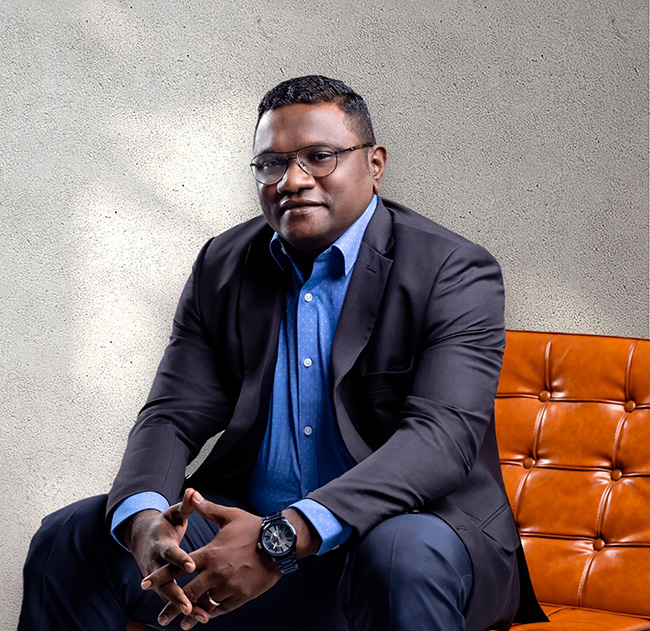
NEBOSH Diplomate Will Maiker is Senior Director, Environment, Health & Safety for Vantage Data Centers (VDC), with responsibility for the Asia Pacific region. With over 22 years' experience, he has built a career focused on strengthening safety culture, simplifying complexity and engaging people through creativity and technology. In this case study, Will reflects on his journey into health and safety, shares the skills needed to lead across borders and cultures, and offers practical advice for those aspiring to work at this level.
Did you always know you wanted to build your career in this profession, and how did you make it a reality?
I began my career in civil engineering, but a workplace accident involving a close friend changed the entire course of my professional life. Witnessing the pain and lasting consequences of that incident on him and others transformed my outlook and career. What began as a deeply painful experience, became a passion to ensure others would not face similar fates. From that moment, I committed myself to health and safety. Over the past 22 years, I have built a career dedicated to protecting people and improving workplace cultures, supported by creative initiatives designed to engage employees and improve performance.
Why did you choose to complete the NEBOSH International Diploma and what benefits did you gain?
I chose it because it is globally recognised and provides a comprehensive framework for managing health and safety across borders. The benefits have been immense: it sharpened my strategic thinking, strengthened my credibility, and gave me the tools to drive improvement at scale. It also reinforced the importance of applying knowledge with creativity and clarity to make a real difference.
In one sentence, what has been the best thing you have learned through your NEBOSH studies?
That effective health and safety leadership is about embedding a culture of care and simplifying complexity.
Looking back on your career to date, what decisions, habits or experiences have had the biggest impact on helping you progress into a senior role?
Three factors have shaped my career:
Focusing on people rather than compliance. Early in my career, I realised that sustainable safety performance comes from influencing behaviour, building trust and developing leaders, not simply enforcing rules. That mindset helped me move from being a technical practitioner to becoming a strategic business leader.
Continually investing in learning and adaptability. I deliberately sought opportunities across different industries, including rail, aerospace, manufacturing, facilities management and data centres. Exposure to different sectors, cultures and business models broadened my perspective and made me a more effective leader.
Embracing innovation and technology early. Safety leaders must move beyond spreadsheets, manual reporting and administrative tasks. I have consistently explored how digital tools, automation, data analytics and artificial intelligence can simplify processes, improve decision-making and free up time for higher-value activities. Developing practical AI capability is now essential. It enables OSH professionals to automate routine tasks, identify patterns and focus more on predictive analytics rather than relying solely on historical reporting.
Do you have any tips to help others manage change well?
Listen first, understand local contexts and co-create solutions with stakeholders rather than imposing them. Change is most successful when leaders invite others to shape the journey. Simplify the path forward, use creativity to inspire engagement, and leverage networks to build momentum.
What qualities do you believe a health and safety professional needs to be successful?
Integrity and resilience are essential attributes that all health and safety professionals should possess. Strong communication skills are also important to ensure safety is accessible to colleagues. Complex processes often need to be simplified and creatively presented to get the message across in an engaging way.
Building and maintaining a strong professional network is vital for learning and influence, and having a good knowledge of technology is also becoming increasingly important for health and safety professionals.
It is important to remember that the best safety leaders are those who serve others and inspire change.
What practical steps can someone take in the next 12 months to increase their chances of moving into a more senior or influential role?
Focus on capabilities beyond technical safety knowledge:
- Learn how the organisation operates commercially and financially.
- Improve stakeholder-management, writing and presentation skills.
- Volunteer to lead a cross-functional project with a measurable outcome.
- Build a strong network inside and outside the organisation.
- Seek a mentor and actively support the development of others.
- Learn to present risk in a way that helps senior leaders make decisions.
- Develop digital, data-analysis and visualisation capability.
- Build practical AI skills to automate repetitive work, simplify processes and improve the quality and speed of analysis.
- Learn the fundamentals of predictive analytics so that you can identify patterns, anticipate risk and focus attention before an incident occurs.
Most importantly, become known for solving problems rather than simply identifying them. Senior leaders value professionals who combine sound judgement with practical solutions.
When reviewing applications or CVs, what separates candidates who get shortlisted from those who do not?
Technical qualifications remain important, but they are rarely a deciding factor. The strongest candidates demonstrate:
- Evidence of measurable outcomes rather than lists of responsibilities.
- The ability to influence people and deliver change.
- Clear communication and credible stakeholder management.
- Experience across different functions, regions or operating environments.
- Examples of leadership, even without a formal leadership title.
- Curiosity, learning agility, and an understanding of how technology, data, and AI can improve safety and business performance.
I pay particular attention to candidates who can explain the impact they created, not just the activities they completed. Strong candidates understand that safety should enable operational and business success, not operate in isolation.
From your experience, what do the strongest candidates do in interviews that show they will succeed in the role?
The best candidates bring authenticity, preparation, and practical examples. They explain a significant challenge, how they influenced others, the outcome they achieved, and what they learnt. They can also discuss setbacks honestly and show how they adapt.
Strong candidates connect safety with operational or business objectives, ask thoughtful questions, and demonstrate curiosity about the organisation’s culture and risks. They show humility alongside confidence and use evidence rather than slogans.
If someone wanted to be in a senior OSH leadership position similar to your own in 10 years, what should they start doing today?
Start thinking beyond safety. Senior leaders are not trusted simply because they understand legislation, standards, or compliance. They are trusted because they understand people, strategy, business, risk, technology, and organisational culture.
Aspiring leaders should:
- Develop commercial and business acumen.
- Strengthen communication, influencing, and stakeholder-management skills.
- Learn to lead through others and build capable teams.
- Gain exposure to different industries, cultures, and operating models.
- Build digital, analytical, and AI capabilities.
- Use AI responsibly to automate low-value administration and create more time for strategic, human, and predictive work, ensuring they gain an understanding of its limitations. It’s a tool that should be used to supplement, not replace, our own knowledge and experience.
- Progress from lagging indicators towards predictive analytics and forward-looking risk insights.
- Invest in developing future leaders, not only in personal advancement.
When you look back on your career so far, what achievement are you most proud of?
I am proud of the teams I have had the opportunity to work alongside and support, and of what we have achieved together in improving safety, engagement, and organisational maturity. I am also really grateful for the chance to coach and mentor others along the way. Seeing more than 30 colleagues grow, gain confidence, and go on to succeed in their own careers has been one of the most rewarding parts of my journey.
What do you enjoy about being a health and safety professional?
I am motivated by knowing that my work directly protects lives and creates better workplaces. It is rewarding to see safety evolve from being viewed as a compliance requirement to being embraced as a core organisational value. I particularly enjoy designing initiatives that make safety engaging and meaningful for people.