
The best health and safety professionals are those who inspire others to care about safety as much as they do
Case Study: Mahedine Bektache
In our latest interview, we spoke with NEBOSH Diplomate Mahedine Bektache about his career and the part NEBOSH qualifications have played. He shares advice to those at the start of their careers and offers tips on making successful transitions between sectors and countries.
When did you decide you wanted to build your career in health and safety, and how did you make it happen?
My passion for health and safety was first sparked in 2004, when my high school organised a visit to the Darguina Electricity plant in Algeria. The visit took place shortly after the tragic explosion at the Skikda refinery, which claimed 29 lives and deeply affected the nation. Before the tour began, the plant’s Health and Safety Manager addressed us with a powerful message. Reflecting on the Skikda tragedy, he said, “Production can be rebuilt, but a lost life can never be replaced.” His words, delivered with sincerity and purpose, resonated deeply with me.
As we toured the plant, I became fascinated by how every procedure, every sign, and every piece of protective equipment was designed with one goal: keeping people safe. That experience shaped my outlook on both work and life. It inspired me to study hygiene and industrial safety at Batna University and dedicate my career to protecting lives and preventing harm in high-risk industries.
I have since gained practical experience across multiple sectors and countries - from construction and oil and gas operations, to consulting and mining.
You passed your first NEBOSH qualification, the NEBOSH International General Certificate in Occupational Health and Safety, in 2021. Why did you choose it?
After working in safety for several years, I was eager to gain an internationally recognised qualification that would validate my technical knowledge and align my practice with global standards. The NEBOSH International General Certificate (IGC) was the natural choice, especially as, during my university studies I was told that NEBOSH would become an integral part of my professional journey.
I was fortunate to study under Mr. Chaabane Sebti whom my professors referred to as the father of HSE in Algeria. The programme was highly structured and practical, making complex concepts accessible and immediately applicable. It provided me with a solid foundation in risk management and international safety standards, enabling me to confidently communicate and implement these principles across multinational teams.
How did achieving this qualification help your career?
The NEBOSH IGC immediately elevated my professional credibility, opening doors to international opportunities and more complex responsibilities. The qualification transformed the way I approached health and safety challenges, enabling me to adopt a more structured, proactive, and globally aligned mindset toward risk management and global safety.
Following this, I moved to Saudi Arabia to take on a new challenge as a team leader in an engineering and consultancy company, before relocating to Canada to pursue new roles in the mining industry. By combining formal education, professional development, and hands-on experience, I have been able to advance my career while continuously contributing to the creation of safer workplaces.
In 2024 you went on to complete the NEBOSH HSE Introduction to Incident Investigation qualification. Why did you take it and how did it help you?
Incident investigation has always been a core part of my work, serving as a valuable exercise in reflection and analysis. I have always viewed each investigation as an opportunity to think critically, understand underlying issues, and drive improvement. This perspective motivated me to pursue the qualification, enabling me to deepen both my knowledge and practical skills through structured methodologies. It refined my ability to identify root causes and prevent recurrence, which has significantly improved the quality of my investigations and the effectiveness of my corrective action follow-ups.
In 2025 you completed the NEBOSH Level 6 International Diploma for Occupational Health and Safety Management Professionals. Can you tell us why you chose this qualification and what benefits you hope to gain from this success?
When I enrolled, I was seeking a qualification that offered a more strategic perspective, reflecting my leadership responsibilities. I decided the NEBOSH Diploma was the logical next step, building on the solid foundation of my NEBOSH IGC studies, while providing the advanced knowledge I needed. Completing the Diploma validated my ability to develop, audit, and improve management systems and positioned me for more senior HSE roles, consultancy opportunities, and the opportunity to mentor the next generation of safety professionals.
In one sentence, what was the best thing you learned through your NEBOSH studies?
That effective health and safety management is not only about compliance, but also about building a culture where safety becomes a shared value and belief, not a rule.
During your career, you’ve worked in both industry and consultancy. Is it easy to transition between the two, and what do you enjoy about each role?
The transition is challenging but rewarding. In industry, I enjoy the operational side - seeing safety strategies come to life in the field. In consultancy, I value the advisory aspects, where I support multiple clients across diverse sectors.
You’ve worked in Algeria, Saudi Arabia, and Canada. What advice would you give to safety professionals considering a move overseas?
Adaptation and cultural awareness are essential as each country has its own regulations, risk perception, and work practices. Take the time to understand local laws and engage respectfully with teams. Strong communication and flexibility are key to earning trust and driving results in new environments. A positive aspect is that many health and safety principles are guided by international frameworks developed by the International Labour Organization (ILO), meaning that countries around the world share a common foundation when it comes to workplace health and safety regulation.
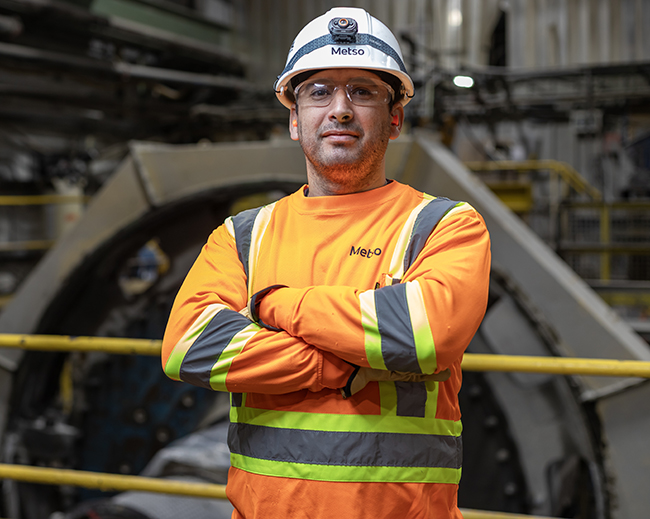
You’re currently working as a Health, Safety and Environment Coordinator at Metso in Canada. Could you tell us about the organisation and your role?
Metso is a global leader in mining, aggregates, and process solutions. As an HSE Coordinator, I support all turnkey projects, ensuring compliance with both corporate and client safety requirements. My work includes conducting risk assessments, leading audits, investigating incidents, and supporting field teams to maintain safe, efficient, and compliant operations. I also help promote a proactive safety culture through training and continuous improvement initiatives.
With your extensive experience in health and safety, what qualities do you believe define a successful H&S professional?
Integrity, leadership, and communication are essential qualities - I have always considered good communication to be a golden rule. A good H&S professional must not only be technically competent, but also able to influence others, lead by example, and balance regulatory compliance with practical solutions that work on the ground.
What advice would you give to someone looking to build a career in the health and safety profession?
Start by putting in place a personal development plan, based on your medium- and long-term objectives. For me the first step should be taking the NEBOSH IGC. Choose your Learner Partner carefully to ensure they match your learning preferences as this can be an important key to success. Gain field experience and never stop learning. Stay curious, be visible on site, and focus on making a real impact, not just completing paperwork. The best professionals are those who inspire others to care about safety as much as they do.