
Mishaps, Milking and Management...
Case Study: Rosie Russell
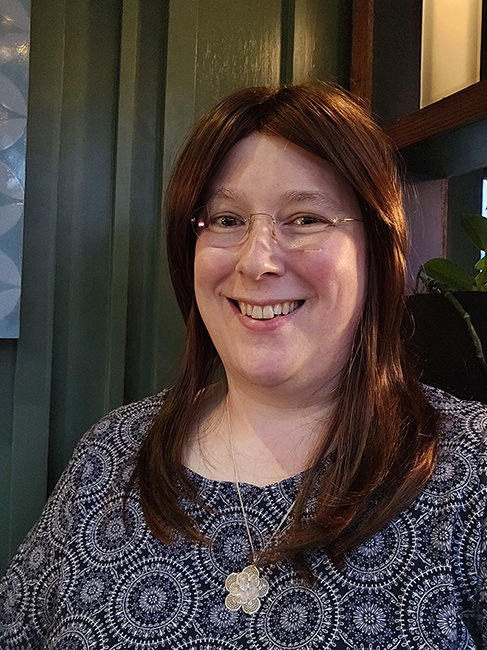
Rosie Russell successfully combines her role as Director of Environment, Health, Safety and Sustainability at MeiraGTx with her positions as Co-President of IIRSM and member of the HS2 Suicide Prevention Committee. In this interview, Rosie shares the key qualities she believes health and safety professionals need to succeed and offers her advice to those aspiring to join the profession.
When did you decide you wanted to build your career in health and safety, and how did you make it happen?
I studied Chemistry at university, where chemical safety was always a key consideration. Laboratory risk assessments were an integral part of the coursework, which added to my interest in all things health and safety. Whilst at university, I also met my wife, who was studying for a master’s degree in Risk and Reliability Management, further enhancing the spark of curiosity that was building. Later, while working as a researcher in the lab, I experienced a serious accident when an experiment exploded. I spent four nights in hospital and was off work for a month. This incident changed everything. When I returned to work, I chose to take on responsibility for coordinating health and safety in the lab. In my next role at a small start‑up, I took this responsibility on for the whole company. For the first few years, health and safety was part of my broader role, but I was deeply engaged—reading avidly to build my knowledge until the opportunity to study more formally arose.
You passed the NEBOSH National General Certificate in Occupational Health and Safety, in 2004:
- Why did you choose it? - The NEBOSH National General Certificate was recommended to me by several experienced health and safety practitioners. Although it was not specific to laboratory safety, they emphasised the value of gaining a broad understanding of all aspects of health and safety as a solid foundation. They advised that once this was in place, I could build on this with specialised courses as needed.
- How did achieving this qualification help your career? – Having the NEBOSH National General Certificate was key when, in 2007, I decided the time was right to move into a full‑time health and safety role. The qualification had deepened my understanding of health and safety management and gave me access to the roles I aspired to as I progressed in my career.
You’re clearly a champion of lifelong learning. Since passing the NEBOSH General Certificate, you’ve gone on to complete three further health and safety qualifications, culminating in a Masters-level achievement. What drives this passion?
Two different things drive my continual development. First, I’m naturally curious and always eager to learn more. Second—and most importantly—my role centres on helping organisations manage risks to their people. Fundamentally, it is a job focused on harm reduction, and I feel this responsibility keenly. As a result, I am always striving to learn and be the best that I can be. A quick look at my bookshelves at home will tell you that learning is a lifelong pursuit for me. But learning doesn’t just come from reading—I also like to learn through experience. When faced with new jobs or unfamiliar environments, I will happily spend days working alongside frontline workers to understand the challenges they face. I’ve even spent time in a milking parlour, hands‑on, milking cows. I may have felt completely out of my depth working with a dairy herd, but that day taught me more than any course or book could.
You generously share your knowledge and time to support others and advance our profession. Can you outline what's involved in the following voluntary roles:
- IIRSM Co-President and Chair of Council - IIRSM Council serves as the Board of Directors of the Charity. Trustees carry significant responsibilities, ensuring the Charity is well‑governed, financially stable, and that its activities and strategy align with its charitable aims. As Co‑President, I chair Council meetings and act as the line manager for the Chief Executive Officer, who is responsible for the day‑to‑day operations of IIRSM and for delivering the strategy set by Council. I also serve as an outward‑facing representative of the Charity by attending and speaking at key events such as the annual Awards Ceremony, the President’s Reception, conferences, webinars, and podcasts. Additionally, I contribute regular columns and articles to The Sentinel, IIRSM’s member magazine.
- Committee Member - HS/2 Suicide Prevention - I sat on the main HS/2 Committee, which was responsible for overseeing the work of both the Drafting and Communications panels, both of which I was also a member of. Within the Drafting Panel, a group of subject matter experts shared their knowledge and experience to draft the standard, supported by staff from BSI. This draft was circulated for public consultation, before being approved by the HS/2 Committee. The BS 30480 Suicide and the Workplace Standard was published in 2025 and provides a framework for organisations to address suicide. It is available to download from the BSI website - BS 30480 Standard.
You manage to fit all of this around your job as the Director of Environment, Health, Safety and Sustainability at MeiraGTx. Could you tell us more about the organisation, its safety ethos, and your responsibilities there?
MeiraGTx is a pharmaceutical company specialising in gene therapies for conditions with no existing treatments. We operate at the cutting edge of medicine and technology. Everything we do, is with the patient in mind, as these treatments, if successful, will be life changing.
Our culture is rooted in “safety first and quality always”. We recognise that nothing will slow us down more effectively than an accident, so we focus heavily on shop floor competence and worker engagement. We have adopted a human factors approach to continuous improvement, with active EHS Councils at each site made up of frontline staff and a management chair. These Councils are empowered to challenge and contribute meaningfully, and their work is overseen by a top-level committee responsible for company-wide strategy and reporting.
In my role, I lead a team of five, responsible for the health, safety and wellbeing of approximately 450 staff across five countries and two continents. Our environments range from research laboratories, pharmaceutical clean rooms to warehousing. We also ensure compliance with environmental standards and drive progress towards our sustainability goals.
Operating in a company that is just eight years old and still in the research phase presents unique challenges. While I contribute at the strategic level, I remain hands-on and operational when needed—whether it’s advising on risk assessments, overseeing maintenance and engineering works, guiding incident investigations, training staff, mentoring managers, writing policies and guidance, conducting inspections, or leading audits. The list goes on.
Much of your health and safety experience has been gained in laboratory environments. What do you consider the key health and safety considerations in this type of workplace?
Competence. The environment may be unfamiliar to many, however safety in the workplace is all about the competence to do the role and understand the risks involved in the daily tasks. This is regardless of the job being undertaken. It really does not matter if you are driving a forklift truck or working in a laboratory designing a treatment for a genetic condition, the single biggest defence against harm is competence. The Health and Safety at Work etc. Act 1974 states that staff must have the information, instruction, training and supervision needed to undertake their role. This fundamentally relates to competence otherwise they may put themselves, and others, at risk.
With your extensive experience in health and safety, what qualities do you believe define a successful H&S professional?
- Curiosity – If we do not have the passion to understand and to learn, we will never get to the root causes behind how risk arises and can be controlled.
- Compassion – Health and safety is a caring profession. Yes, we make tough decisions, but we do so with care. This also means the ability to balance risk and resources, the so far as is reasonably practicable test. It’s a difficult balance to strike and we need to understand everyone involved and their different pressures: the staff facing the risks, the manager facing resource issues and the executive with targets to meet. Treating everyone with compassion is key.
- Creativity – No two situations are the same and we need to bring our experience and ability to adapt to the fore to allow us to solve problems. We must be flexible and creative when novel situations arise. In some circumstances, this will be creatively finding a safe solution when there is pressure to just get on with things. This can be very challenging in some situations.
- Critical Thinking – We are called on to evaluate a myriad of data and make unbiased decisions. We need to critically appraise the data and our own internal biases.
- Conviction – We must have that certainty of purpose that will keep us going through hard times, especially when being challenged. We often need to find ways to meet the challenges the organisation is facing but, sometimes, the answer must be no. That said, creativity, compassion, curiosity and critical thinking may provide the solutions that prevent having to say no.
What advice would you give to someone looking to build a career in the health and safety profession?
- Start with what you know best then diversify - My career started in research labs. I could offer most there as I understood what it was to be a researcher and scientist. I now look after a wide array of risks and hazards, but I started with what I knew.
- Read – Widely and hungrily.
- Network – It is your connections that will help you solve problems.
- Stay humble - you do not know what you do not know. Listen to others, especially those doing the work, and you will learn. Moreover, you will be approachable.
- Get out and see the work being done. Even better, get hands-on with the work being done on the front line. Some of my most valuable lessons have been when I walked a mile in someone else’s shoes and tried doing the job I was looking at. I’ve even milked a cow… It’s those moments that shape you the most.