
Making the safe way the easy way: A career built on what really matters
Case Study: Ian Stacey
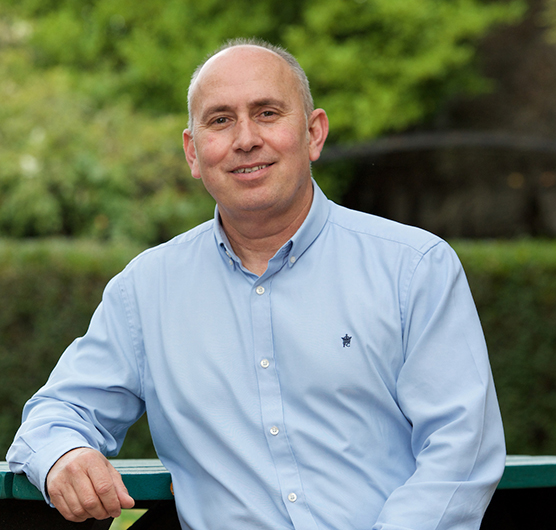
Ian Stacey, Global Head of Health and Safety at Dechra. In this interview he explains why he champions clear expectations, real world controls and human centred leadership and explains the benefits that follow adopting this approach to health and safety.
Your working life began in the British Army. When you left, you initially worked in facilities management before transitioning to health and safety. What made this profession appeal to you?
The Army teaches you that standards are not optional. Small things become big things if you ignore them. Facilities work was similar. In both you are close to the job, the people, and the real risks.
Health and safety appealed to me because it is practical and personal. You can prevent harm quickly when you get the basics right: clear expectations, simple controls, and leaders who show they mean it. That has been my approach across every sector I have worked in.
Why do you think health and safety is a good career choice for service leavers?
Service leavers often bring calm thinking, strong planning skills and the confidence to speak up — all of which translate extremely well into safety roles.
It is also a career with purpose. You are still looking after people; you’re just doing it in a different setting. NEBOSH has also shared advice for service leavers moving into safety, which I fully support.
You have completed the NEBOSH National General Certificate in Occupational Safety and Health. Can you tell us:
- Why you chose it? I chose the NEBOSH General Certificate because it is trusted and widely recognised internationally. It provides a solid foundation and a clear structure for managing risk.
- How achieving the qualification helped you? It helped my career by improving my confidence and credibility. It also enabled me to explain risk in plain language and influence leaders — not just write documents.
In one sentence, what was the best thing you learned through your NEBOSH studies?
Safety works best when you understand how work really happens, and you make the safe way the easy way.
During your career you have worked in a wide range of industries including retail, broadcasting, food manufacturing, distribution and now the pharmaceutical sector. Do you have any tips to help others to manage change well?
A few things have worked for me in every sector I have worked in:
- Start by listening. Spend time with people doing the job and understand how the work really happens before you change anything.
- Keep it simple. If someone on the floor cannot explain it back to you, it is too complicated and it will not last.
- Focus on the biggest risks first. Be clear about what really matters and do not bury teams in low value actions.
- Build local ownership. Change sticks when people are involved and trusted to shape the solution.
- Develop people, not dependency. Strong capability stays long after any programme, policy, or toolkit has been replaced.
This approach has worked for me in complex environments, including charity, conservation, and in high-pace operations like automotive, F1, food and logistics.
You have held some very senior leadership roles and have always supported and championed your team’s development. Can you tell us about this?
Developing people has been a constant part of my work. Seeing colleagues I have supported move into senior safety roles is something I am always hugely proud of.
I have consistently encouraged people to follow a NEBOSH learning pathway where it fits. For my own professional development, I chose an alternative to the NEBOSH Diploma because, at that time, the format required fixed study times and periods away from home. I was recently widowed with three young children who needed me, so I opted for the vocational NVQ route instead. I know from supporting team members that the NEBOSH Diploma is now far more flexible in both delivery and assessment. Over the years, I have read assignments, challenged thinking and helped people apply their learning to real work. Mentoring like this has helped to keep my own practice sharp and grounded.
Using NEBOSH qualifications to upskill teams ensures a shared baseline and a common language — something that matters greatly when you are leading across borders.
When I worked at the Zoological Society of London (ZSL), we used the NEBOSH National General Certificate to build in house capability. Operational colleagues were given the opportunity to study the qualification so they could take on real safety responsibilities. The knowledge and confidence they gained benefited them as individuals and strengthened the organisation.
Most recently, whilst at HelloFresh, I worked in partnership with NEBOSH, using its Endorsed service to help design and roll out NEBOSH endorsed training at scale across multiple countries.
In July 2025, you were appointed Global Head of Health and Safety by Dechra. Can you tell us about the organisation and your role and responsibilities?
Dechra is a global specialist in veterinary pharmaceuticals and related products, focused on improving animal health and welfare.
I joined Dechra in July 2025 as Head of Health and Safety in a newly created global role. My focus is non-manufacturing environments. That includes offices, remote and field-based work, and global business travel with another member of the team managing the manufacturing side of the business.
The role is about making sure that our controls are clear and practical. It is also about making sure people are properly supported to work safely everyday and know what to do when something goes wrong. No complexity for its own sake. Just solid basics, applied consistently across countries.
With your extensive experience in health and safety, what qualities do you believe define a successful H&S professional?
For me, the best safety professionals are:
- Calm and fair, especially under pressure
- Clear communicators who keep things simple
- Curious and always learning
- Confident enough to challenge, without ego
- Focused on outcomes, rather than tick-box safety
- Committed to developing others
What do you enjoy most about being a health and safety professional?
- I enjoy turning risk into clear decisions and everyday routines that people can use. I like building trust, and want teams to feel supported, not watched.
- I also take pride in developing people. Seeing former team members step into leadership roles is one of the most satisfying parts of the job
- I am also proud that work I led at ZSL was recognised with an International IIRSM Outstanding Risk Practice Award in 2019.
What leadership lesson has shaped you most?
Being widowed young with three children shaped how I lead. It made me very clear on what truly matters. I focus on simple standards, real support and decisions that protect people. Work is hard enough without leaders adding noise or unnecessary complexity.
What advice would you give someone who wants to build their career in health and safety?
- Get a strong foundation early, like the NEBOSH General Certificate. Then spend time where the work happens. Learn why shortcuts appear. Learn what good leaders do on a normal day, not just after an incident.
- Find a mentor. Write clearly. Speak plainly. Build your judgement. Keep your standards high, and your approach human.