
Learning, Leading, and Making a Difference: Yasmina’s HSE Journey
Case Study: Yasmina Emad
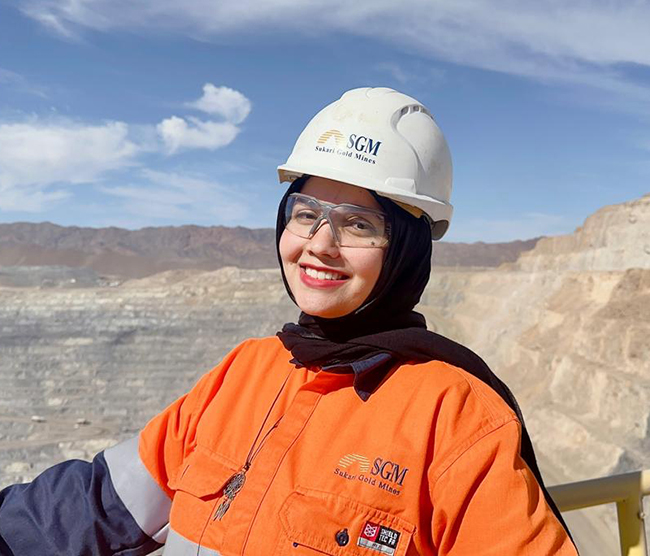
In this interview, we speak to NEBOSH Diplomate Yasmina Emad, who works as a Safety Officer for AngloGold Ashanti in Egypt. Yasmina shares what first attracted her to the profession, her tips for success and managing change, and what makes HSE such a rewarding career.
What attracted you to the profession?
For me, health and safety is far more than a job — it’s about people. From the start, I was drawn to the challenge of creating workplaces where every individual — the real person behind the hard hat — goes home safe every day. Entering a high risk industry gave me an even stronger sense of purpose: to demonstrate that technical expertise, combined with a truly embedded safety culture, is what enables systems and people to work in harmony. Playing a role in achieving that balance and preventing harm is deeply rewarding, and it’s what continues to drive my passion for this profession.
You took your first NEBOSH qualification, NEBOSH International General Certificate in Occupational Health and Safety in 2022:
- Why did you choose this qualification in particular?
At that time, I was the first female safety officer in my company within the facilities management sector. I felt I needed a solid, recognised foundation to demonstrate my competence and technical knowledge in a male dominated environment. I chose the NEBOSH International General Certificate because it’s the benchmark for anyone wanting to take their first serious step into the field. I wanted to ensure that every practical decision I made on site was backed by globally respected best practice.
- How has this qualification helped you?
It was a turning point for me. It gave me the technical confidence to discuss safety matters and influence behaviours on site more effectively. It also demonstrated to my colleagues and management that I was committed to achieving the highest standards. In fact, after I registered, some of my colleagues were encouraged to do the same, and we ended up taking the course and studying together.
Achieving this qualification gave me the solid foundation and recognition I was looking for and supported my progression into more challenging sectors including mining.
You went on to take two other NEBOSH Certificate-level qualifications — the NEBOSH Environmental Management Certificate and the NEBOSH HSE Certificate in Process Safety Management. Can you tell us what appealed to you about each one, and how studying these qualifications has helped you?
When I transitioned into the mining sector, specifically gold processing and production, I realised that understanding complex technical operational risks was essential. This led me to the NEBOSH HSE Process Safety Management Certificate, which helped to deepen my knowledge of process related hazards and the complexities involved. At the same time, as an environmental science graduate, I wanted to truly embody the full scope of an HSE professional — not just the health and safety elements. The NEBOSH Environmental Management Certificate helped me bridge that gap, ensuring I could manage both safety and environmental impacts with equal confidence and expertise.
In 2025 you completed the NEBOSH Level 6 International Diploma for Occupational Health and Safety Management Professionals. Can you tell us:
- Why you chose this Diploma level qualification?
After working in the field for a few years, I knew I didn’t want to stay at the same level. It felt like the right time to strive to move beyond day to day operational roles and progress into a more strategic, managerial position. I explored several high level certifications, but I chose the NEBOSH Diploma because it focuses on developing a true managerial mindset. It doesn’t just teach the rules — it teaches you how to analyse safety systems, think critically, and manage them effectively at a higher level.
- How achieving this qualification will benefit you?
Completing this NEBOSH Diploma is a major milestone for me. It has changed how I look at safety management systems and helped me understand the bigger picture of how safety fits within an organisation. Practically, it has given me the technical depth I need to advance into leadership roles and is a key step toward achieving my future goals.
What was the best thing you learned through your NEBOSH studies?
For me, the best thing I learnt is that technical knowledge is only half the battle; the real skill lies in using that knowledge to help build a culture where people genuinely value safety, so that every life remains unchanged by accidents.
During your career you have worked in several sectors. How easy is it to transition between sectors?
Transitioning between sectors — in my case construction, waste management, and mining — can be challenging, as each comes with its own unique risks and operational pace. However, it becomes much easier when you realise that the core principles of risk management remain the same. While the machinery and environments change, the logic behind identifying a hazard and protecting a worker from it is constant. Once I understood the broader ‘safety framework’ through my NEBOSH studies, adapting to a new sector became less about reinventing the wheel and more about learning the specific technical details of that industry.
Do you have any tips to help others to manage change well?
My main tip is to stay curious and never stop learning. When you move into a new sector, spend time on the frontline — talk to the workers and the engineers to understand their daily challenges. Don’t just try to impose rules; try to understand the process first. Also focus on your transferable skills — communication, incident investigation, and risk assessment are valuable everywhere. If you master the fundamentals, you can build safety excellence in any environment.
You now work for AngloGold Ashanti based in Egypt. Can you tell us about the company and its health and safety ethos?
AngloGold Ashanti is a global leader in gold mining, and our ethos is built on the belief that safety is our first value. What I appreciate most is that safety is never compromised for production. We have a very strong Stop Work Authority (SWA), which empowers every employee to stop any task they feel is unsafe, without hesitation. It’s a culture of care where Zero Harm is the goal we all work toward together.
As a Safety Officer for the organisation, what are your key responsibilities?
In my role, I am based within our open pit operations, so my day to day responsibilities are focused on being proactive and present on the frontline. Key tasks include:
- Conducting field risk assessments for high risk mining activities.
- Ensuring that all site operations align with local regulations as well as our international corporate standards.
- Delivering safety briefings and training to help workers identify hazards before they become incidents.
- Monitoring work environments to ensure that safety controls are effectively implemented and followed.
What do you enjoy most about being a health and safety professional?
I enjoy the challenge of solving problems in a high hazard environment, and I gain great satisfaction from knowing that my work helps my colleagues go home safe to their families every day.
What advice would you give someone who wants to build a career in the health and safety profession?
My advice is to never stop being a student of the industry. Don’t just focus on collecting certificates; focus on understanding the 'Why' behind every safety standard. Also, remember that technical knowledge is only half the battle—building strong communication skills is what will truly allow you to influence people and change mindsets. Finally, especially for women entering this field, stay confident in your expertise. Your unique perspective is a strength that can help build a more inclusive and effective safety culture.