
Connection Before Correction: Leading Safety Across Borders
Case Study: Mohamed Elsayed AbdElaal
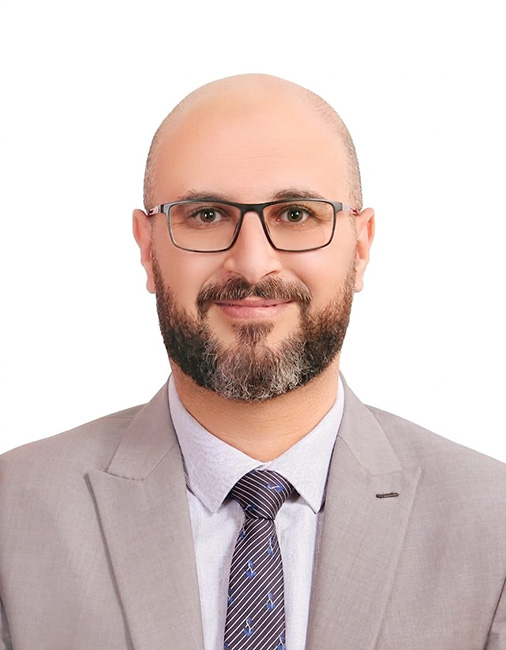
NEBOSH Diplomate Mohamed Elsayed AbdElaal has almost 20 years’ experience in health, safety and environment. In this interview, Mohamed shares practical insights into working internationally and highlights the qualities he believes are essential for success in the profession.
You have worked in Health and Safety since 2008. Did you always know you wanted to build your career in this profession, and how did you make it a reality?
To be honest, it was not my original intention to join this profession. I began my career as a chemist but quickly found the market to be overcrowded. I therefore started looking for specialisms where my academic background would still be relevant, while offering greater opportunities for progression. As part of this search, I identified Health, Safety and Environment (HSE).
Egyptian labour law recognises academic backgrounds in Science, Engineering and Medicine as suitable for HSE professionals, meaning this pathway was open to me. I also found there was strong demand for skilled HSE practitioners.
To support this transition, I invested in essential HSE training, including OSHA standards, firefighting and first aid. Taking this proactive approach helped me secure my first role in the profession as a Safety Engineer on a major petrochemical construction project.
You passed your first NEBOSH qualification, the NEBOSH International General Certificate in Occupational Health and Safety, in 2011.
- Why did you choose it?
At that time, I was working for a leading multinational organisation in the maritime sector. Given the high-risk nature of maritime operations, I recognised that I needed to strengthen my knowledge. I chose the NEBOSH International General Certificate because it is widely regarded as the gold standard. It offers a strong theoretical foundation in occupational health and safety management systems, combined with practical, real-world approaches to hazard control. Within the HSE profession, holding this qualification is seen as a clear indicator of competence, which made me confident to invest in the course.
- How did achieving this qualification help your career?
The impact was immediate. Within a year of gaining my NEBOSH General Certificate, I was promoted to Senior HSE Supervisor. While the qualification was not the sole reason for my promotion, it certainly played an important role by improving my approach and overall performance. It provided a structured way to identify risks and refreshed my technical knowledge, aligning my practice with internationally recognised best practice.
In 2024, you completed your NEBOSH Level 6 International Diploma for Occupational Health and Safety Management Professionals. Can you tell us:
- Why you took this Diploma-level qualification?
As my responsibilities expanded to managing multiple sections within the HSSE department, I recognised the need for deeper, more strategic knowledge. While I had been applying the fundamentals for several years, the Diploma provided the scientific and management foundation I felt was missing. - How achieving this qualification will benefit you?
My understanding of occupational health and safety management has significantly improved and become more structured and effective. One of the greatest benefits for me has been adopting the principle of sensible risk management. I now demonstrate that managing risk is about achieving the right balance between benefits and risks, with a focus on reducing significant risks. It is not about frightening people by exaggerating or publicising trivial risks, nor about trying to create a totally risk-free society.
In one sentence, what has been the best thing you have learned through your NEBOSH studies?
My NEBOSH studies highlighted the importance of taking a structured and proportionate approach, particularly to risk management, with the Hierarchy of Controls providing a valuable framework.
During your career, you’ve worked in both industry and consultancy. Is it easy to transition between the two, and what do you enjoy about each role?
The transition can be challenging because the required skill sets differ. In consultancy and training, your personal brand is on the line every minute, and if you lose a client’s trust, the impact is immediate and lasting. In a corporate role, there is more time to build long-term systems and recover from individual challenges. I enjoy the high stakes of consultancy, but I also value the opportunity, as an in-house manager, to have a deeper and more lasting impact on organisational culture.
You’ve worked in Egypt, Saudi Arabia, and Tunis. What advice would you give to safety professionals working internationally?
Building strong rapport with stakeholders is key to success. During my Diploma studies, my instructor shared a piece of invaluable advice: connection before correction. Success in international safety is not just about knowing the rules; it is about building strong, respectful relationships with stakeholders. People are far more likely to follow safety advice when they trust your intentions, which makes taking the time to understand and engage with the workforce vitally important.
In July 2022, you set up your consultancy which provides HSE advice to the renewable energy sector. Can you tell us about the work you are doing now?
Since setting up my own business, I have had the opportunity to work on several exciting projects. I have enjoyed making a tangible difference to the organisations I have supported by:
- Leading the development and implementation of comprehensive Environmental and Social Management Systems (ESMS), aligned with international standards.
- Working collaboratively with clients, subcontractors and regulatory authorities to ensure compliance with applicable environmental and social requirements.
- Fostering a strong safety culture through active engagement with workers at all levels, encouraging the reporting of near misses and incidents without fear of reprisal.
- Promoting a proactive approach to HSE risk management resulting in a significant increase in engagement and a reduction in workplace incidents.
- Successfully managing remote teams of HSE professionals across diverse project sites, providing training, mentorship, performance feedback.
- Developing and implementing robust emergency response plans to ensure organisations are well prepared.
With almost 20 years’ experience in health and safety, what qualities do you believe define a successful health and safety professional?
A successful professional is defined by a commitment to continuous learning, personal discipline, the ability to recognise hidden risks, and strong auditing and monitoring skills.
What do you enjoy most about being a health and safety professional?
I enjoy the fact that, through my work, I help to keep people safe and support the protection of the organisation’s assets.
What advice would you give to someone who wants to build their career in health and safety?
My advice is simple: never stop learning. The field is constantly evolving, and your knowledge must underpin your authority. One effective way to build and maintain that knowledge is by working with trusted partners such as NEBOSH, who offer recognised qualifications alongside ongoing support through webinars and online resources.