
As health and safety professionals, the work we do today prevents harm tomorrow
Case Study: Sultan Fallatah
NEBOSH Diplomate Sultan Fallatah is Alstom’s KSA EHS Director and AMECA EHS Services PL Referent. In this interview, he shares insights from a career built on strategic leadership, principled decision making, and an unwavering belief that every choice has the power to protect lives and shape safer futures.
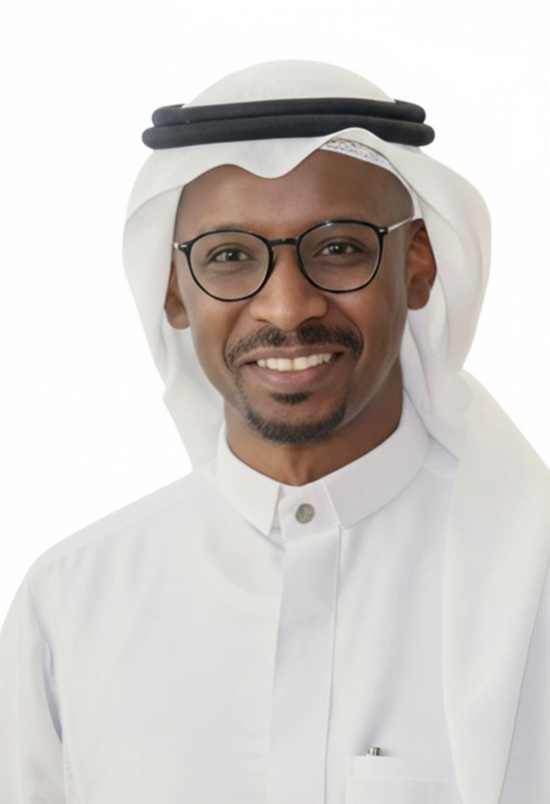
You have worked in Health and Safety since 2013. Did you always know you wanted to build your career in this profession, and how did you make it a reality?
My journey into Environment, Health and Safety was not simply a career choice; it was a commitment to responsibility. Early in my professional life, I realised that behind every project milestone and every operational success are people whose wellbeing depends on the decisions we make.
I came to understand that true leadership is measured not only by results, but by the lives we protect and the cultures we shape. From that point on, I committed myself to mastering the discipline by gaining field experience, pursuing professional qualifications, and continuously challenging myself to grow. That commitment has shaped every step of my journey.
You passed your first NEBOSH qualification, the NEBOSH International General Certificate, in 2020. Why did you choose it?
I chose NEBOSH because it represents credibility, structure, and global excellence. I wanted a qualification that would not only strengthen my technical understanding but also provide an internationally recognised foundation built on best practice.
The NEBOSH International General Certificate offered exactly that. It gave me structured, risk based thinking and a deeper appreciation of how safety systems influence organisational performance. It validated my direction and strengthened my confidence as a professional.
How did achieving the NEBOSH International General Certificate help your career?
The NEBOSH International General Certificate elevated my professional presence. It enhanced my ability to communicate risk with clarity, influence leadership decisions, and shift conversations from reactive compliance to proactive strategy. It strengthened trust others had in my competence—and in environment, health and safety, trust is everything.
For me, it was not just a certificate; it was a turning point.
In 2023 you completed the NEBOSH International Diploma. Why did you choose this qualification and what benefits did you gain?
Progressing to the NEBOSH Diploma was a deliberate and defining decision. I wanted to think differently; more strategically, more analytically, and more globally. The Diploma transformed the way I approach leadership. It deepened my understanding of governance, culture, and organisational psychology, and strengthened my ability to align safety with executive priorities and long term business sustainability.
The transition from the NEBOSH International General Certificate to the NEBOSH International Diploma marked a powerful evolution from operational practitioner to strategic leader. It sharpened my judgement, strengthened my voice at executive level, and equipped me to lead high value, multi billion dollar programmes with confidence and conviction.
In one sentence, what has been the best thing you have learned through your NEBOSH studies?
Environment, health and safety is ultimately about influence: shaping decisions before risks become consequences.
You have worked for Alstom in Saudi Arabia since 2017. Can you tell us about the company and its Health and Safety ethos?
Alstom is a global mobility leader delivering safe, sustainable, and high performance rail systems in more than 70 countries. In Saudi Arabia, the company plays a key role in supporting national transport ambitions by combining international expertise with strong local partnerships.
Health and Safety is embedded as a strategic and moral imperative. Through its Zero Deviation Plan “AZDP”, safety is positioned not as a target, but as a principle, reinforcing leadership accountability, disciplined risk management, and the conviction that deviations must be prevented, not tolerated. This philosophy ensures that protection of people is engineered into every phase, from design to operations.
Operating within this framework for many years has shaped my own approach to leadership. It reinforces that performance is not only measured by delivery milestones, but by the quality, discipline, and care embedded in the way we deliver. When safety drives behaviours and decisions, organisations build stronger teams, more resilient operations, and long term trust with customers and the communities they serve.
In April 2025, you were appointed KSA EHS Director and AMECA EHS Services PL Referent. Please tell us about your role and responsibilities.
As KSA EHS Director, I oversee the environmental, health, and safety strategy across some of the Kingdom’s most complex and high value rail programmes. My responsibility extends beyond compliance, it involves shaping governance, driving innovation, developing talent, and strengthening culture at scale. This includes supporting project leadership to embed EHS principles into daily execution, enhance competencies, mentor teams, and foster a culture where safety is a shared responsibility and a driver of operational excellence. My objective is to align safe practices with strong performance, ensuring that progress is achieved in a way that protects people, delivers quality, and reinforces Alstom’s reputation in Saudi Arabia.
In parallel, as AMECA EHS Services PL Referent, I provide regional guidance to service sites across several countries, helping harmonise standards, enhance audit readiness, share best practices, and support continuous improvement. The role ensures that our service activities maintain the same high level of safety culture and operational consistency throughout the AMECA region.
Within your extensive experience in health and safety, what qualities define a successful health and safety professional?
Courage, credibility, emotional intelligence, and strategic thinking. A successful professional must have the confidence to challenge, the empathy to listen, and the vision to connect safety with business performance.
What do you enjoy most about being a health and safety professional?
Knowing that the work we do today prevents harm tomorrow. There is deep fulfilment in building systems and cultures that protect people, often in ways they may never fully see, but that quietly safeguard lives and futures.
What advice would you give to someone who wants to build their career in health and safety?
Build depth before you seek titles. Master the fundamentals, pursue globally respected qualifications such as NEBOSH, and place yourself in complex environments where your judgment is tested and refined. Growth in this profession comes from exposure to real responsibility, where decisions influence not just performance, but people’s lives.
At the same time, develop more than technical competence. Cultivate critical thinking, the confidence to challenge unsafe norms, and the emotional intelligence to influence at every level of an organisation. The most effective environment, health and safety professionals are those who can translate risk into strategic insight and transform compliance into culture.
Environment, Health, and Safety is not simply a career choice; it is a leadership commitment. When approached with integrity, innovation, and purpose, it becomes one of the most impactful and meaningful professions you can pursue.