
A practical route into health and safety, built on knowing the site and what people need
Case Study: Weronika Ridley
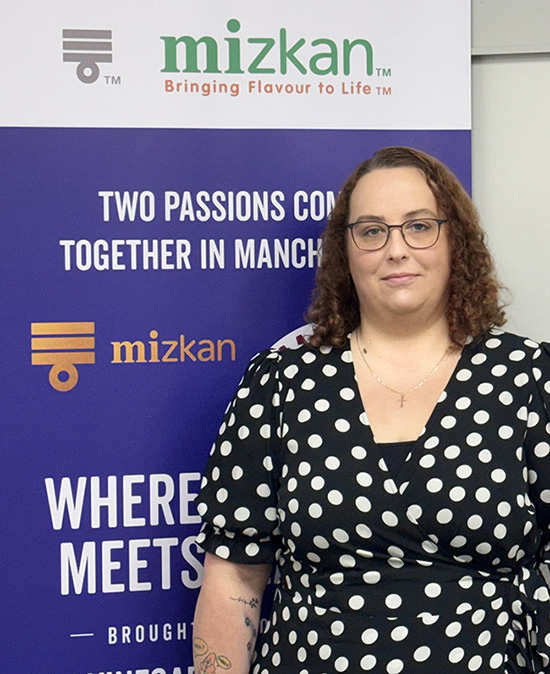
Weronika Ridley is the Health and Safety Training and Development Lead at Mizkan Euro Ltd. In this interview, she shares her career path and explains how her previous operational experience continues to support her role today. She also gives advice on how to identify training needs and reflects on her recent experience of the NEBOSH HSE Certificate in Managing Stress at Work qualification.
Most of your working life has been spent in operational roles. In 2019, you changed the focus of your career and moved into training and development. Can you explain the motivation for this and how you made it happen?
I have always been someone who pushes myself to learn and do more, but during COVID I decided to focus more deliberately on staff development. Up until that point, developing people had been part of my role as a people manager, ensuring my teams were trained, competent, and confident. During COVID, my HR responsibilities broadened to include providing employee support, particularly during furlough, which gave me a different perspective on what people need from a business.
Wanting to develop my knowledge further, I enrolled on the CIPD Certificate in Human Resource Management (HRM). While studying, I completed a gap analysis of my workplace that identified areas where I could apply what I was. As a result, I created training workshops, built a Train the Trainer programme for Team Leaders, and supported compliance training across the business. That was when I realised this was not just something I was good at, but something I genuinely cared about.
Outside of work, I set up a support group for others completing CIPD qualifications, which grew quickly. To date, I have supported over 285 learners and delivered over 1,800 hours of one-to-one support. This experience reinforced that developing people was not just part of my job, but where I could make a big difference. As a result, I decided to move my career fully into training and development and completed a CIPD qualification in Learning and Development (L&D) to help make this happen. Having both my HRM and L&D CIPD qualifications helped open new doors for me.
You have worked for Mizkan Euro Ltd since 2022. Can you tell us about the company and its approach to staff development?
Mizkan Euro is the European subsidiary of the Mizkan Group, a Japanese family-owned business. Its mission is to bring its expertly crafted vinegars and Japanese-inspired flavours to European tables while preserving the legacy of Branston and Sarson’s, two much-loved British brands.
Mizkan is a business with high standards and clear expectations, particularly around training and development. When I joined, there was structure in place, but it lacked consistency and clear ownership. My focus was to bring structure, accountability, and visibility. I worked closely with the leadership team to understand expectations and built a clear plan to deliver against them. This involved putting systems in place, standardising processes, and building strong relationships with managers so they understood not just what needed to be done, but why it mattered.
Over the last three years, we have moved from fragmented systems and paperwork to a fully integrated digital approach. Training is now structured, tracked, and aligned to roles, and we have embedded a culture where development is ongoing rather than reactive.
The biggest shift has been in engagement. Managers now take ownership, and employees are actively developing their skills, whether through internal training or external programmes such as apprenticeships.
Since April 2025, your role within the company has been Health and Safety Training and Development Lead. Can you tell us about your role and the responsibilities that it comes with?
Moving into health and safety was not part of my original plan. However, through supporting health and safety activities on site, including near miss management and conducting risk assessments, I started to see the impact I could have.
I do not like having gaps in my knowledge, so I made the decision to invest in myself and completed the NEBOSH General Certificate. This gave me a solid foundation to understand health and safety properly and contribute with confidence.
From there, the transition made sense. I already understood the site, the people, and the operational challenges, which meant I could apply health and safety in a practical rather than theoretical way. With the support of my health and safety manager, who has been a key mentor, I stepped into the role.
Now, my focus is on integrating health and safety with training and development. This includes leading health and safety committees, supporting risk assessment processes, delivering compliance training, and ensuring the systems we have invested in are used effectively. It is not just about compliance; it is about building a culture where people understand and take ownership of safety.
How has your organisation supported your development as you transitioned into Health and Safety?
The support from Mizkan has been a key part of my transition. From the outset, there was a clear level of trust from the leadership team, who recognised that while I may not yet have had all the technical knowledge, I understood the site, the people, and how the business operates.
I have also had strong support from the health and safety business partner, who has acted as a mentor throughout. Having someone with experience to challenge me, guide me, and sense-check decisions has made a significant difference in building my confidence and capability.
What has been particularly important is that the support has not just been verbal. I have been given the space to learn, to get involved, and to take ownership. Whether leading on systems, supporting risk assessments, or delivering training, I have been able to apply what I am learning in real situations.
That combination of trust, mentorship, and opportunity has allowed me to develop quickly in a way that is practical for the site. It is not just about gaining knowledge; it is about being able to use it effectively, and the business has enabled that.
You passed two NEBOSH certificate level qualifications in 2025. What did you gain from each of them?
The NEBOSH General Certificate gave me a structured understanding of risk management and legal compliance, which allowed me to move from supporting health and safety to leading it with confidence. It helped me understand not just what needs to be done, but why — which is critical when influencing others on site.
The Fire Safety Certificate built on that by giving me a deeper understanding of fire risk assessment and control measures. It’s directly applicable to the site, particularly when reviewing fire systems, evacuation procedures and future projects like fire alarm upgrades.
Both qualifications strengthened my ability to make informed decisions and provide practical, site-relevant guidance.
More recently you have completed the NEBOSH HSE Certificate in Managing Stress at Work. Can you tell us:
• The motivation for taking this qualification? – I wanted to take this qualification because I realise that mental health and stress are just as critical as physical safety, particularly in a manufacturing environment where pressure can be high.
• What you gained from your studies? - The course gave me a clear framework for identifying stress risks, having the right conversations and implementing practical controls. It’s something I can apply immediately, whether through manager training or supporting individuals.
• If you would you recommend it to others? I would absolutely recommend it — it’s practical, relevant and fills a gap that many organisations still don’t fully address.
In one sentence, what has been the best thing you have learned through your NEBOSH studies?
Understanding that effective health and safety isn’t about systems or paperwork — it’s about influencing people to make the right decisions every day.
What are you currently doing to ensure you can effectively support your organisation from a health and safety perspective?
I take a very structured approach to building my competence in health and safety, ensuring that what I learn is directly relevant to the risks and operations on site. Completing the NEBOSH General and Fire Safety Certificates gave me a strong foundation, but I have been very clear that this is just the starting point.
I actively review the site, the equipment we use, and the risks we manage, and then align my development accordingly. For example, I have completed PUWER training to strengthen my understanding of machinery safety, as well as Duty to Manage Asbestos training, which is critical from a compliance and building management perspective.
It is important to me that I am not just gaining qualifications for the sake of it, but that I can apply that knowledge in a practical way. Whether supporting risk assessments, advising managers, or contributing to projects, I want to be in a position where I can add real value to the business.
My health and safety development is ongoing because as the site evolves, risks change, and I need to stay ahead of that to support the business effectively.
What are your future career plans and how do you plan to achieve them?
My focus is to continue developing both my technical knowledge and practical experience in health and safety so that I can take on more responsibility and have a greater impact on the business.
A key part of that is completing the NEBOSH Level 6 National Diploma for Occupational Health and Safety Management Professionals, which will allow me to deepen my understanding and operate at a more strategic level. Alongside that, I’m looking at more specialised training that aligns with site risks, such as Legionella Duty Holder and DSEAR training as we manage hazardous substances and complex processes on site.
I want to build a well-rounded capability — not just in compliance, but in influencing, supporting and driving improvements across the organisation. My goal is to be someone who can bridge the gap between operational reality and health and safety requirements, ensuring that what we put in place is both effective and practical.
Long term, I see myself continuing to grow within health and safety, taking on more strategic responsibility while still staying close to the operational side of the business, where real change happens.
Given your background in training, do you have any hints and tips to help others:
• Decide what training they and others need? Understanding the role and the risks is the starting point for identifying what training is required. The key to effective staff training and development is breaking the role down to understand what people genuinely need to be competent in and then building training around that. Nobody needs to know everything so training should focus on what matters.
• Manage time effectively to fit training around other commitments? For me, this is about discipline and consistency. You will not find time; you have to create it. We are so busy with our lives that we forget to stop and think. Do we need to rush? Does this need to be done now? Can it wait? We sometimes put additional pressure on ourselves by treating everything as a priority.
I have completed all my qualifications outside work hours in my own time. I did not want to add extra pressure by trying to juggle work and study at the same time. Learning has always been enjoyable for me, and I have never seen it as a chore. I see it as an extension of my role, and I make a conscious effort to apply everything I have learned in my day-to-day work as this helps me retain the knowledge.