
My Journey into Health and Safety
Case Study: Xavier Varghese
In our latest interview, we caught up with NEBOSH Diplomate Xavier Varghese. We discussed how and why he entered the profession, and he shared valuable insights gained through experience, including key considerations for working offshore and the qualities that can help you succeed in health and safety.
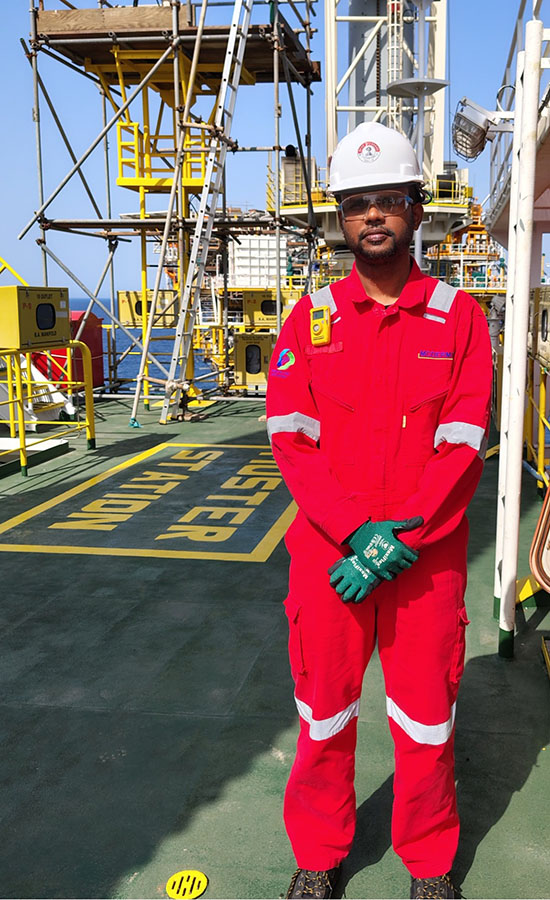
Did you always know you wanted to build your career in this profession, and how did you make it a reality?
I never really imagined that I would end up building a career in health and safety. After completing my MBA, I moved into business development and marketing, and at the time I honestly had very little idea of what the HSE field involved.
It was my uncle who suggested it as an option, and he made me curious enough to investigate it in more detail. As I started researching, what really stayed with me was the purpose behind the profession: protecting people and preventing incidents before they happen. I could also see the career opportunities the profession offers.
That was the point when I decided to change direction. I focused on gaining the right qualifications and gradually building my career in my newly chosen field. So, while it wasn’t something I planned initially, once I understood its value, I pursued it with full confidence.
You passed your first NEBOSH qualification, the NEBOSH International General Certificate in Occupational Health and Safety, in 2015.
- Why did you choose it?
At that time, I was working for a construction company in India, and I began searching for recognised qualifications and came across the NEBOSH International General Certificate. It felt like the right choice because it offered a strong foundation and opened potential opportunities beyond my current role. It wasn’t just about gaining a certificate, but about growing professionally and building a clear career path in the HSE field.
- How did achieving this qualification help your career?
Achieving the NEBOSH International General Certificate made a significant difference to my career. It helped me to understand core health and safety principles and how to apply them practically on site. My confidence grew, and I began approaching safety with a more structured and professional mindset.
More importantly, it opened doors for me. The qualification helped me secure my first overseas role in Qatar as Senior Health and Safety Supervisor for a major power plant company, where I worked. That opportunity was a real turning point, and it marked the start of my international career and gave me a platform to continue growing in the field.
In 2024 you completed the NEBOSH Level 6 International Diploma for Occupational Health and Safety Management Professionals, choosing to study with NEBOSH Gold Learning Partner, Safety Catch Safety Training & Consulting Pvt. Ltd. Can you tell us why you chose this qualification and what benefits you gained from this success?
At that stage in my professional journey, I felt my growth had slowed. I was not getting the progression or learning opportunities I was looking for, which led me to reflect seriously on my next step. I made the difficult decision to leave my job in Dubai and move back to India to focus fully on completing the NEBOSH Level 6 International Diploma. It was not an easy choice. Leaving a stable role always comes with uncertainty, but I knew that if I wanted to grow in this field, I needed to invest my time and effort properly.
My main reason for choosing this qualification was to gain a deeper understanding of health and safety, particularly in areas such as management systems, leadership, and risk-based approaches. I wanted to see how everything connects at a higher, more strategic level.
I chose Safety Catch Safety Training & Consulting because of its strong reputation as a NEBOSH Gold Learning Partner. Several colleagues recommended them, and I had also watched several exam orientation sessions by Mr Anil Gopinath, which gave me confidence in their approach and teaching style.
Completing the Diploma was a major achievement for me. It gave me a far deeper and more structured understanding of HSE management systems and how to apply them in real-world situations. It also changed the way I think; I became more analytical, more proactive, and more confident in handling complex safety challenges.
Looking back, taking that risk and stepping away from my job was one of the most important decisions of my career. It pushed me out of my comfort zone, but it also helped me grow both professionally and personally.
In one sentence, what has been the best thing you have learned through your NEBOSH studies?
I gained a strong understanding of how internationally recognised standards can be applied in real workplaces to create consistent and reliable safety systems.
You have worked for McDermott since 2024. Can you tell us about the company and its health and safety ethos?
McDermott is a premier, fully-integrated provider of engineering and construction solutions to the energy industry. Operating in over 30 countries, its locally-focused and globally-integrated resources include more than 30,000 employees.
McDermott’s safety culture is deeply embedded and its Life-Saving Rules sit at the core of this culture. They establish clear and actionable standards that focus on preventing incidents and safeguarding employees from harm. From leadership to frontline crews, safety ownership is visible every day, supported by strong systems, open communication, and industry leading performance.
Please can you tell us about your role and responsibilities as a Marine HSES with the company?
In my role as a Health and Safety Specialist, I primarily work on offshore barges and vessels, supporting field operations by providing technical expertise and guidance to ensure that all activities are carried out safely and in line with company standards. My focus is on implementing and overseeing the company’s HSE management system, establishment and implementation of HSE programs, ensuring full compliance across all project activities through strong guidance and oversight.
I play a key role in ensuring that subcontractors follow company standards by regularly reviewing their performance and verifying their activities. Additionally, I contribute towards the safety culture by engaging with teams, promoting safety initiatives, and encouraging open, two-way communication, while also supporting emergency response activities as required.
Much of your experience has been gained working in the offshore oil and gas markets. What are the key considerations in this challenging environment?
Working offshore requires a strong focus on risk management to ensure hazards are identified, assessed, and controlled before work begins. The remote nature of the environment heightens the impact of any gaps in preparation, making strict adherence to procedures and standards essential. Emergency preparedness is critical, with limited response options requiring well-trained teams, regular drills, and a clear understanding of roles.
The ability to perform under pressure and make timely, informed decisions is equally important, particularly during critical operations. Strong leadership plays a key role in both managing activities and setting a positive safety culture. Effective collaboration is also vital, demanding clear communication and coordination across teams and contractors to execute work safely and efficiently.
Ultimately, success offshore depends on proactive risk management, supported by thorough planning, strong leadership, and effective teamwork to ensure safe and controlled operations.
What qualities do you believe define a successful health and safety professional?
In my opinion, a successful health and safety professional is someone who combines strong technical knowledge with practical understanding. It is important to have a robust understanding of management systems, procedures, and regulatory frameworks, but what really makes the difference is the ability to apply that knowledge effectively in real-life situations.
Leadership is another key quality, not just by giving instructions, but by setting the right example and positively influencing people’s behaviour towards safety. At the same time, teamwork plays a vital role, as safety is never achieved alone. It depends on coordination, communication, and trust between different teams and disciplines.
Above all, a good safety professional should be proactive, observant, and willing to engage with people on the ground. Understanding the work being carried out, and the people doing it, is what truly helps to manage risks and improve safety performance.
The profession's objective is to prevent incidents and reduce risk exposure. When safety is consistently embedded in day-to-day operations, the absence of incidents becomes the most meaningful measure of success, supported by strong systems, leadership and workforce engagement.
What do you enjoy most about being a health and safety professional?
What I enjoy most is the responsibility that comes with the role. Knowing that your decisions and actions can directly influence whether work is carried out safely or not gives the work real purpose. It is a field where you are constantly thinking ahead, trying to understand not just what could go wrong, but why, and how to prevent it in practical ways.
I also value the depth of the role. It’s not limited to one area; you deal with people, systems, technical challenges, and real-time situations all at once. That balance keeps the work engaging and meaningful.
What advice would you give to someone who wants to build their career in health and safety?
My advice would be to start by getting the right qualifications, as they provide a strong foundation and create opportunities. They help you understand core principles such as risk assessment, management systems, and legal requirements, which are essential in any role. At the same time, make a conscious effort to learn from real work situations. Try to see how those principles apply on site, how risks actually develop, and how controls are implemented in practice. This combination of knowledge and real-world understanding is what makes you effective.
Most importantly, be patient and keep learning. Growth in this field does not happen overnight; it comes from experience, observing different situations, and learning from both good practice and mistakes. If you stay consistent, keep improving your knowledge, and genuinely care about the impact of your work, you will gradually build a strong and meaningful career in health and safety.