
Eighteen Years of Learning, Leading, and Protecting People
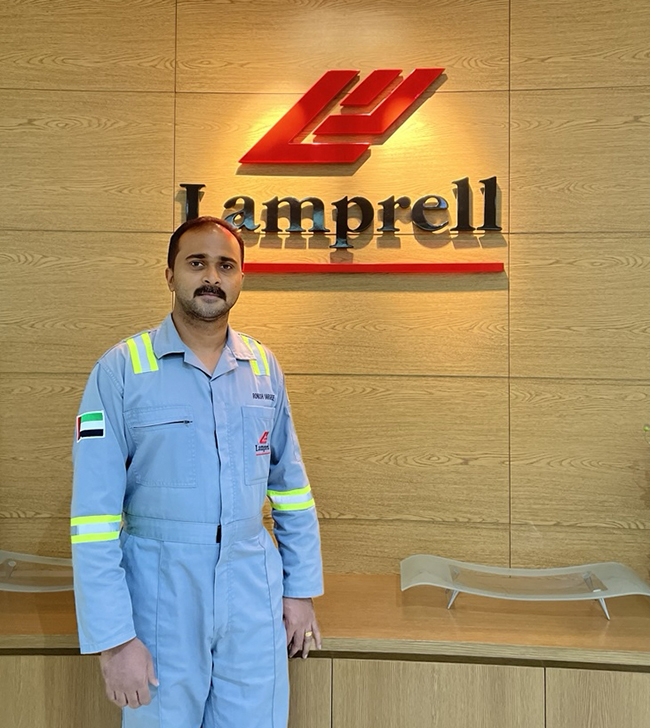
Case Study: Ronish Varghese
For Ronish Varghese, health and safety has always been about people. From attending a fire safety awareness session as a young student to leading HSES programs for major EPC projects, his career has been built on a passion for protecting others and helping organisations develop strong safety cultures. In this interview, Ronish reflects on his NEBOSH journey, the lessons he has learned from working across multiple sectors, and why trust, leadership, and continuous learning are the qualities that define successful health and safety professionals.
When did you first decide to pursue a career in health and safety, and what sparked your interest?
My interest in health and safety began before I started my degree. I was given the opportunity to attend a fire safety awareness session arranged by a local hospital. It was delivered by a knowledgeable and experienced volunteer who worked in the oil and gas industry in Oman and was home on holiday. It was the first time I learned about different types of fire extinguishers, the PASS technique, emergency evacuation procedures, and the practical aspects of firefighting. I also had the opportunity to use a fire extinguisher during the practical demonstration, which made the experience more memorable. What inspired me most was seeing how one person could use their knowledge to educate others and help keep people safe. That experience sparked my interest in pursuing a career in health and safety because I realised I could make a meaningful difference by protecting people and preventing incidents. From that day, I knew this was the career I wanted to pursue.
You passed your first NEBOSH qualification, the NEBOSH International General Certificate in Occupational Health and Safety, in 2012.
- Why did you choose it? By 2012, I was already working as an HSE Officer in Qatar and held a Diploma in Fire and Safety Engineering. I chose the NEBOSH International General Certificate because I wanted to expand my knowledge and develop as a health and safety professional. While the qualification was highly respected throughout the Middle East, its practical focus on risk assessment, hazard identification, incident investigation, and health and safety management systems was what appealed to me most. I was confident it would strengthen my existing knowledge and give me the skills to apply health and safety principles more effectively in the workplace.
- How did achieving this qualification help your career? Achieving the International General Certificate gave me greater confidence in my role and significantly enhanced my professional capabilities. It strengthened my understanding of hazard identification, risk assessment, incident investigation, and the implementation of effective control measures. As a result, I became more confident in applying health and safety principles in the workplace. My commitment to professional development was recognised by my department manager, who promoted me to Safety Supervisor. That promotion marked an important turning point in my career and reinforced the value of continuous learning and professional growth.
In 2024 you completed the NEBOSH Level 6 International Diploma for Occupational Health and Safety Management Professionals, choosing to study with NEBOSH Gold Learning Partner, Safety Catch Safety Training & Consulting Pvt. Ltd. Can you tell us why you chose this qualification and what benefits you gained from this success?
The NEBOSH Level 6 International Diploma changed the way I think about health and safety. Rather than focusing solely on compliance, it encouraged me to adopt a more strategic approach to leadership, risk management, and the development of a positive safety culture across an organisation.
At the time, I was leading the HSE function across multiple business units, which allowed me to apply what I learned immediately. The qualification enabled me to enhance our training programmes, strengthen workforce engagement, and communicate more effectively with both frontline workers and senior leaders. One of the most rewarding aspects was seeing employees recognise and respond positively to the improvements in our safety culture and approach to training.
The Diploma also strengthened my confidence, and it enhanced my decision-making, improved my ability to influence others, and enabled me to mentor and support fellow HSE professionals. Even today, the knowledge, skills, and mindset I gained continue to shape my leadership approach and the contribution I make to organisational success.
What has been the best thing you have learned through your NEBOSH studies?
My NEBOSH studies have shown me that effective health and safety leadership is about influencing people, building a positive safety culture, and making informed decisions that create lasting value for both employees and the organisation.
You have 18 years of health and safety experience gained in construction, oil and gas and offshore across the UAE and India. What advice would you give to make the transition between sectors a success?
My advice is to approach every new sector with humility, curiosity, and a willingness to learn. The fundamental principles of health and safety remain the same, but every industry has its own hazards, regulatory requirements, client expectations, and ways of working.
Whenever I join a new organisation, my priority is to understand the business by visiting operational areas, observing the process and methodologies of execution, and speaking with both discipline trades and management. A simple site walkthrough can provide valuable insights into the process, practices and culture that go far beyond what is written in policies and procedures.
One of the biggest lessons I have learned is that every organisation is at a different stage in its health and safety journey. Some have a mature safety culture supported by strong leadership, while others are still working towards fully embedding health and safety into everyday decision-making. Understanding where an organisation is on that journey helps you adapt your approach and build trust with both management and the workforce.
Finally, never assume that experience in one sector automatically prepares you for another. Stay open to learning, listen and respect the knowledge of experienced personnel’s, understand the applicable legal and client requirements, and be prepared to adapt. In my experience, the most effective HSE professionals combine technical competence with humility, continuous learning, and the ability to influence people in a way that drives lasting improvements in safety performance and culture.
You rejoined Lamprell as a HSES Lead - EPC Onshore and Services in 2026. Can you tell us about the company and its health and safety ethos?
Lamprell is a leading Engineering, Procurement, Construction and Installation (EPCI) company with operations across the Middle East and India, delivering projects in the onshore oil and gas, offshore, and renewable energy sectors. One of the things I value most about the company is the opportunity to work across diverse business areas while continuing to develop professionally.
The main reason I chose to re-join Lamprell in 2026 was its culture. From my previous experience with the company, I knew that health and safety was genuinely valued, not only through robust management systems but also through the way the organisation cares for its people. Employee wellbeing, workforce engagement, and continuous improvement are clearly reflected in day-to-day operations.
Since rejoining, I have been particularly impressed by the leadership team's commitment to health and safety. Work is carefully planned before it begins, employees are encouraged to report incidents and concerns openly, and there is a strong focus on learning from experience through an extensive lessons learned programme. I have also seen a genuine commitment to investing in people through training, mental health and wellbeing initiatives, worker welfare programmes, and empowering everyone to stop unsafe work whenever necessary. It is rewarding to be part of an organisation where leadership, learning, and care for people are fundamental to the way we work.
Please can you tell us about your role and responsibilities as a HSES Lead - EPC Onshore and Services, with the company?
As HSES Lead for the EPC Onshore and Services division, my focus is on strengthening our safety culture, enhancing risk management, developing our people, standardising HSE management systems, and creating a learning environment where everyone feels responsible for protecting themselves and those around them.
A key responsibility of my role is ensuring that all subcontractors become part of our safety culture from the very beginning of a project. Once a subcontractor is appointed, we hold a Safe Start meeting involving their leadership team, our project management team, and the client to clearly communicate the project's health and safety expectations, regulatory requirements, and client standards before any work begins.
The next step is a collaborative hazard identification workshop, where our teams, the client and the subcontractor's subject matter experts work together to identify the project's key hazards from mobilisation through to demobilisation. Together, we develop a project hazard register that provides the foundation for meaningful task risk assessments and job safety analyses based on the actual risks associated with the project.
Our engagement does not stop there. We continue to work closely with our subcontractors throughout the project holding monthly HSE committee meetings, where we review performance, share lessons learned, and agree improvement actions. I believe this collaborative approach helps everyone work towards a common goal: protecting our workforce and delivering projects safely.
What qualities do you believe define a successful health and safety professional?
After 18 years in health and safety, I believe applying technical knowledge by understanding its practicality is only one part of being successful. What really defines a good health and safety professional is the ability to influence people and earn their trust.
For me, a successful health and safety professional is someone who listens, coaches their team, and shares their experience to help others grow. They remain calm under pressure, understand the work from a technical perspective, and spend time in the field because the best understanding of risk comes from being where the work is happening, not from sitting behind a desk.
I also believe that health and safety professionals need the confidence to respectfully challenge unsafe decisions, even when there are production pressures. If we have the right knowledge and communicate it effectively, we can influence decisions that protect both people and the business.
Above all, I believe health and safety is about people. Compliance is important, but behind every procedure are individuals, and it is our responsibility to ensure they can return home safely to their families. If we can build trust, lead by example, and create a culture where people work together to manage risk, then we have succeeded as health and safety professionals.
How is the role of health and safety evolving, based on your experience?
When I started my career as an HSE Officer, the role was largely focused on compliance. Much of my time was spent monitoring PPE, permit-to-work systems, conducting site inspections, and identifying unsafe acts etc. At that time, HSE professionals were often seen as inspectors, and success was largely measured through compliance and incident statistics.
Over the years, I have seen the profession evolve significantly. Health and safety is involved much earlier in the project lifecycle, from planning and design through to execution. We play a key role in leadership engagement, contractor collaboration, competency development, and promoting worker wellbeing and mental health. Rather than simply monitoring subcontractors, we work with them as partners through Safe Start Meetings, collaborative hazard identification workshops, and regular HSE engagement sessions to establish a shared safety culture across the project.
Perhaps the biggest change I have experienced is that technical knowledge alone is no longer enough. HSE professionals need to influence people, engage leaders, build trust with the workforce, and use data and technology to support better decision-making. Our role has evolved from enforcing compliance to leading cultural change and helping organisations create workplaces where health and safety is embedded in the way people think, plan, and work every day.
What advice would you give to someone who wants to build their career in health and safety?
My advice to anyone starting a career in health and safety is to spend as much time as possible in the process or operational areas. Before trying to enforce rules, take the time to understand how work is actually carried out. Learn the process, become familiar with the equipment and operations, understand different disciplines and their roles, and build relationships with the people. The more you understand the work, the better you will be at identifying risks and finding practical solutions.
Do not be afraid to ask questions or learn from experienced people. Every project, incident, and challenge is an opportunity to develop your knowledge. Keep learning throughout your career, whether through professional qualifications, technical training, or experience gained across different industries. Each sector has something valuable to teach you and will help you become a more well-rounded HSE professional.
I would also encourage young professionals to remember that health and safety is about much more than inspections and compliance. Learn to communicate effectively, influence people, and have the confidence to respectfully challenge unsafe decisions when necessary. Treat subcontractors as part of your team, because building a shared safety culture is far more effective than simply monitoring compliance.
Most importantly, never forget that health and safety is a profession built on trust. When people trust your knowledge, judgement, and intentions, they will listen to your advice. Behind every procedure, permit, and risk assessment is a person who wants to return home safely to their family. If you keep that at the centre of everything you do, you will build not only a successful career but also make a meaningful difference to people's lives. For me, that is the true purpose of health and safety.