
Combining safety expertise with emerging technology to prevent harm
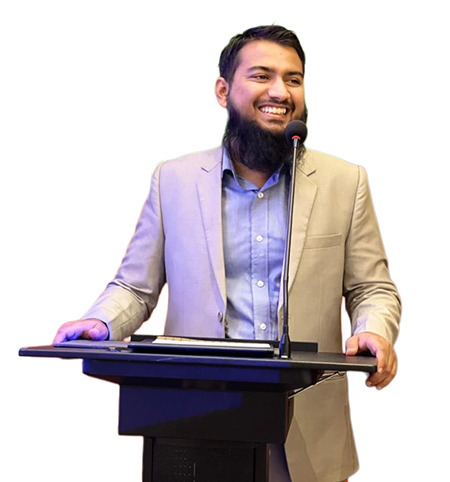
Case Study: Muhammad Rehan Yasin
Muhammad Rehan Yasin is a Health and Safety Consultant with Saudi Energy's Construction Division. Since securing his first HSE role in 2018, he has built his career on proactive risk management, continuous learning, and a passion for protecting people at work. In this interview, he explains how the NEBOSH International General Certificate helped establish the foundations of his career and shares his thoughts on how technologies such as artificial intelligence could transform the future of workplace safety.
When did you decide you wanted your career to be in health and safety?
My interest in health and safety began during my Industrial Engineering studies. I learnt that successful projects are not measured solely by productivity, cost, and schedule performance. They are also judged by how effectively risks are managed and how well workers are protected.
During my studies, I became increasingly interested in the relationship between operational excellence and workplace safety. I began to realise that accidents are rarely the result of a single unsafe act. More often, their root causes lie in weaknesses in planning, design, supervision, communication, and risk management. This understanding led me to pursue a career in health and safety, where I believed I could contribute to both operational efficiency and worker protection.
I was inspired by the vital role health and safety professionals play in creating systems that eliminate hazards before they cause harm. That belief continues to drive my passion for the profession today.
You secured your first HSE role in 2018. How did this come about?
I graduated as an Industrial Engineer in 2018. My engineering studies helped me develop analytical thinking, process improvement skills, and an understanding of industrial operations, all of which are highly relevant to health and safety management.
As I began working on construction and utility projects, I quickly realised that health and safety was about much more than compliance. It also required leadership, communication, problem-solving, and the ability to assess risks and influence positive behaviours, all of which appealed to me.
The HSE role I secured in 2018 allowed me to apply engineering principles to workplace safety, helping to protect workers, contractors, and other project stakeholders. Since then, I have continued to build my expertise through a combination of practical experience, professional certifications, and continuous learning.
Why did you choose to take the NEBOSH International General Certificate?
After gaining practical experience in the field, I wanted to strengthen my technical understanding of occupational health and safety and obtain a globally recognised qualification.
The NEBOSH International General Certificate is widely respected across industry and had been recommended to me by many experienced professionals. I saw it as the ideal qualification to provide a solid foundation in hazard identification, risk assessment, incident investigation, and safety management systems.
More importantly, I wanted to develop a structured understanding of international best practices that could be applied across different industries and geographical locations.
Taking this qualification proved to be one of the most valuable investments in my professional development and has played an important role in shaping my career in health and safety.
How has gaining the NEBOSH International General Certificate helped you?
The NEBOSH International General Certificate significantly enhanced my professional capabilities and transformed the way I approach safety management. It strengthened my understanding of:
- Risk assessment methodologies
- The hierarchy of controls
- Incident investigation techniques
- Safety management systems
- Human factors and behavioural safety
- Occupational health principles
- International safety standards
The qualification gave me the confidence to make informed decisions and effectively support organisations in achieving their safety objectives. It also reinforced the importance of proactive risk management rather than relying solely on reactive measures. This mindset has shaped my professional approach and contributed to my progression towards becoming a Certified Safety Professional (CSP).
Motivated by the positive impact the qualification has had on my career, I decided to continue my studies by enrolling on the NEBOSH Level 6 International Diploma for Occupational Health and Safety Management Professionals. I have successfully completed the first module and am thoroughly enjoying the course.
I understand that you have begun to explore how new technology can be used to more proactively manage risks. Can you explain please?
Throughout my career in the utility and construction sectors, one of the most significant and consistent risks has been work at height (WAH). A single mistake whilst working at height can have life-changing consequences, and falls from height remain one of the leading causes of fatalities and serious injuries across construction projects worldwide.
Traditionally, organisations have managed these risks through inspections, audits, incident investigations, toolbox talks, and corrective actions. While these controls remain essential, they are often reactive in nature, addressing hazards after they have been identified or following an incident.
By combining AI-driven technologies with the strong risk management principles promoted by NEBOSH, organisations can take a more proactive approach by identifying hazards, predicting risks, and preventing incidents before they happen. AI can provide real-time information, predictive insights, and support data-driven decision-making.
I have outlined below some of the ways AI can be applied to working at height risk control:
Computer Vision for PPE Compliance - AI-powered cameras can automatically detect whether workers are wearing:
- Full-body harnesses
- Safety helmets
- Chin straps
- High-visibility clothing
- Fall arrest equipment
When non-compliance is identified, supervisors receive immediate alerts, allowing corrective action to be taken before workers are exposed to risk.
Unsafe Behaviour Recognition -Advanced AI systems can identify unsafe conditions and behaviours, such as:
- Workers approaching unprotected edges
- Improper ladder use
- Missing guardrails
- Unsafe scaffold access
- Failure to connect lanyards
This enables immediate intervention and significantly reduces exposure to fall hazards.
Smart Wearables -Modern wearable technology can monitor:
- Worker location
- Fatigue levels
- Heart rate
- Heat stress
- Fall detection
In the event of a fall, emergency alerts can be automatically transmitted to supervisors and rescue teams, improving response times.
Predictive Analytics - AI systems can analyse:
- Near-miss reports
- Safety observations
- Inspection findings
- Permit-to-work records
- Weather conditions
- Historical incident trends
By identifying patterns and trends, organisations can forecast high-risk activities and implement preventive controls before work begins.
Drone-Assisted Inspections - AI-enabled drones can safely inspect:
- Utility structures
- Transmission towers
- Elevated pipelines
- Building facades
- Construction work at height
This minimises worker exposure to fall hazards while improving inspection quality and efficiency.
AI should never replace competent supervision or effective safety leadership. Instead, it should be viewed as a powerful tool that supports safety professionals in making better decisions and preventing incidents. For safety professionals, the question is no longer whether AI will influence workplace safety, but how effectively we can harness its potential to create a safer, smarter, and more sustainable future.
What are you most proud of in your career?
When I reflect on my career, I am proud of the progress I have made from an Industrial Engineering graduate to a Certified Safety Professional. This journey has been shaped by my proactive approach to safety and my belief that modern technologies can strengthen risk management.
One of the defining milestones in my development was gaining the NEBOSH International General Certificate. Looking back, it provided a strong foundation for my professional growth and helped shape the safety professional I am today.
For me, the most rewarding aspect of this profession is the opportunity to influence a positive safety culture, support organisational improvement and contribute to preventing injuries.
What advice would you give to anyone considering a career in health and safety?
My advice is simple: start by building a strong foundation. The NEBOSH International General Certificate remains one of the most respected and valuable qualifications for anyone pursuing a career in occupational health and safety. It provides the knowledge, skills and confidence needed to develop as a safety professional.
Beyond qualifications, aspiring professionals should focus on:
- Enhancing their communication skills
- Developing effective leadership capabilities
- Strengthening their risk management competence
- Building awareness of emerging technologies
- Committing to continuous learning
The future of health and safety will increasingly be shaped by digitisation, data analytics, artificial intelligence and predictive technologies. Professionals who can combine strong safety knowledge with the ability to harness these emerging technologies will be best placed to lead the next generation of workplace safety improvements.