
An Engineer’s Approach to Safety: From Aviation Principles to Workplace Protection
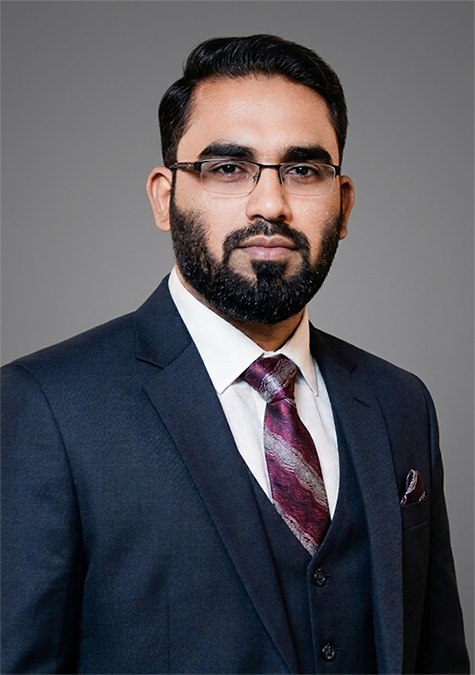
Case Study: Ghulam Rasool
Ghulam Rasool is an HSE Officer whose passion for health and safety developed through first-hand experience of the risks people face at work. Since achieving his first NEBOSH qualification in 2020, he has continued to build his expertise through the NEBOSH International General Certificate and most recently the NEBOSH Level 6 International Diploma. In this interview, he reflects on his career journey, the lessons he has learned, and the qualities he believes are essential for success in the evolving HSE profession.
When did you first decide to pursue a career in health and safety, and what sparked your interest?
My background is in Aeronautical Engineering, so a career in health and safety was not my original plan. My interest developed through experience. In my early years working on construction projects in India, I saw how quickly a missed hazard or a shortcut could put someone at risk, and that had a lasting impact on me.
Those experiences made me realise that I wanted to play a more direct role in protecting people at work. I wanted to be the person on site helping to identify and manage risks, ensuring everyone returned home safely at the end of the day.
In 2020 you passed your first NEBOSH qualification, the NEBOSH Health and Safety at Work Award. Why did you take it and how did it help you?
By 2020 I already had several years of practical site experience, but I wanted a recognised qualification to formalise that knowledge. The NEBOSH Health and Safety at Work Award gave me exactly that. It took the instincts I had developed on site and turned them into a proper understanding of risk assessment and legal responsibility. After completing it, I was able to explain the reasoning behind a safety decision, not just identify the hazard itself.
You went on to complete the NEBOSH International General Certificate in 2022. Why did you choose this qualification, and how has it helped you?
I was already working in the Gulf by this stage, and wanted a qualification that reflected the scale and complexity of the projects I was involved in. The NEBOSH International General Certificate is widely regarded as the qualification for HSE roles in the oil, gas and construction sectors across the region, and it significantly strengthened my professional standing.
It also broadened my technical knowledge in areas such as fire safety, chemical hazards and workplace transport, well beyond what I had gained from my first qualification. The knowledge and credibility it provided enabled me to take on greater responsibility within my existing role, and it has continued to support my professional development throughout my career.
In 2025 you completed the NEBOSH Level 6 International Diploma for Occupational Health and Safety Management Professionals. Why did you undertake this, and how will it benefit you?
After several years focused on operational HSE work, I wanted to develop a broader understanding of the profession. I was keen to learn more about how organisations build a genuine safety culture, how leadership behaviours influence outcomes, and how effective management systems are designed and implemented.
The Diploma has shifted my thinking from reactive safety management to a more strategic approach. I see it as the qualification that has prepared me for more senior roles, where I can help shape organisational decisions, influence culture, and strengthen management systems rather than simply implement them.
What was the best thing you learned through your NEBOSH studies?
The most important thing I have learned is that a genuine safety culture is built through consistent, visible leadership rather than paperwork. Once that principle is understood, the rest of HSE practice makes far more sense.
You have almost 10 years of health and safety experience across construction, offshore, renewable energy and oil and gas sectors in the UAE and India. What advice would you give to make a transition between sectors a success?
The fundamentals of HSE remain consistent across sectors, but the culture, pace and regulatory expectations can differ considerably. My advice would be:
- Approach a new sector as a learner first, not as an expert.
- Take the time to understand how that sector actually operates and where its real hazards lie before applying a standard checklist or procedure.
- Build credibility by demonstrating that you understand the operation, not by arriving with a generic safety framework.
- Build relationships with the site team early on, they often provide insight no course can replicate.
Can you tell us about your role?
I am currently working as a HSE Officer on a major industrial development project in Qatar.
The role involves a wide range of high-risk activities, and no two days are the same. My core responsibilities include:
- Leading risk assessments and site inspections across excavation, civil works, foundations, and piping and pipe support installation activities.
- Ensuring safety compliance during chemical lamination and chemical joint application activities.
- Enforcing Permit to Work, Job Safety Analysis, and Toolbox Talk requirements before high-risk activities commence.
- Delivering safety inductions and awareness sessions to a diverse multinational workforce.
- Leading incident investigations and root cause analyses and developing corrective and preventive action plans.
A significant part of my role involves maintaining a visible presence on site, identifying hazards and addressing them before they develop into incidents.
What do you believe a health and safety professional needs to be successful?
In my experience, these are the qualities that separate strong HSE professionals from the rest:
- They have a strong presence on site - Safety cannot be managed from behind a desk.
- They influence people even when they have no direct authority over them - In our roles, we need to encourage changes in behaviour and attitudes, and this cannot be achieved simply by issuing instructions. You need to bring people with you.
- They communicate clearly and can adapt their message - to ensure it resonates with a diverse audience, particularly on multinational sites.
- They remain composed and decisive during an incident - which is important as the initial response often shapes the outcome.
- They have a genuine curiosity - this helps them get to the root cause of issues.
- They are committed to continuous learning - which is important because health and safety is constantly evolving, whether through new technologies, changing regulations, or better ways of working.
How are health and safety roles evolving, based on your experience?
I have noticed several clear shifts in how the profession operates:
- A move towards data-driven safety management, with dashboards, trend analysis, and digital reporting becoming standard practice.
- Growing recognition of tools such as Power BI as valuable resources for monitoring and analysing HSE performance.
- A stronger focus on the behavioural and cultural aspects of safety, including near-miss reporting and behaviour-based safety programmes.
- Greater emphasis on genuine workforce engagement, rather than compliance for its own sake.
- Increasing integration of safety and environmental management into unified systems, reflecting how ISO 45001 and ISO 14001 are often implemented together in practice.
What advice would you give someone who wants to build a career in the health and safety profession?
For anyone starting out, I would offer the following advice:
- Gain site experience as early as possible. Qualifications carry far more value when paired with genuine exposure to real hazards.
- Learn to listen before advising. The workforce on the ground usually understands the risks better than anyone and taking the time to listen will also make you more approachable and effective.
- Build a reputation for being practical and credible, rather than simply citing regulations.
- Treat every project as an opportunity to strengthen that reputation, as it is ultimately what carries a career forward from one project, and eventually one sector, to the next.