
Stay up to date
Subscribe to our newsletter
Subscribe to get your monthly news and updates directly from NEBOSH.
Subscribe to get your monthly news and updates directly from NEBOSH.
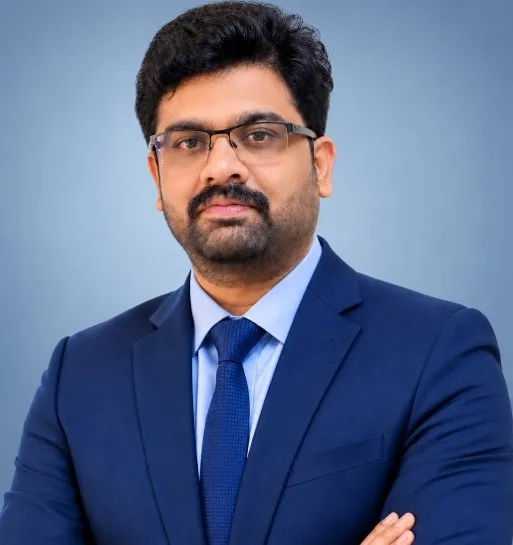
For Jayakumar Muralidharan, health and safety has always been about more than rules and procedures. Over a 20-year career spanning India and Dubai, NEBOSH qualifications have helped him build his confidence and develop a more strategic approach to HSE. Today, he believes effective safety leadership comes down to understanding people, earning their trust and never stopping learning.
Jayakumar Muralidharan
HSE Manager
20 November 2026
|When did you first decide to pursue a career in health and safety, and what sparked your interest?
After completing my Diploma in Fire and Safety Engineering, I was keen to begin gaining practical experience as quickly as possible. I secured my first position as a Safety Officer in India through a campus interview and began my career in April 2006. This gave me the opportunity to move directly from academic learning into a real construction environment, working on a range of exciting projects, including large and complex high rise residential developments.
These early experiences gave me a strong foundation in site safety, hazard identification, worker engagement and the day-to-day responsibilities of a safety professional.
I then began to explore opportunities in the UAE, where the construction industry was developing rapidly. Many major projects were under construction and there was growing demand for health and safety professionals with relevant experience and qualifications.
Can you tell us about you move to the UAE?
In 2007, I relocated to the UAE after securing my first opportunity here. It was a major step for me, both professionally and personally, and I had to adapt quickly to a new working environment, different organisational systems, international standards and a highly multicultural workforce.
The move gave me exposure to projects of much greater scale and complexity, working with major contractors, consultants and clients across high-rise residential, commercial, hospitality and educational developments. These experiences helped me develop not only my technical HSE knowledge, but also my leadership and stakeholder management skills.
Working in such a multicultural environment also taught me an important lesson very early in my UAE career. A health and safety professional must be able to communicate effectively with everyone involved in the work, from workers and supervisors to engineers, project managers and senior management.
Relocating to the UAE became one of the most important turning points in my career. It gave me the platform to progress from a site-based Safety Officer into increasingly senior HSE positions and, eventually, into consultancy and client-side HSE management.
The first NEBOSH qualification you completed was the NEBOSH International General Certificate in Occupational Health and Safety. Why did you choose it?
By 2010, I had already gained several years of practical health and safety experience in both India and the UAE. That year, I secured a new role leading my employer’s health and safety function, which made me realise that practical experience alone was not enough.
My new responsibilities involved working directly with clients, consultants, project management teams and local authorities, as well as participate in audits, inspections and formal HSE reviews. I needed to be able to explain and justify health and safety requirements professionally, respond confidently to technical questions and represent the organisation during external audits and authority inspections.
This highlighted the importance of developing a stronger and more structured understanding of occupational health and safety management. NEBOSH had an excellent reputation within the UAE construction industry, so the International General Certificate was a natural choice.
I wanted an internationally recognised qualification that would strengthen my technical knowledge, build my professional confidence and prepare me to carry out a much broader level of HSE responsibility.
How did achieving this qualification help your career?
Achieving the NEBOSH International General Certificate was an important milestone in my career. It strengthened my technical knowledge and gave me greater confidence when working with clients, consultants, local authorities and external auditors.
The qualification deepened my understanding of risk assessment, control measures and health and safety management systems, enabling me to contribute more effectively during meetings, audits and inspections and provide stronger technical advice to project teams and management.
NEBOSH was already widely recognised within the UAE construction industry, so achieving the International General Certificate also strengthened my professional credibility and opened the door to roles with greater HSE responsibility. It also motivated me to continue developing professionally and pursue further qualifications.
In 2020 you took the NEBOSH HSE Introduction to Incident Investigation qualification. Why did you choose this qualification in particular?
At the time, I was working as an HSE Manager, leading health and safety across large-scale construction projects. I had already been involved in several incident investigations and had gained practical experience in managing and reviewing workplace incidents.
Those experiences made me realise that identifying what happened is often much easier than understanding why it happened. I wanted to strengthen this area of my professional practice and develop a more structured and consistent approach to identifying underlying and root causes.
I chose the NEBOSH HSE Introduction to Incident Investigation qualification to develop my skills in evidence gathering, interviewing and analysis. One of the key lessons I learnt was the importance of looking beyond the immediate cause of an incident to identify and understand the underlying and organisational factors that contributed to it.
This was particularly relevant to my role as an HSE Manager, where the aim was not simply to establish what had gone wrong, but to learn from incidents and ensure effective corrective actions were implemented.
The qualification strengthened my confidence and capability in incident investigation, and I continue to apply these principles in my work today.
"Real competence comes from understanding what you are doing, applying that knowledge effectively and continually looking for ways to improve."
— Jayakumar Muralidharan, HSE Manager
In 2026 you completed the NEBOSH Level 6 International Diploma for Occupational Health and Safety Management Professionals. Why did you choose this qualification at this point in your career and how has it benefited you?
By the time I decided to undertake the NEBOSH Level 6 International Diploma, I had nearly 20 years of experience in health and safety, working across main contractor, consultancy and client-side environments. I had also completed several other professional qualifications, including another Level 6 qualification.
At this stage of my career, my responsibilities had become much broader and more strategic. I was involved in contractor management, leadership, risk-based decision-making, management systems, stakeholder coordination and providing professional advice to senior management. I wanted a qualification that would challenge my existing knowledge and deepen my understanding of health and safety from an organisational and leadership perspective.
Having completed different qualifications throughout my career, I found the NEBOSH approach particularly comprehensive and demanding. The depth of the syllabus and assessment process required a high level of preparation, understanding and practical application.
What I valued most was that the Diploma was not simply about memorising information. It challenged me to analyse situations, justify decisions and apply health and safety principles to realistic workplace scenarios. This has strengthened my ability to approach complex HSE challenges strategically and make well-informed decisions in my current role.
What was the best thing you learned through your NEBOSH studies?
One of the most important things I learned is that there are no shortcuts to achieving a meaningful professional qualification. The study process and standard of assessment require genuine understanding, preparation and consistent effort.
NEBOSH assessments are not simply about memorising information. You need to understand the subject, analyse situations, apply the principles correctly and justify your decisions. This made the learning challenging, but also much more valuable.
The experience also taught me the importance of persistence. There were times when the studies and assessments were demanding, but I had to keep going, to deepen my understanding and learn from the process.
Professionally, this reinforced something equally important: real competence comes from understanding what you are doing, applying that knowledge effectively and continually looking for ways to improve.
You secured a new role as an HSE Manager in 2024. Can you tell us about it?
I joined a leading real estate development and asset management company in December 2024 as HSE Manager- Projects. The company is responsible for several high-profile developments in Dubai.
My role involves providing client-side HSE leadership and oversight across multiple projects and operational assets. A significant part of my work involves managing construction and fit-out activities within live environments, including busy retail destinations. In these settings, construction activity must be carefully managed around customers, tenants and day-to-day operations.
My responsibilities include contractor HSE management, permit-to-work systems, risk assessments and method statements, high-risk activities, fire and life safety, emergency preparedness, incident investigation, inspections, audits and HSE performance monitoring.
I have also developed company’s HSE Manual, procedures and standards, creating a consistent framework for managing HSE across projects and operational assets.
My role requires close collaboration with project teams, consultants, contractors, facilities management, property management and other operational stakeholders to ensure projects progress safely while minimising disruption to the people and businesses operating within these assets.
As an Indian HSE professional working in the UAE, you have managed multinational workforces. How have cultural differences, language barriers and different attitudes towards safety influenced your approach to HSE leadership?
Working in the UAE has given me the opportunity to manage and work with people from more than 60 nationalities. This experience has taught me that to be an effective HSE leader, you need to adapt, because the same approach will not work for everyone.
People have different levels of education, work experience and understanding of risk. Culture can also influence how people respond to authority, whether they are comfortable asking questions or raising concerns, and how they perceive safety requirements.
Language is another major factor. A technically correct safety instruction has very little value if the person carrying out the work does not fully understand it. When managing workforces where language barriers exist, I always try to find practical ways to communicate and help people feel comfortable. I used to carry a sheet containing commonly used construction and safety instructions translated into the languages spoken by the workforce. WeChat, translators and support from bilingual colleagues can also help to overcome communication barriers. I find that visual methods of communication, including demonstrations, signs and photographs, are often more effective than lengthy verbal instructions.
Another important lesson has been to develop capability from within the workforce. Where possible, I have identified individuals who could communicate effectively with their colleagues and encouraged them to take greater responsibility. In one case, I supported a worker’s development and progression into a safety role. This not only helped to overcome the language barrier but also created greater trust because workers had someone from their own community who understood both their language and the safety expectations.
These experiences taught me that communication is not simply about delivering a message. As an HSE professional, it is my responsibility to make sure the message is understood.
Over the years, working with such a diverse workforce has made me more patient, adaptable and culturally aware. It has reinforced my belief that good HSE leadership requires much more than technical knowledge. You need to understand people, recognise the barriers they face, earn their trust and find the most effective way to help them work safely.
With over 20 years’ experience in the profession, what qualities do you believe health and safety professionals need to possess to be successful?
Technical competence is essential, but to be an effective HSE professional you need much more than this.
As I explained previously communication is equally important. Safety professionals work with people from very different backgrounds, from workers and supervisors to engineers, project directors and senior executives. You need to be able to adapt your communication style to your audience while ensuring the message remains clear and consistent.
Integrity is one of the qualities I value most. There will be times when an HSE professional needs to raise an uncomfortable issue or challenge a decision. You need the professional courage to do that while remaining objective and respectful.
Practical judgement and strong decision-making skills are also essential. Our role is not simply to identify problems or quote regulations. We need to understand the work, assess the actual risks and make balanced, evidence-based decisions. In high-risk or time-critical situations, those decisions may need to be made quickly while remaining professionally defensible.
Continuous learning is also important. Laws, regulations, standards, technology and working methods continue to evolve, so HSE professionals need to keep their knowledge up to date through continuous professional development and training.
Finally, I believe empathy and the ability to listen are extremely important. Health and safety is ultimately about people. If people see you only as someone who enforces rules, your influence will be limited. If they understand that you are there to help them work safely and protect their wellbeing, they are far more likely to engage with you and speak up about safety concerns.
What do you enjoy most about your chosen career?
Knowing that the work we do can make a genuine difference to people. In health and safety, success is often about what does not happen. When risks are properly identified, work is well planned and effective controls are in place, people can complete their work safely and return home to their families.
I also value the variety and continuous learning that come with the profession. Even after more than 20 years, every project brings different challenges, people and working environments. One day may involve reviewing a high-risk construction activity, while another may involve an incident investigation, an audit, a management discussion or developing a new HSE procedure.
I particularly enjoy solving complex problems and working with different stakeholders to find practical solutions that allow work to progress safely. The profession has also given me the opportunity to work with people from many different nationalities, cultures and professional backgrounds, which has been one of the most rewarding aspects of my career.
How do you see the health and safety profession evolving over the next few years, and what opportunities and challenges do you think this will create?
I believe the profession will become increasingly strategic, technology-driven and more closely integrated with wider business decision-making.
Digital permit-to-work systems, real-time monitoring, data analytics, artificial intelligence and predictive technologies will give organisations greater visibility of risk and performance. This creates an opportunity for HSE professionals to become less reactive by identifying trends and potential weaknesses before incidents occur. However, technology will not replace the need for professional judgement, leadership and communication. Building trust, encouraging people to report concerns and creating a strong safety culture will continue to depend on people and effective leadership.
I also expect HSE professionals to become involved much earlier in projects, including at the design, procurement, contractor selection and planning stages. This will create greater opportunities to reduce or eliminate risks before they reach the workplace.
An important challenge we must address is demonstrating the value of effective health and safety when commercial pressures arise. When project costs are being reduced, we need to ensure that HSE initiatives, such as training and welfare facilities, are not viewed as opportunities to make savings. HSE professionals need to demonstrate that effective safety management is not simply a cost, but an essential part of project performance, business continuity and long-term risk management.
I also expect to see a greater focus on occupational health, worker wellbeing, human factors and climate-related risks such as heat stress. Overall, I think the profession will continue to evolve, with a greater emphasis on leadership, planning and risk-based decision-making rather than compliance alone.
What advice would you give someone who wants to build a career in the health and safety profession?
The work we do is not just a job. It’s a profession that is suited to those who genuinely care about people and have a passion for health and safety.
A good HSE professional should always be curious, willing to learn and prepared to understand the work before giving advice. Practical experience, communication skills, professional judgement and the ability to influence people are as important as qualifications in my opinion.
Empathy is essential. We must understand the reality of the people who are carrying out the work. Are they living and working far away from their families? Are their working conditions challenging? Is the project particularly demanding? As HSE professionals, we need to listen to them, understand the challenges they face and make sure their concerns are given proper attention.
I would also encourage young professionals to keep developing and remain students throughout their careers. Laws, standards, technology and working methods are constantly changing, so learning should never stop. After almost 20 years in HSE, I am still learning. Completing my NEBOSH Level 6 International Diploma did not feel like the end of my learning journey. In many ways, it reminded me how much more there is to understand.
Most importantly, never lose sight of the purpose of the profession. Behind every procedure, inspection, risk assessment and control measure are people who should be able to carry out their work safely and return home to their families.
If you have that passion, empathy and sense of responsibility, health and safety can be a very meaningful and rewarding career.
For Jayakumar Muralidharan, health and safety has always been about more than rules and procedures. Over a 20-year career spanning India and Dubai, NEBOSH qualifications have helped him build his confidence and develop a more strategic approach to HSE. Today, he believes effective safety leadership comes down to understanding people, earning their trust and never stopping learning.
Jayakumar Muralidharan,
HSE Manager
20 November 2026
|When did you first decide to pursue a career in health and safety, and what sparked your interest?
After completing my Diploma in Fire and Safety Engineering, I was keen to begin gaining practical experience as quickly as possible. I secured my first position as a Safety Officer in India through a campus interview and began my career in April 2006. This gave me the opportunity to move directly from academic learning into a real construction environment, working on a range of exciting projects, including large and complex high rise residential developments.
These early experiences gave me a strong foundation in site safety, hazard identification, worker engagement and the day-to-day responsibilities of a safety professional.
I then began to explore opportunities in the UAE, where the construction industry was developing rapidly. Many major projects were under construction and there was growing demand for health and safety professionals with relevant experience and qualifications.
Can you tell us about you move to the UAE?
In 2007, I relocated to the UAE after securing my first opportunity here. It was a major step for me, both professionally and personally, and I had to adapt quickly to a new working environment, different organisational systems, international standards and a highly multicultural workforce.
The move gave me exposure to projects of much greater scale and complexity, working with major contractors, consultants and clients across high-rise residential, commercial, hospitality and educational developments. These experiences helped me develop not only my technical HSE knowledge, but also my leadership and stakeholder management skills.
Working in such a multicultural environment also taught me an important lesson very early in my UAE career. A health and safety professional must be able to communicate effectively with everyone involved in the work, from workers and supervisors to engineers, project managers and senior management.
Relocating to the UAE became one of the most important turning points in my career. It gave me the platform to progress from a site-based Safety Officer into increasingly senior HSE positions and, eventually, into consultancy and client-side HSE management.
The first NEBOSH qualification you completed was the NEBOSH International General Certificate in Occupational Health and Safety. Why did you choose it?
By 2010, I had already gained several years of practical health and safety experience in both India and the UAE. That year, I secured a new role leading my employer’s health and safety function, which made me realise that practical experience alone was not enough.
My new responsibilities involved working directly with clients, consultants, project management teams and local authorities, as well as participate in audits, inspections and formal HSE reviews. I needed to be able to explain and justify health and safety requirements professionally, respond confidently to technical questions and represent the organisation during external audits and authority inspections.
This highlighted the importance of developing a stronger and more structured understanding of occupational health and safety management. NEBOSH had an excellent reputation within the UAE construction industry, so the International General Certificate was a natural choice.
I wanted an internationally recognised qualification that would strengthen my technical knowledge, build my professional confidence and prepare me to carry out a much broader level of HSE responsibility.
How did achieving this qualification help your career?
Achieving the NEBOSH International General Certificate was an important milestone in my career. It strengthened my technical knowledge and gave me greater confidence when working with clients, consultants, local authorities and external auditors.
The qualification deepened my understanding of risk assessment, control measures and health and safety management systems, enabling me to contribute more effectively during meetings, audits and inspections and provide stronger technical advice to project teams and management.
NEBOSH was already widely recognised within the UAE construction industry, so achieving the International General Certificate also strengthened my professional credibility and opened the door to roles with greater HSE responsibility. It also motivated me to continue developing professionally and pursue further qualifications.
In 2020 you took the NEBOSH HSE Introduction to Incident Investigation qualification. Why did you choose this qualification in particular?
At the time, I was working as an HSE Manager, leading health and safety across large-scale construction projects. I had already been involved in several incident investigations and had gained practical experience in managing and reviewing workplace incidents.
Those experiences made me realise that identifying what happened is often much easier than understanding why it happened. I wanted to strengthen this area of my professional practice and develop a more structured and consistent approach to identifying underlying and root causes.
I chose the NEBOSH HSE Introduction to Incident Investigation qualification to develop my skills in evidence gathering, interviewing and analysis. One of the key lessons I learnt was the importance of looking beyond the immediate cause of an incident to identify and understand the underlying and organisational factors that contributed to it.
This was particularly relevant to my role as an HSE Manager, where the aim was not simply to establish what had gone wrong, but to learn from incidents and ensure effective corrective actions were implemented.
The qualification strengthened my confidence and capability in incident investigation, and I continue to apply these principles in my work today.
"Real competence comes from understanding what you are doing, applying that knowledge effectively and continually looking for ways to improve."
— Jayakumar Muralidharan, HSE Manager
In 2026 you completed the NEBOSH Level 6 International Diploma for Occupational Health and Safety Management Professionals. Why did you choose this qualification at this point in your career and how has it benefited you?
By the time I decided to undertake the NEBOSH Level 6 International Diploma, I had nearly 20 years of experience in health and safety, working across main contractor, consultancy and client-side environments. I had also completed several other professional qualifications, including another Level 6 qualification.
At this stage of my career, my responsibilities had become much broader and more strategic. I was involved in contractor management, leadership, risk-based decision-making, management systems, stakeholder coordination and providing professional advice to senior management. I wanted a qualification that would challenge my existing knowledge and deepen my understanding of health and safety from an organisational and leadership perspective.
Having completed different qualifications throughout my career, I found the NEBOSH approach particularly comprehensive and demanding. The depth of the syllabus and assessment process required a high level of preparation, understanding and practical application.
What I valued most was that the Diploma was not simply about memorising information. It challenged me to analyse situations, justify decisions and apply health and safety principles to realistic workplace scenarios. This has strengthened my ability to approach complex HSE challenges strategically and make well-informed decisions in my current role.
What was the best thing you learned through your NEBOSH studies?
One of the most important things I learned is that there are no shortcuts to achieving a meaningful professional qualification. The study process and standard of assessment require genuine understanding, preparation and consistent effort.
NEBOSH assessments are not simply about memorising information. You need to understand the subject, analyse situations, apply the principles correctly and justify your decisions. This made the learning challenging, but also much more valuable.
The experience also taught me the importance of persistence. There were times when the studies and assessments were demanding, but I had to keep going, to deepen my understanding and learn from the process.
Professionally, this reinforced something equally important: real competence comes from understanding what you are doing, applying that knowledge effectively and continually looking for ways to improve.
You secured a new role as an HSE Manager in 2024. Can you tell us about it?
I joined a leading real estate development and asset management company in December 2024 as HSE Manager- Projects. The company is responsible for several high-profile developments in Dubai.
My role involves providing client-side HSE leadership and oversight across multiple projects and operational assets. A significant part of my work involves managing construction and fit-out activities within live environments, including busy retail destinations. In these settings, construction activity must be carefully managed around customers, tenants and day-to-day operations.
My responsibilities include contractor HSE management, permit-to-work systems, risk assessments and method statements, high-risk activities, fire and life safety, emergency preparedness, incident investigation, inspections, audits and HSE performance monitoring.
I have also developed company’s HSE Manual, procedures and standards, creating a consistent framework for managing HSE across projects and operational assets.
My role requires close collaboration with project teams, consultants, contractors, facilities management, property management and other operational stakeholders to ensure projects progress safely while minimising disruption to the people and businesses operating within these assets.
As an Indian HSE professional working in the UAE, you have managed multinational workforces. How have cultural differences, language barriers and different attitudes towards safety influenced your approach to HSE leadership?
Working in the UAE has given me the opportunity to manage and work with people from more than 60 nationalities. This experience has taught me that to be an effective HSE leader, you need to adapt, because the same approach will not work for everyone.
People have different levels of education, work experience and understanding of risk. Culture can also influence how people respond to authority, whether they are comfortable asking questions or raising concerns, and how they perceive safety requirements.
Language is another major factor. A technically correct safety instruction has very little value if the person carrying out the work does not fully understand it. When managing workforces where language barriers exist, I always try to find practical ways to communicate and help people feel comfortable. I used to carry a sheet containing commonly used construction and safety instructions translated into the languages spoken by the workforce. WeChat, translators and support from bilingual colleagues can also help to overcome communication barriers. I find that visual methods of communication, including demonstrations, signs and photographs, are often more effective than lengthy verbal instructions.
Another important lesson has been to develop capability from within the workforce. Where possible, I have identified individuals who could communicate effectively with their colleagues and encouraged them to take greater responsibility. In one case, I supported a worker’s development and progression into a safety role. This not only helped to overcome the language barrier but also created greater trust because workers had someone from their own community who understood both their language and the safety expectations.
These experiences taught me that communication is not simply about delivering a message. As an HSE professional, it is my responsibility to make sure the message is understood.
Over the years, working with such a diverse workforce has made me more patient, adaptable and culturally aware. It has reinforced my belief that good HSE leadership requires much more than technical knowledge. You need to understand people, recognise the barriers they face, earn their trust and find the most effective way to help them work safely.
With over 20 years’ experience in the profession, what qualities do you believe health and safety professionals need to possess to be successful?
Technical competence is essential, but to be an effective HSE professional you need much more than this.
As I explained previously communication is equally important. Safety professionals work with people from very different backgrounds, from workers and supervisors to engineers, project directors and senior executives. You need to be able to adapt your communication style to your audience while ensuring the message remains clear and consistent.
Integrity is one of the qualities I value most. There will be times when an HSE professional needs to raise an uncomfortable issue or challenge a decision. You need the professional courage to do that while remaining objective and respectful.
Practical judgement and strong decision-making skills are also essential. Our role is not simply to identify problems or quote regulations. We need to understand the work, assess the actual risks and make balanced, evidence-based decisions. In high-risk or time-critical situations, those decisions may need to be made quickly while remaining professionally defensible.
Continuous learning is also important. Laws, regulations, standards, technology and working methods continue to evolve, so HSE professionals need to keep their knowledge up to date through continuous professional development and training.
Finally, I believe empathy and the ability to listen are extremely important. Health and safety is ultimately about people. If people see you only as someone who enforces rules, your influence will be limited. If they understand that you are there to help them work safely and protect their wellbeing, they are far more likely to engage with you and speak up about safety concerns.
What do you enjoy most about your chosen career?
Knowing that the work we do can make a genuine difference to people. In health and safety, success is often about what does not happen. When risks are properly identified, work is well planned and effective controls are in place, people can complete their work safely and return home to their families.
I also value the variety and continuous learning that come with the profession. Even after more than 20 years, every project brings different challenges, people and working environments. One day may involve reviewing a high-risk construction activity, while another may involve an incident investigation, an audit, a management discussion or developing a new HSE procedure.
I particularly enjoy solving complex problems and working with different stakeholders to find practical solutions that allow work to progress safely. The profession has also given me the opportunity to work with people from many different nationalities, cultures and professional backgrounds, which has been one of the most rewarding aspects of my career.
How do you see the health and safety profession evolving over the next few years, and what opportunities and challenges do you think this will create?
I believe the profession will become increasingly strategic, technology-driven and more closely integrated with wider business decision-making.
Digital permit-to-work systems, real-time monitoring, data analytics, artificial intelligence and predictive technologies will give organisations greater visibility of risk and performance. This creates an opportunity for HSE professionals to become less reactive by identifying trends and potential weaknesses before incidents occur. However, technology will not replace the need for professional judgement, leadership and communication. Building trust, encouraging people to report concerns and creating a strong safety culture will continue to depend on people and effective leadership.
I also expect HSE professionals to become involved much earlier in projects, including at the design, procurement, contractor selection and planning stages. This will create greater opportunities to reduce or eliminate risks before they reach the workplace.
An important challenge we must address is demonstrating the value of effective health and safety when commercial pressures arise. When project costs are being reduced, we need to ensure that HSE initiatives, such as training and welfare facilities, are not viewed as opportunities to make savings. HSE professionals need to demonstrate that effective safety management is not simply a cost, but an essential part of project performance, business continuity and long-term risk management.
I also expect to see a greater focus on occupational health, worker wellbeing, human factors and climate-related risks such as heat stress. Overall, I think the profession will continue to evolve, with a greater emphasis on leadership, planning and risk-based decision-making rather than compliance alone.
What advice would you give someone who wants to build a career in the health and safety profession?
The work we do is not just a job. It’s a profession that is suited to those who genuinely care about people and have a passion for health and safety.
A good HSE professional should always be curious, willing to learn and prepared to understand the work before giving advice. Practical experience, communication skills, professional judgement and the ability to influence people are as important as qualifications in my opinion.
Empathy is essential. We must understand the reality of the people who are carrying out the work. Are they living and working far away from their families? Are their working conditions challenging? Is the project particularly demanding? As HSE professionals, we need to listen to them, understand the challenges they face and make sure their concerns are given proper attention.
I would also encourage young professionals to keep developing and remain students throughout their careers. Laws, standards, technology and working methods are constantly changing, so learning should never stop. After almost 20 years in HSE, I am still learning. Completing my NEBOSH Level 6 International Diploma did not feel like the end of my learning journey. In many ways, it reminded me how much more there is to understand.
Most importantly, never lose sight of the purpose of the profession. Behind every procedure, inspection, risk assessment and control measure are people who should be able to carry out their work safely and return home to their families.
If you have that passion, empathy and sense of responsibility, health and safety can be a very meaningful and rewarding career.
