
Stay up to date
Subscribe to our newsletter
Subscribe to get your monthly news and updates directly from NEBOSH.
Subscribe to get your monthly news and updates directly from NEBOSH.
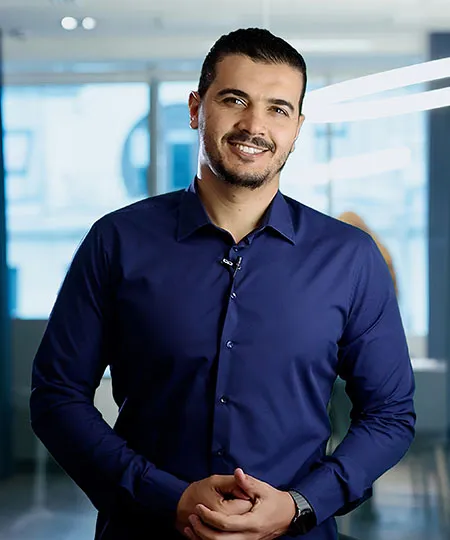
Bakr Mammar is a Process Safety Engineer at Sonatrach in Algeria. In this interview, he shares his journey into the profession, what he enjoys most about working in health and safety and offers advice for those with similar aspirations.
Bakr Mammar
Process Safety Engineer
Sonatrach
25 July 2025
|When did you decide you wanted to work in health and safety, and how did you know it was the right career for you?
To be honest, I never initially imagined myself working in health and safety. After earning my diploma in petrochemical engineering, I was offered a role as an EHS Engineer in 2015 by Sonatrach, the Algerian National Oil Company.
At the time, I had just completed a professional training programme and accepted the opportunity—even though it wasn’t directly aligned with my academic background.
At first, I wasn’t sure I would remain in the profession long-term. But once I began working in the oil and gas sector, I quickly recognised the vital role health and safety plays in high-risk industries. I saw firsthand how robust safety systems protect people, preserve the environment, safeguard assets, and uphold a company’s reputation.
That was my turning point—I realised the impact I could have in this field. So, I made the decision to fully commit and build a meaningful career in health and safety.
You have worked for Sonatrach in Algeria for over 10 years. Can you tell us about the company and its health and safety ethos?
Sonatrach is Algeria’s national oil company and the largest energy company in Africa. With a strategic presence in the global oil and gas industry, it operates in some of the world’s most challenging environments—making health, safety, and environmental protection an absolute priority.
The company’s commitment to HSE is formally outlined in its Health, Safety and Environment Policy Declaration, which affirms a clear pledge: to protect worker health and safety, safeguard asset integrity, and preserve the natural environment.
Sonatrach has adopted a proactive and structured approach to HSE by implementing an Integrated Health, Safety and Environment Management System (HSE-MS). This system ensures compliance with legal and regulatory standards, promotes risk prevention, and drives continuous improvement in HSE performance across all operations.
You have worked as a Process Safety Engineer since 2017. Can you tell us about this role and your key responsibilities?
Since 2017, I’ve worked as a Process Safety Engineer in the oil and gas industry—where even minor oversights can have major consequences. Over the years, there have been near misses and a few serious incidents, many of which could have been prevented with more robust process safety management systems. That’s exactly where my role becomes crucial.
My core mission is to prevent loss of containment and ensure hazardous materials and energies are effectively controlled throughout operations. I’ve been deeply involved in designing, implementing, and continuously improving key elements of the Process Safety Management (PSM) system, aligning with both regulatory requirements and industry best practices.
Some of my key responsibilities include:
Ultimately, my goal is to embed safety into every phase of a project and every decision we make—protecting people, the environment, and company assets.
In 2024, you completed the NEBOSH HSE Certificate in Process Safety Management.
"A great safety professional should also be approachable, proactive, and resilient—someone who leads by example, remains calm under pressure, and always keep the bigger picture in mind: protecting people, assets, and the environment."
— Bakr Mammar, Process Safety Engineer, Sonatrach
Please, can you tell us about your future ambitions?
I’m fully committed to dedicating my career to helping organisations that handle high-hazardous substances operate safely, reliably, and responsibly. My ambition is to continuously strengthen process safety culture, ensure that process safety elements are effectively implemented at every level of the organisation, and ultimately reduce the risk of major incidents.
Beyond my day-to-day responsibilities, I’m also passionate about contributing to the broader safety community. Through my active engagement with more than 35,000 professionals on LinkedIn, I advocate for greater awareness, knowledge sharing, and collaboration in the field of process safety. We all share a common goal: to make every workplace a safe place—where every worker can return home safely.
I believe that by sharing expertise, supporting others, and promoting a strong safety mindset, we can expand the reach of process safety across industries and borders—and make a meaningful, lasting impact.
What do you enjoy about being part of the health and safety profession?
I truly consider health and safety to be a noble profession. As the saying goes, "prevention is better than cure", and nowhere is that more relevant in our field. One of the most powerful lessons I’ve learned through incident investigations is that most accidents are preventable. That understanding becomes a strong motivator: to act before something goes wrong.
What I enjoy most is knowing that my work directly contributes to protecting lives. Seeing workers carry out their tasks with confidence, knowing they’re safe, is incredibly rewarding. It means the systems, training, and culture we’ve built are truly working.
There’s also a great sense of pride in seeing tangible results—like reaching milestones such as 5 million work hours without a single incident. These aren’t just statistics; they represent real people going home safely every day. It’s moments like these that remind me and why I love this profession and why I strive to do more, lead better, and raise standards even higher.
Given your extensive experience and connections, what do you think makes a good health and safety professional?
From my experience, a good health and safety professional must possess a combination of technical expertise and strong interpersonal skills.
Solid knowledge of safety principles, industry standards, and the ability to assess risks related to specific sites, processes, and equipment is fundamental. But technical knowledge alone isn’t enough—what truly makes a difference is the ability to communicate.
In our profession, it’s crucial to influence, persuade, and engage people across all levels of the organisation-from frontline workers to senior leadership. That’s not always easy, especially when safety rules may seem inconvenient or when risks are underestimated. The ability to clearly communicate the “why” behind safety measures, build trust, and foster awareness, is key to driving real behavioural change.
A great safety professional should also be approachable, proactive, and resilient—someone who leads by example, remains calm under pressure, and always keep the bigger picture in mind: protecting people, assets, and the environment.
What advice would you give to someone who wants to make health and safety their career?
Health and safety is a meaningful and critical career—but it’s far more than wearing a helmet, ticking checklists, or filing daily reports. It demands vigilance, accountability, and a real and strong presence in the workplace.
If you're considering this path, my advice is simple: take it seriously, stay engaged, and commit to continuous learning. The best investment you can make is in yourself. Grow both your technical expertise and your communication skills—because safety is about people just as much as it is about systems.
Pursuing internationally recognised qualifications like NEBOSH is an excellent place to start. They provide a solid foundation and practical tools to understand safety principles and apply them effectively across any industry.
Bakr Mammar is a Process Safety Engineer at Sonatrach in Algeria. In this interview, he shares his journey into the profession, what he enjoys most about working in health and safety and offers advice for those with similar aspirations.
Bakr Mammar,
Process Safety Engineer,
Sonatrach
25 July 2025
|When did you decide you wanted to work in health and safety, and how did you know it was the right career for you?
To be honest, I never initially imagined myself working in health and safety. After earning my diploma in petrochemical engineering, I was offered a role as an EHS Engineer in 2015 by Sonatrach, the Algerian National Oil Company.
At the time, I had just completed a professional training programme and accepted the opportunity—even though it wasn’t directly aligned with my academic background.
At first, I wasn’t sure I would remain in the profession long-term. But once I began working in the oil and gas sector, I quickly recognised the vital role health and safety plays in high-risk industries. I saw firsthand how robust safety systems protect people, preserve the environment, safeguard assets, and uphold a company’s reputation.
That was my turning point—I realised the impact I could have in this field. So, I made the decision to fully commit and build a meaningful career in health and safety.
You have worked for Sonatrach in Algeria for over 10 years. Can you tell us about the company and its health and safety ethos?
Sonatrach is Algeria’s national oil company and the largest energy company in Africa. With a strategic presence in the global oil and gas industry, it operates in some of the world’s most challenging environments—making health, safety, and environmental protection an absolute priority.
The company’s commitment to HSE is formally outlined in its Health, Safety and Environment Policy Declaration, which affirms a clear pledge: to protect worker health and safety, safeguard asset integrity, and preserve the natural environment.
Sonatrach has adopted a proactive and structured approach to HSE by implementing an Integrated Health, Safety and Environment Management System (HSE-MS). This system ensures compliance with legal and regulatory standards, promotes risk prevention, and drives continuous improvement in HSE performance across all operations.
You have worked as a Process Safety Engineer since 2017. Can you tell us about this role and your key responsibilities?
Since 2017, I’ve worked as a Process Safety Engineer in the oil and gas industry—where even minor oversights can have major consequences. Over the years, there have been near misses and a few serious incidents, many of which could have been prevented with more robust process safety management systems. That’s exactly where my role becomes crucial.
My core mission is to prevent loss of containment and ensure hazardous materials and energies are effectively controlled throughout operations. I’ve been deeply involved in designing, implementing, and continuously improving key elements of the Process Safety Management (PSM) system, aligning with both regulatory requirements and industry best practices.
Some of my key responsibilities include:
Ultimately, my goal is to embed safety into every phase of a project and every decision we make—protecting people, the environment, and company assets.
In 2024, you completed the NEBOSH HSE Certificate in Process Safety Management.
"A great safety professional should also be approachable, proactive, and resilient—someone who leads by example, remains calm under pressure, and always keep the bigger picture in mind: protecting people, assets, and the environment."
— Bakr Mammar, Process Safety Engineer, Sonatrach
Please, can you tell us about your future ambitions?
I’m fully committed to dedicating my career to helping organisations that handle high-hazardous substances operate safely, reliably, and responsibly. My ambition is to continuously strengthen process safety culture, ensure that process safety elements are effectively implemented at every level of the organisation, and ultimately reduce the risk of major incidents.
Beyond my day-to-day responsibilities, I’m also passionate about contributing to the broader safety community. Through my active engagement with more than 35,000 professionals on LinkedIn, I advocate for greater awareness, knowledge sharing, and collaboration in the field of process safety. We all share a common goal: to make every workplace a safe place—where every worker can return home safely.
I believe that by sharing expertise, supporting others, and promoting a strong safety mindset, we can expand the reach of process safety across industries and borders—and make a meaningful, lasting impact.
What do you enjoy about being part of the health and safety profession?
I truly consider health and safety to be a noble profession. As the saying goes, "prevention is better than cure", and nowhere is that more relevant in our field. One of the most powerful lessons I’ve learned through incident investigations is that most accidents are preventable. That understanding becomes a strong motivator: to act before something goes wrong.
What I enjoy most is knowing that my work directly contributes to protecting lives. Seeing workers carry out their tasks with confidence, knowing they’re safe, is incredibly rewarding. It means the systems, training, and culture we’ve built are truly working.
There’s also a great sense of pride in seeing tangible results—like reaching milestones such as 5 million work hours without a single incident. These aren’t just statistics; they represent real people going home safely every day. It’s moments like these that remind me and why I love this profession and why I strive to do more, lead better, and raise standards even higher.
Given your extensive experience and connections, what do you think makes a good health and safety professional?
From my experience, a good health and safety professional must possess a combination of technical expertise and strong interpersonal skills.
Solid knowledge of safety principles, industry standards, and the ability to assess risks related to specific sites, processes, and equipment is fundamental. But technical knowledge alone isn’t enough—what truly makes a difference is the ability to communicate.
In our profession, it’s crucial to influence, persuade, and engage people across all levels of the organisation-from frontline workers to senior leadership. That’s not always easy, especially when safety rules may seem inconvenient or when risks are underestimated. The ability to clearly communicate the “why” behind safety measures, build trust, and foster awareness, is key to driving real behavioural change.
A great safety professional should also be approachable, proactive, and resilient—someone who leads by example, remains calm under pressure, and always keep the bigger picture in mind: protecting people, assets, and the environment.
What advice would you give to someone who wants to make health and safety their career?
Health and safety is a meaningful and critical career—but it’s far more than wearing a helmet, ticking checklists, or filing daily reports. It demands vigilance, accountability, and a real and strong presence in the workplace.
If you're considering this path, my advice is simple: take it seriously, stay engaged, and commit to continuous learning. The best investment you can make is in yourself. Grow both your technical expertise and your communication skills—because safety is about people just as much as it is about systems.
Pursuing internationally recognised qualifications like NEBOSH is an excellent place to start. They provide a solid foundation and practical tools to understand safety principles and apply them effectively across any industry.
